
Paella Negra is a unique way of cooking paella, using squid instead of chicken, beef or pork. To make this paella more appetizing, you can add other seafoods as well like shrimps, mussels or crabs. Although this is a Spanish cuisine, most of our dishes has a Spanish influence so we come to love a dish like squid ink paella. By the way, Halloween is fast approaching and this dish is a perfect food to serve if you are having a Halloween party.
Paella Negra: My First Taste of Paellitos Negritos
I still remember the first time I tasted paella negra. It wasn’t in some fancy Spanish restaurant — it was right in my Tita Lorna’s backyard in Cavite. The air smelled of grilled seafood and charcoal, and there she was, stirring a big, shallow pan over a makeshift stove. “Try this, anak,” she said, handing me a spoonful of inky rice glistening under the afternoon sun. One bite and I was hooked. The briny, smoky flavor was unlike anything else — comforting yet bold, simple yet sophisticated.
The Story Behind This Black Beauty
For many of us Filipinos, paella negra might look exotic, but its roots are actually close to home. The dish comes from Spain, like many of our beloved recipes, but we’ve embraced it and made it our own. Instead of the traditional chicken or chorizo, our version proudly highlights squid — a seafood staple in every coastal town from Batangas to Cebu. It’s no wonder we love this dish so much; it speaks to both our Spanish heritage and our love for the sea.
My cousin Carlo, who works as a cook in Iloilo, once told me that his boss — a retired Spanish chef — said the secret to an unforgettable paella negra lies in the balance between the ink’s saltiness and the rice’s softness. “Don’t rush the rice,” Carlo warned me. “Let it soak in all that ink and stock — that’s where the magic happens.”
The Art of Perfecting Paella Negra
Cooking this dish may look intimidating, but it’s actually beginner-friendly once you understand the technique. It starts with cleaning the squid — a step that my Lola Nena insisted should never be rushed. “Take care not to tear the ink sac,” she used to remind me. That tiny pouch holds the essence of the dish. When sautéed later with rice and garlic, it releases a deep, oceanic flavor that gives the dish its signature black hue.
When you add white wine to the pan, it’s not just for show — it helps deglaze the pan, lifting all the flavorful bits stuck at the bottom. The wine’s acidity also balances the richness of the ink and seafood. Then comes the rice, which you toast lightly in the fragrant oil. This step keeps the grains firm, so they don’t turn mushy later. As the rice simmers in fish or vegetable stock, it slowly absorbs the ink’s flavor, turning into that glossy, jet-black beauty we all love.
I like to add a few shrimps or mussels when I have them — not just for presentation, but for an extra layer of taste. My brother Jun swears that the slight sweetness of shrimp makes the dish even better. Sometimes he tops his version with crab meat, and honestly, that’s next-level paellitos negritos right there.
A Halloween Treat or Everyday Favorite
What makes paella negra so fun is how it fits almost any occasion. Tita Lorna often serves it during family reunions, while my niece Mia once made it her Halloween party centerpiece — the dark, dramatic color looked perfectly spooky yet appetizing. Pair it with a slice of lemon and a cold glass of soda, and you’ve got yourself a crowd-pleaser.
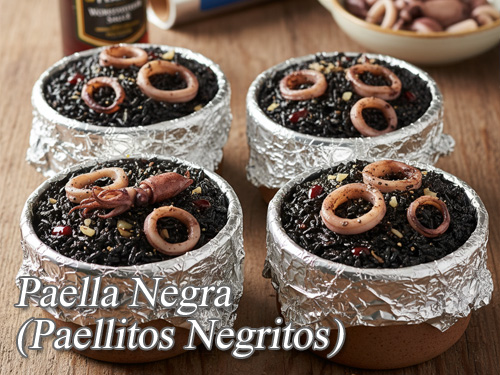
If you want to bake it like how my uncle Tito Boy does, you can spoon the mixture into ovenproof cups lined with foil and pop them into a preheated 350°F oven for about 10 minutes. This extra step adds a toasty, slightly crisp layer at the bottom — that’s the socarrat, the golden crust every paella lover dreams of. The foil trick keeps the edges neat and prevents the rice from drying out, making it ideal for individual servings or potluck gatherings.
Food for Thought: The History and Heart of Squid Ink Paella
Did you know that squid ink has been used in Mediterranean cooking for centuries? Spanish fishermen were the first to experiment with it, using the ink to stretch their limited ingredients into something flavorful. The black color once symbolized good luck and abundance at sea. Here in the Philippines, that symbolism resonates deeply. Every serving feels like a small celebration of our coastal roots and our knack for turning simple ingredients into something extraordinary.
Cooking paella negra is more than just following a recipe — it’s a moment of connection. Every stir, every simmering sound, brings memories of family kitchens and stories shared over meals. When I cook it today, I still think of Tita Lorna laughing by her outdoor stove, the scent of garlic and sea breeze filling the air.
So the next time you crave something special, don’t be afraid to try this dish. With a bit of patience, a few simple ingredients, and a sprinkle of family love, you’ll find that this Spanish-Filipino classic is easier — and more heartwarming — than it looks.
How to Make Paella Negra (Paellitos Negritos)
Ingredients
- 1/2 kilo squid about 3 inches long
- 2 Tbsp Lea & Perrins Worcestershire Sauce
- 5 cloves freshly pound garlic
- 3 cups fish or vegetable stock
- 1/2 cup white wine
- 1 roll Reynold's Wrap Aluminum Foil
- 1 1/2 cups cooked long grain rice
- 1/4 cup olive oil
- salt and pepper to taste
Instructions
How to cook Paellitos Negritos
- Skin and clean squid and remove ink sacs. Set aside ink sacs.
- In hot oil, saute rice with garlic, wine, salt and pepper.
- Add squid (either cut into rings or kept whole).
- Remove squid when done and add fish or vegetable stock.
- Stir and add ink sacs. Ink sacs will burst to let out the ink.
- Stir to blend ink with rice. Add Lea & Perrins Worcestershire Sauce.
- Line individual ovenproof cups with Reynolds Wrap Aluminum Foil with an overlap of 2 inches and spoon the squid and rice mixture into the cups.
- Bake for 10 minutes in a 350°F oven. Serves 4.
Notes
Cooking Tips:
Handle the Squid Ink with Care
When cleaning the squid, gently remove the ink sacs and set them aside in a small bowl. Avoid tearing them so you can release the ink later in the pan for a deep, even color. This careful step ensures your paella negra gets its signature black hue without turning bitter.Toast the Rice Before Adding Stock
Lightly sautéing the rice in oil before adding the liquid helps seal the grains, keeping them firm and flavorful. This technique prevents your paella from becoming mushy as it cooks. It also adds a nutty aroma that beautifully complements the squid ink and seafood.Let It Rest Before Serving
After removing the paella negra from the heat, let it rest for at least five minutes before serving. This short pause allows the rice to finish absorbing the flavors and moisture evenly. You’ll end up with a richer taste and a perfect, slightly crispy bottom layer known as socarrat.



Delicious! One of my favorite paella dish!