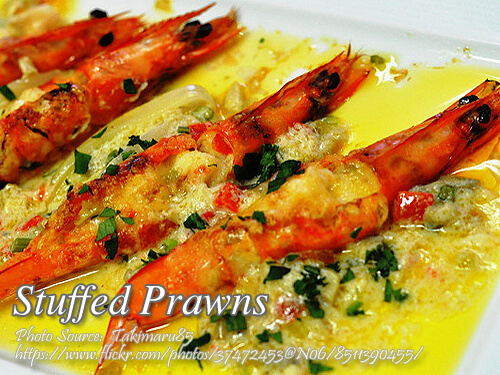
This stuffed prawns dish is baked prawns stuffed with its own prawn meat, vegetables, cream of mushroom soup, white wine and spices filling. Then sprinkled with grated cheese and pimiento. Great way to cook your prawns if your are want to cook a special lunch or dinner on a special occasion.
Stuffed Prawns for Special Occasions
Stuffed prawns, or rellenong sugpo, is one of those Filipino seafood dishes that instantly makes the table feel festive. You’ll often find it served during birthdays, Christmas dinners, or Sunday gatherings when someone wants to prepare something a little extra special without spending the whole day in the kitchen. The presentation alone looks impressive, with the bright orange shells filled to the brim with creamy seafood stuffing and melted cheese bubbling on top.
What I like most about this dish is that it looks elegant but is actually beginner-friendly once you understand the process. The first time I made stuffed prawns for a family lunch, I expected it to be difficult because of the stuffing part. But after preparing a few pieces, the routine became surprisingly manageable. The trick is taking your time when removing the prawn meat so the shells stay intact for filling later.
This baked seafood dish also stretches ingredients nicely. Instead of serving plain grilled prawns where everyone grabs two or three pieces quickly, the stuffing makes each piece heartier and more satisfying. The creamy mushroom sauce, white wine, butter, and cheese all work together to give the prawns a rich flavor without overpowering the sweetness of the seafood.
Why Rellenong Sugpo Works So Well
One reason stuffed prawns remain popular in Filipino home cooking is the contrast of textures and flavors. The prawn shells hold the filling together while the inside stays creamy, savory, and slightly briny from the seafood itself. When baked properly, the cheese forms a lightly golden topping while the filling stays moist underneath.
Using the prawn meat as the stuffing base is also practical because none of the seafood flavor goes to waste. Once chopped into small cubes, the meat absorbs the butter, garlic, onion, and cream of mushroom soup beautifully. The white wine and lemon juice help balance the richness and keep the filling from tasting too heavy.
There’s also a reason why the prawns are only simmered briefly after sautéing. Seafood cooks very quickly, and overcooked prawns become rubbery almost immediately. You’ll notice the texture changing from translucent to opaque after just a few minutes in the pan. That’s your signal to stop cooking. The filling will continue heating later in the oven, so slightly undercooking it on the stovetop actually gives better results.
Preparing the Prawns Properly
For the best stuffed prawns, choose large fresh prawns with heads and tails intact. Bigger prawns are easier to stuff and hold their shape better during baking. Fresh prawns should smell clean and slightly salty like the sea, not fishy or sour.
Boiling the prawns briefly before slicing them open makes removing the meat easier while keeping the shells firm enough for stuffing. Don’t leave them in boiling water too long. Around two to three minutes is usually enough depending on size. The shells will turn orange, and the meat will just begin to cook through.
When slicing along the back, use kitchen scissors or a small sharp knife. Try not to cut all the way through because the shell acts like a natural serving dish. I learned this the hard way years ago after rushing through preparation and accidentally splitting several prawns in half. They still tasted delicious, but the filling kept sliding out while baking.
After removing the meat, chop it into small cubes instead of turning it into a paste. Small chunks give the filling better texture and make the seafood more noticeable in every bite.
Building Flavor in the Filling
The filling is where stuffed prawns really shine. Garlic and onions sautéed in butter create the savory base of the dish. Cook the onions until softened and translucent rather than deeply browned. This keeps the flavor mellow and slightly sweet, which pairs better with delicate seafood.
Adding lemon juice and white wine before cooking the prawn mixture helps brighten the flavor. The acidity cuts through the richness of the cream of mushroom soup and cheese. If you skip this step, the filling can taste flat and overly creamy.
Letting the prawn mixture sit for about 10 to 15 minutes after seasoning also makes a noticeable difference. During this short resting time, the seafood absorbs the wine, salt, pepper, and citrus more evenly. It’s a simple step, but it helps prevent bland pockets in the filling.
The mushrooms add earthiness and stretch the stuffing without making it feel heavy. Finely chopping them also helps them blend into the seafood mixture naturally. Pimiento gives subtle sweetness and a pop of color that makes the finished dish look more appetizing once baked.
Stuffed Prawns Cooking Tips for Beginners
One common mistake beginners make when preparing stuffed prawns is adding too much cream soup too early. Cream of mushroom soup thickens as it cooks, so it’s best to stir only part of it into the filling while reserving the rest for the baking dish. This keeps the stuffing creamy without becoming soupy.
When spooning the filling into the shells, gently press it down so it stays compact during baking. Overfilling can cause the stuffing to spill over once the cheese melts and the sauce bubbles around the platter.
Another important detail is dotting butter over the top before baking. It may seem minor, but the butter helps the cheese brown more evenly and keeps the filling moist. Without it, the surface can dry out too quickly in the oven.
Bake the stuffed seafood at 350°F just until heated through and lightly golden. Since the prawns are already partially cooked, the oven’s job is mainly to melt the cheese and bring all the flavors together. Leaving them too long can dry out the seafood filling.
You’ll know the dish is ready when the sauce around the platter starts bubbling gently and the cheese develops light golden spots.
A Dish with Spanish Influence
Like many Filipino dishes with the word “relleno” or “rellenong,” stuffed prawns show traces of Spanish culinary influence. The concept of stuffing meats and seafood became popular during the colonial period and slowly evolved using local ingredients and Filipino flavors.
In many older Filipino households, rellenong dishes were reserved for celebrations because they required more preparation compared to everyday meals. Even today, dishes like rellenong bangus and rellenong alimango still appear during holidays and fiestas.
Rellenong sugpo feels slightly more modern because of the cream of mushroom soup and cheese topping, ingredients that became popular in Filipino kitchens during the American era. The combination may sound unusual at first, but it works surprisingly well with seafood. The creamy sauce softens the natural saltiness of the prawns while the cheese adds richness without overpowering the dish.
Serving Stuffed Prawns
Stuffed prawns are best served hot straight from the oven while the cheese is still melted and the sauce creamy. The aroma alone usually gathers everyone around the table before the platter even lands.
This dish pairs well with steamed rice because the creamy mushroom sauce naturally drips onto the plate. Some families also serve it alongside pancit, buttered vegetables, or warm dinner rolls during larger celebrations.
Leftovers can still taste good the next day, although the texture of the filling becomes slightly firmer after refrigeration. Reheat gently in the oven instead of the microwave if possible. Slow reheating keeps the prawns from turning rubbery.
What makes stuffed prawns memorable is how comforting and celebratory it feels at the same time. It’s rich without being overwhelming, elegant without being intimidating, and impressive enough for guests while still approachable for beginner cooks. Once you’ve made it once or twice, it becomes the kind of seafood recipe you’ll want to bring out for birthdays, holidays, or even simple family dinners that deserve something a little special.
How to Cook Stuffed Prawns
Ingredients
- 15 pcs fresh sugpo large prawns
- 1/2 cup canned button mushrooms diced
- 1/2 tsp. salt
- 1/4 tsp. pepper
- 1 Tbsp. kalamansi or lemon-juice
- 4 Tbsp. white wine
- 1 Tbsp. butter
- 2 cloves garlic minced
- 2 pcs onions chopped finely
- 2 pcs red pimiento cubed
- 1 can cream of mushroom soup
- 2 Tbsp. cheese grated
- Pimiento slices
- Butter
Instructions
How to Cook Stuffed Prawns:
- Boil prawns and slice the back, leaving the heads and tails intact. Remove the meat and cut into small cubes. Add mushroom, salt and pepper.
- Sprinkle with lemon juice and white wine. Mix thoroughly and set aside for 10-15 minutes. In medium heat, melt butter and saute garlic and onions. Add the prawn mixture. Cover and allow to simmer.
- Do not overcook. Add pimiento. Remove from fire and add some of the cream of mushroom soup.
- Stuff-the prawn shells with the prawn mixture. Sprinkle grated cheese on top. Arrange the stuffed prawns in oven proof platter.
- Pour the remaining cream of mushroom at the sides. Garnish, top with pimiento slices and dot with butter.
- Bake in preheated oven at 350°F for 15 minutes. Serve hot.
Notes
Avoid Overcooking the Prawns
Prawns cook very quickly, so simmer the filling just until the meat turns opaque and firm. Overcooking can make the seafood rubbery and dry even before baking. Since the stuffed prawns will continue cooking in the oven, slightly undercooking the filling on the stovetop gives better texture later.Keep the Shells Intact
When slicing the prawns along the back, avoid cutting all the way through the shell. The shell acts as a sturdy container that keeps the creamy filling in place during baking. Using kitchen scissors instead of a knife can make the process easier and less messy for beginners.Use Cheese and Butter for Better Browning
Sprinkling grated cheese on top adds richness while helping create a lightly golden crust during baking. Small dots of butter over the stuffed prawns keep the filling moist and prevent the surface from drying out too quickly. Bake only until the cheese melts and bubbles to maintain a creamy and tender texture.