
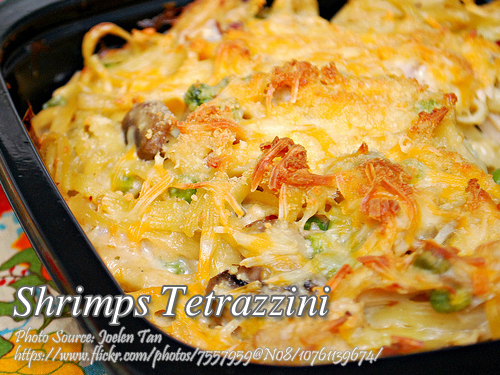
Do you think that shrimp tetrazzini is an Italian dish? The name tetrazzini sounds Italian but actually it is an American dish. It consists of pasta, poultry or seafood, butter, cream, milk, sherry, cream of mushroom soup and Parmesan cheese. This version of shrimp tetrazzini is already adapted to the Pinoy taste. In case you are wondering where to get the shrimp juice, it is made by pounding the shrimp heads in a mortar and pestle or you can put it in a blender with 3/4 cup of water. Then strain in a cheese cloth or fine sieve to get the juice.
A Creamy and Comforting Shrimp Tetrazzini for Family Meals
Shrimp tetrazzini is a creamy, comforting pasta dish that’s perfect for family dinners, weekend gatherings, or those days when you want something a little special without spending hours in the kitchen. Made with tender shrimp, mushrooms, spaghetti, and a rich cream sauce, this baked pasta brings together familiar ingredients in a delicious, satisfying way.
Although its name sounds Italian, tetrazzini is actually an American pasta dish. This Filipino-inspired version has a creamy sauce with a savory seafood flavor that makes it especially enjoyable for Pinoy families. The addition of homemade shrimp juice gives the sauce a deeper taste, while Parmesan cheese adds a pleasant salty finish.
If you’re new to making baked pasta, don’t worry. The process is straightforward, and you don’t need complicated cooking techniques to get good results. With properly cooked spaghetti, a flavorful sauce, and a little attention to the oven, you’ll have a dish that’s creamy, hearty, and ready to share.
What Is Shrimp Tetrazzini?
Tetrazzini is an American casserole traditionally made with pasta, poultry or seafood, mushrooms, and a creamy sauce. Depending on the recipe, the sauce may include butter, milk, cream, sherry, Parmesan cheese, or condensed cream of mushroom soup. The ingredients are combined with cooked pasta and baked until hot and flavorful.
Despite its Italian-sounding name, the dish is generally credited to American cooking. It is commonly associated with Italian opera singer Luisa Tetrazzini, who became popular in the United States during the early twentieth century. The exact origin of the dish is debated, but its name is widely linked to her.
Over time, tetrazzini developed into a practical way to turn cooked meat or seafood into a comforting baked meal. Its creamy sauce and familiar ingredients also make it easy to adapt to different tastes.
This Filipino-style preparation uses spaghetti instead of some of the pasta shapes found in other versions. It also makes use of shrimp heads to prepare a flavorful liquid for the sauce. That simple step gives the dish a distinctly savory seafood character without requiring expensive ingredients.
Why You’ll Love This Shrimp Tetrazzini Recipe
The best part about shrimp tetrazzini is how its ingredients work together. The shrimp provides a naturally sweet, delicate seafood flavor, while mushrooms contribute an earthy taste that balances the richness of the sauce. Garlic and onions build the aromatic base, giving every layer more flavor.
Condensed cream of mushroom soup makes the sauce convenient for home cooks. It provides body and a creamy texture without requiring you to prepare a traditional cream sauce from scratch. Milk loosens the condensed soup, while shrimp juice adds extra depth.
Parmesan cheese finishes the casserole with a savory, slightly nutty flavor. As the pasta bakes, the sauce settles around the strands of spaghetti, allowing the flavors to mingle.
This recipe is also flexible enough for family meals. You can prepare the sauce while the pasta cooks, then assemble everything in a casserole dish. Once it’s in the oven, there’s little hands-on work left to do.
How to Make Shrimp Tetrazzini
Prepare the Spaghetti for Shrimp Tetrazzini
Preheat your oven to 375°F. Cook the spaghetti according to the package directions, using a large pot of boiling water and enough space for the strands to move freely.
Cook the pasta until just al dente, which means it should be tender but still have a slight firmness in the center. This matters because the spaghetti will continue cooking in the oven. If it’s already very soft before baking, it can become mushy by the time the casserole is done.
Drain the spaghetti thoroughly and set it aside. You generally don’t need to rinse it because the remaining starch helps the sauce cling to the pasta. If the sauce isn’t ready yet, toss the drained spaghetti with a small amount of butter to help prevent sticking.
Make the Shrimp Juice for a Richer Sauce
One of the most useful tricks in this recipe is making shrimp juice from the heads. If you’re using whole fresh shrimp, reserve the heads after cleaning them. Place the heads in a mortar and pestle and pound them until the juices are released. Alternatively, blend them with three-quarters of a cup of water.
Strain the mixture through a fine-mesh sieve or cheesecloth, pressing gently to extract the liquid. Discard the solids.
The resulting liquid carries some of the shrimp’s natural flavor into the sauce. This technique is especially helpful when you want a stronger seafood taste without adding more shrimp.
For food safety, use fresh shrimp that has been handled and refrigerated properly, and cook the strained liquid thoroughly in the sauce. If the shrimp smells sour or ammonia-like, discard it rather than trying to mask the odor.
Sauté the Shrimp and Vegetables
Melt the butter in a saucepan over medium heat. Add the garlic and onions, stirring until fragrant and softened. This usually takes a couple of minutes, depending on how finely you’ve chopped them.
Add the mushrooms and shrimp. Cook briefly, stirring occasionally, until the mushrooms begin to soften and the shrimp starts turning pink.
Avoid cooking the shrimp completely at this stage. It will continue cooking when the sauce simmers and when the assembled pasta goes into the oven. Overcooked shrimp can become firm and rubbery, so a gentle approach helps preserve its tender texture.
If the pan looks dry, reduce the heat slightly rather than letting the garlic brown too quickly. Burnt garlic can introduce a bitter flavor that is difficult to correct later.
Prepare the Creamy Shrimp Tetrazzini Sauce
In a separate bowl, combine the cream of mushroom soup, milk, prepared shrimp juice, and sherry. Stir until the mixture is reasonably smooth before pouring it into the saucepan with the shrimp and vegetables.
Mixing the liquid ingredients first helps distribute the condensed soup more evenly. It also reduces the chance of thick clumps forming when the mixture reaches the hot pan.
Bring the sauce to a gentle boil, then lower the heat and simmer for about ten minutes, stirring occasionally. The sauce should gradually become cohesive and develop a richer aroma as the ingredients combine.
Keep an eye on the bottom of the pan, especially as the sauce thickens. Condensed soup can scorch if left undisturbed over high heat. If the mixture becomes too thick, add a small splash of milk or water until it reaches a consistency that can coat the spaghetti without becoming pasty.
Taste the sauce before assembling the casserole. The soup and Parmesan already contribute salt, so it’s best to adjust the seasoning only after tasting.
Assemble and Bake the Pasta
Arrange a layer of spaghetti in a casserole dish, then spoon some of the shrimp mixture over it. Repeat the layers until the pasta and sauce are used up, making sure the sauce is distributed throughout the dish rather than sitting only on top.
Sprinkle grated Parmesan cheese over the surface and finish with chopped parsley. The cheese adds a savory topping, while the parsley provides a fresh contrast to the creamy sauce.
Bake at 375°F for at least 25 minutes, or until the casserole is heated through and bubbling around the edges. Oven performance and the depth of your baking dish can affect the cooking time, so check the center before serving.
If you prefer a more golden top, place the casserole under the broiler briefly. Watch it closely because grated cheese can go from lightly browned to burnt in a short time.
Let the baked pasta rest for several minutes before serving. This gives the sauce a chance to settle, making the casserole easier to portion without losing all its creamy filling onto the plate.
Tips for the Best Shrimp Tetrazzini
The texture of the finished dish depends on the balance between the pasta and sauce. Spaghetti that is slightly firm before baking holds up better, while a sauce that’s too thick can leave the casserole dry. Aim for a creamy mixture that coats the pasta generously before it goes into the oven.
Fresh mushrooms are a good choice because they release moisture and develop a pleasant savory flavor as they cook. Slice them evenly so they soften at roughly the same rate.
If you don’t have sherry, you can omit it rather than making a special trip to the store. The dish will still be flavorful, although it will lack some of the subtle depth that the wine contributes. For a nonalcoholic variation, use a little extra milk or a small amount of unsalted seafood stock, adjusting the consistency as needed.
You can also prepare the components ahead of time, but be careful about assembling the casserole too early. Spaghetti absorbs sauce as it sits, which may leave the finished dish drier than expected. If preparing in advance, keep the components refrigerated and consider reserving a little extra sauce to loosen the pasta before baking.
How to Serve and Store This Creamy Pasta
Serve shrimp tetrazzini warm, straight from the casserole dish. Its creamy texture pairs nicely with a crisp green salad, steamed vegetables, or lightly toasted bread. For a Filipino family meal, it can be served as a hearty main dish for Sunday lunch, birthdays, or casual gatherings with relatives.
Refrigerate leftovers in a covered container within two hours of cooking. They generally keep for three to four days in the refrigerator. Reheat individual portions until steaming hot, adding a splash of milk if the sauce has thickened during storage.
For the best texture, avoid repeatedly reheating the entire casserole. Shrimp can become tough with prolonged heating, and the sauce may lose some of its creaminess.
A Comforting Seafood Pasta Worth Sharing
This homemade shrimp tetrazzini combines the convenience of condensed soup with the extra flavor of shrimp juice, tender seafood, mushrooms, and Parmesan. It brings an American casserole tradition to the Filipino table with ingredients and flavors that feel familiar.
The key is to pay attention to the small details: cook the spaghetti just until al dente, avoid overcooking the shrimp, stir the sauce as it simmers, and bake only until the casserole is heated through and the cheese is lightly golden.
Once you’ve made it a few times, you’ll have a better feel for the sauce consistency and baking time that work best in your kitchen. It’s a practical, satisfying pasta dish to keep in your home-cooking rotation, especially when you want a creamy seafood meal that everyone can enjoy.
Shrimp Tetrazzini
Ingredients
- 1 pack 400 grams spaghetti, pre-cut
- 2 Tbsp. butter or margarine
- 1 tsp. garlic minced
- 1/4 cup onion sliced thin
- 1 cup shrimps cooked, shelled and cut diagonally
- 1 can 350grams cream of mushroom soup
- 1/2 cup evaporated milk
- 3/4 cup shrimp juice
- 2 Tbsp. sherry optional
- 1/4 cup Parmesan cheese grated
- 1 Tbsp. parsley chopped
Instructions
How to cook Shrimp Tetrazzini:
- Pre-heat oven to 375 °F. Cook spaghetti according to package directions or you can follow this spaghetti recipe pasta cooking direction. Drain and set aside.
- Heat a saucepan and put butter. When butter is heated saute garlic, onions, mushrooms and shrimps for a few minutes.
- In a bowl combine and mix cream of mushroom soup, milk, shrimp juice and sherry.
- Pour over the sauteed mixture. Allow to boil for 10 minutes and stir occasionally to avoid burning.
- Arrange layers of spaghetti in a casserole and top each layer with the shrimp mixture.
- Sprinkle with grates Parmesan cheese and chopped parsley.
- Bake at least 25 minutes until cooked. If desired, you can place it under a broiler to brown the cheese.
Notes
Cook the Spaghetti Until Al Dente
Cook the spaghetti until just tender with a slight firmness in the center, as it will continue cooking in the oven. Drain it well to prevent excess water from thinning the creamy sauce. Avoid overcooking the pasta, or it may turn mushy after baking.Make Flavorful Shrimp Juice
Pound fresh shrimp heads with a mortar and pestle or blend them with three-quarters of a cup of water, then strain through a fine-mesh sieve. This flavorful liquid adds a deeper seafood taste to the creamy sauce without needing extra shrimp. Cook the strained liquid thoroughly in the sauce, and use only fresh, properly handled shrimp.Keep the Shrimp Tender and the Sauce Creamy
Sauté the shrimp just until it begins turning pink because it will continue cooking as the sauce simmers and the casserole bakes. Stir the sauce occasionally over medium-low heat to prevent the condensed soup from sticking or scorching on the bottom of the pan. If the sauce becomes too thick, add a little milk to help it coat the spaghetti evenly before baking.


Wish you had a share button. I can’t find this on FB.
Hi Patricia, I removed my social sharing buttons because I thought it is not necessary. But I might put it back again soon.
Please send me e recipe book thank you God Bless
Hi Teresita,
Just go subscribe here to get your ebook: http://www.panlasangpinoymeatrecipes.com/meaty-recipes-mini-ecook-book