
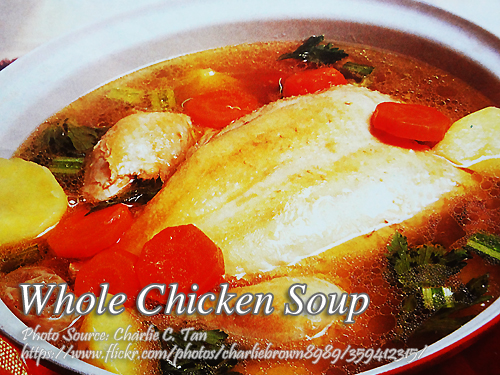
This whole chicken soup recipe is similar to the nilagang manok but the only difference is the vegetables used and instead of cut up chicken, whole chicken is utilized. Boiling the whole chicken give a more flavorful soup and with the addition of ham bone (biyas ng baboy), it will give a better taste. You can buy ham bone to a wet market meat shop. Just ask the meat vendor for the “biyas ng baboy”.
Whole Chicken Soup: A Comforting Filipino Home-Cooked Meal
There is something comforting about a pot of chicken soup simmering on the stove. The gentle bubbling, the aroma of garlic and onions, and the rich broth filling the kitchen make it hard to resist a bowl, especially on a rainy afternoon or when the family wants something warm and satisfying.
This whole chicken soup is similar to the Filipino nilagang manok, a simple boiled chicken dish known for its clear broth and tender meat. The main difference is that this recipe uses a whole chicken instead of cut-up pieces, along with vegetables such as carrots, celery, and potatoes. A ham bone, locally known as biyas ng baboy, adds another layer of flavor to the soup.
What makes this dish special is how much flavor develops from a few humble ingredients. You do not need complicated seasonings or expensive cuts of meat. With proper preparation and a little patience, you can make a nourishing pot of soup that tastes like something you would happily serve to the whole family.
Why Cook Whole Chicken Soup Instead of Using Cut-Up Chicken?
Cooking the chicken whole gives the broth time to absorb flavor from different parts of the bird as it gently simmers. Bones, connective tissues, and meat all contribute to the finished soup. The result is a fuller-tasting broth that pairs beautifully with the sweetness of carrots and onions.
Keeping the chicken intact also makes for a lovely presentation. You can bring the pot to the table for a family-style meal or transfer the cooked bird carefully to a serving platter before ladling the broth and vegetables into bowls.
The ham bone is another ingredient worth seeking out. At a Filipino wet market, ask the meat vendor for biyas ng baboy. This cut can add savory, meaty depth to the broth without requiring a long list of additional ingredients. Its exact flavor contribution depends on how the bone was prepared, so taste the soup before adding too much salt.
If you cannot find a ham bone, you can still prepare a delicious chicken soup without it. The whole chicken and aromatics will provide plenty of flavor on their own.
Preparing the Chicken for a Cleaner-Tasting Broth
Before cooking, inspect the chicken carefully. If you bought it from a wet market, check for any remaining small feathers, unwanted internal parts, or other material left behind during dressing. Remove anything that should not be there, including the yellowish oil gland near the base of the tail if it is still attached.
Although washing raw chicken under running water is common in many home kitchens, food safety guidance recommends avoiding this practice because splashing water can spread bacteria around the sink and nearby surfaces. Instead, remove unwanted parts with clean utensils and pat the chicken dry with paper towels. Wash your hands and sanitize any surfaces that come into contact with raw poultry.
If you prefer to follow the traditional salt-rubbing method, keep in mind that salt does not reliably eliminate harmful bacteria. It may help with surface moisture and odor, but proper cooking is what makes the chicken safe to eat.
Once the chicken is prepared, set it aside while you get the vegetables and aromatics ready. Having everything within reach makes the cooking process easier, especially if this is your first time preparing a whole bird in a pot.
Building Flavor With Garlic, Onion, Carrots, and Celery
Choose a deep, heavy pot that can hold the whole chicken comfortably. The bird should fit without being forced into the pot, and there should be enough room for the water and other ingredients.
Heat a little oil over medium heat, then add the garlic, onion, carrot, and celery. Cook until the onion softens and turns translucent, stirring occasionally to prevent the garlic from browning too quickly.
This first step may seem simple, but it makes a noticeable difference. Heating the aromatics in oil releases their fragrant compounds, while the carrots and onions begin to develop a gentle sweetness. Celery contributes a fresh, savory flavor that complements the chicken without overpowering it.
Avoid rushing this stage over high heat. Burnt garlic can leave a bitter taste that carries through the entire pot of broth. If the garlic begins to brown before the onion softens, lower the heat slightly and stir.
Once the vegetables have softened, place the whole chicken in the pot. Add enough water to barely cover it, then include the ham bone, peppercorns, and potatoes.
The amount of water you need will depend on the size of your chicken and the shape of your pot. Starting with just enough water helps keep the broth flavorful rather than overly diluted. If the chicken is too large for your pot, choose a larger one instead of forcing the bird inside.
Simmering Whole Chicken Soup for a Clear, Flavorful Broth
Bring the liquid to a boil and watch the surface carefully. As the temperature rises, foam and grayish scum may collect on top. This material consists largely of coagulated proteins and other particles released from the meat and bones.
Use a spoon or small ladle to skim it away. This step helps produce a cleaner-looking broth and removes some of the particles that can make the soup appear cloudy.
After skimming, lower the heat to medium-low and partially cover the pot. The goal is a gentle simmer, with small bubbles rising occasionally, rather than a vigorous rolling boil.
Why does this matter? Constant, aggressive boiling can break up fat and suspended particles throughout the liquid, making the broth cloudier. A gentler simmer also helps the chicken cook more evenly and reduces the chance of the meat becoming tough and dry.
Cooking time depends on the chicken’s weight, its starting temperature, and the pot you use. Begin checking the bird as it approaches the expected cooking time rather than relying on the clock alone. Insert a food thermometer into the thickest part of the breast and the innermost part of the thigh, avoiding the bone. The chicken should reach at least 165°F (74°C) to be safe to eat.
If the potatoes become tender before the chicken is ready, check them with a fork and remove them temporarily if necessary. This prevents them from falling apart while the bird finishes cooking.
Adding Macaroni and Adjusting the Seasoning
For a heartier meal, you can add macaroni to the pot when the chicken is nearly cooked. Small pasta shapes work well because they are easy to spoon up with the broth and vegetables.
Follow the package’s suggested cooking time, but start checking the pasta a little early. Macaroni continues to soften in hot liquid, even after the heat is turned off. If you expect leftovers, consider cooking the pasta separately and adding it to individual bowls. This keeps it from absorbing too much broth and becoming mushy during storage.
Season the soup with salt and pepper toward the end of cooking. This is especially important when using a ham bone, since some prepared or smoked bones can contribute considerable saltiness.
Taste the broth before adding more seasoning. If it tastes flat, a little salt may bring the chicken and vegetable flavors into better balance. If it is already savory, leave it alone rather than adding salt automatically. You can also adjust the pepper to suit your family’s preference.
Serving Whole Chicken Soup the Filipino Way
Serve the soup hot, with the chicken, potatoes, carrots, and broth arranged in generous bowls. For a traditional Filipino touch, offer calamansi and patis on the side.
A small squeeze of calamansi adds bright acidity that cuts through the richness of the broth. Patis, or Filipino fish sauce, brings a salty, savory note. Let everyone adjust their own bowl to taste instead of adding too much to the entire pot.
This is the kind of meal that goes well with steamed rice, particularly if you want something filling without an elaborate spread of side dishes. The tender chicken can be portioned at the table, and the broth makes a comforting accompaniment to each spoonful of rice.
A Little Filipino Food History Behind This Chicken Soup
Nilaga is a familiar part of Filipino home cooking. The word refers to food that has been boiled or simmered, and many versions combine meat, vegetables, and a simple broth. Ingredients vary from household to household, depending on regional preferences, family traditions, and what is available at the market.
Chicken-based soups also reflect a practical approach to home cooking. Simmering meat with aromatics and vegetables transforms everyday ingredients into a meal that can feed several people. Using a ham bone in this recipe follows that same resourceful spirit, drawing extra flavor from an ingredient that might otherwise be overlooked.
There is no single version that every Filipino family prepares. Some cooks prefer leafy greens, while others use potatoes, corn, or other vegetables. Macaroni is another optional addition that makes the soup more substantial. These variations are part of what makes traditional home cooking so personal.
Storing and Reheating Leftover Chicken Soup
If you have leftovers, remove the chicken meat from the bones if convenient and transfer the soup to shallow containers. Refrigerate it within two hours of cooking, or within one hour if the surrounding temperature exceeds 90°F (32°C). Eat refrigerated leftovers within three to four days.
When reheating, bring the soup to 165°F (74°C). Add a splash of water or broth if the liquid has reduced during storage, and taste again before serving. If you stored the macaroni separately, combine it with the hot soup just before eating.
For longer storage, freeze the broth and chicken in airtight, freezer-safe containers. Leaving a little room at the top allows the liquid to expand as it freezes. Thaw frozen portions safely in the refrigerator before reheating.
A Simple Pot of Soup Worth Making Again
This whole chicken soup is proof that a satisfying family meal does not need a complicated recipe. The whole bird creates a rich foundation, the ham bone adds savory depth, and the vegetables bring sweetness and substance to every bowl.
Take your time with the aromatics, keep the broth at a gentle simmer, and taste before seasoning. These small details help beginners get better results without making the process difficult.
Whether you serve it with rice on a rainy day or prepare it for a relaxed family lunch, this comforting Filipino-style soup is an easy recipe to return to whenever you want a warm, homemade meal.
How to Cook Whole Chicken Soup
Ingredients
- 1 Whole dressed chicken about 1 & 1/2 kilo
- 2 Tbsp. cooking oil
- 1 pc large onion chopped
- 1 pc large carrot chopped into medium sized rounds
- 2 cloves garlic minced
- 2 stalks celery cut into 2 inch length
- 1 pc ham bone biyas ng baboy
- 6 pcs black pepper corns
- 2 pcs potatoes cut into 4 pcs each
- 1 cup elbow macaroni optional
- Rock salt
- Calamansi
- Patis or fish sauce
Instructions
How to Cook Whole Chicken Soup:
- Wash the chicken on running water and remove excess fats or other parts if not properly dressed when you bought it from the wet market or supermarket.
- Parts like the esophagus, small feathers and the yellowish oil gland at the base of the tail should be removed.
- Rub chicken with rock salt inside and out to remove the odor. The after a few minutes rinse the chicken on running water and drain. Set aside.
- In a deep pot (be sure the chicken fits inside the pot) , heat oil in a medium heat and saute garlic, onion, carrot and celery until the onion is soft and translucent.
- Add the whole chicken in the pot and enough water to barely cover the chicken.
- Drop the ham bone, pepper corns and potatoes. Let it boil until the scum floats on the surface.
- Gently skim off the scum. Lower the heat to medium-low and cover the pot partially.
- Let it simmer until chicken is cooked. If you are going to add macaroni, put it when the chicken is nearly cooked.
- Season with salt and pepper if desired and adjust the if necessary.
- Serve with calamansi and patis.
Notes
Choose the Right Pot
Use a deep pot that comfortably fits the whole chicken with enough room for the water and vegetables. Add just enough water to barely cover the bird so the broth stays rich and flavorful. Avoid using a pot that's too small, as overcrowding makes it harder to cook the chicken evenly.Simmer Gently for Flavorful Broth
After bringing the soup to a boil, skim off the foam that collects on the surface for a cleaner-looking broth. Lower the heat and let the chicken simmer gently instead of boiling vigorously, which can make the broth cloudy and the meat dry. Check the thickest parts of the chicken with a food thermometer and make sure they reach 165°F (74°C).Season and Add Macaroni at the Right Time
Add the macaroni when the chicken is nearly cooked, following the package directions to prevent it from becoming mushy. Taste the broth before adding salt because the ham bone, or biyas ng baboy, may already contribute plenty of savory flavor. Serve with calamansi and patis on the side so everyone can adjust the seasoning to their liking.


Thank you for the posted recipes. Please, can you post again the smoking recipes? thank you very much.
Thanks for your comment. I’ll try to post more smoked recipes soon.