
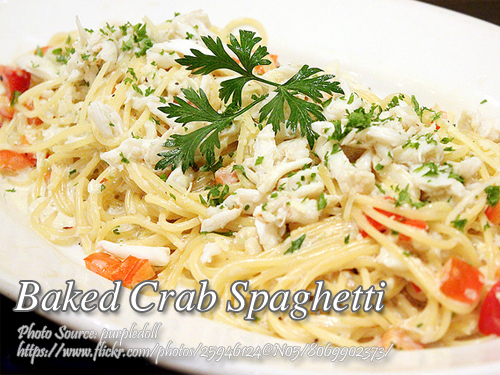
This baked crab spaghetti consist of flaked crab meat, cream of mushroom soup, milk and grated cheese as the main ingredients. This is a simple dish compared to other baked pasta and can be prepared and served in any occasions. One advantage of cooking this seafood pasta is it does not contain red meat or poultry so I’m sure this is a healthy alternative to the usual meat based pasta.
Why You’ll Love This Baked Crab Spaghetti
There is something comforting about a pan of baked pasta coming out of the oven, especially when the cheese is melted and lightly golden on top. This baked crab spaghetti is one of those dishes that looks a little special on the table but is surprisingly easy to put together.
Instead of the usual tomato sauce and ground meat, this version uses flaked crab meat, cream of mushroom soup, milk, butter, and plenty of grated cheese. The sauce is creamy without requiring a long list of ingredients, while the crab adds a delicate seafood flavor that makes the pasta feel different from the usual spaghetti.
I like making this when I want something that can feed a family without spending the whole afternoon in the kitchen. It also works nicely for birthdays, potlucks, family gatherings, or a simple weekend lunch when everyone is hungry and waiting around the dining table.
Why This Baked Crab Spaghetti Works
The secret to this pasta is really in the simple combination of creamy sauce and cheese. Cream of mushroom soup gives the sauce body and a savory base, while milk loosens it enough to coat the spaghetti. Butter adds richness, and cheese brings everything together.
When I first started making creamy baked pasta, one mistake I often made was cooking the sauce too aggressively. A creamy mixture doesn’t need to boil hard. Gentle heat and frequent stirring are enough. If the soup gets too hot or sits unattended, it can become thick and lumpy at the bottom of the pan.
For this recipe, heat the soup slowly and stir until it becomes smooth before adding the butter and milk. Once the mixture is combined, take it off the heat before stirring in the cheese. This small step helps keep the cheese smooth instead of making the sauce greasy or grainy.
Getting the Spaghetti Just Right
The pasta deserves a little attention because it will continue cooking in the oven. Cook the spaghetti until it is tender but still firm to the bite. This is what we mean by al dente.
If you cook the noodles until they are very soft on the stovetop, they can turn mushy after another fifteen minutes in the oven. Nobody wants spaghetti that falls apart when you lift it with a fork.
Follow the cooking time on the package, but don’t rely on the clock alone. Taste a strand near the end of cooking. It should be cooked through but have a slight firmness in the center.
Once drained, rinsing the spaghetti with tap water helps stop the cooking process and removes some surface starch. This is particularly useful here because we don’t want the noodles to become overly soft while we prepare the sauce.
A teaspoon of salt in the cooking water also helps season the pasta from the inside. The cooking oil is optional, but if you’re following the traditional method in this recipe, a small amount can be added to the boiling water.
Choosing and Preparing the Crab Meat
The crab is what gives this white spaghetti its character, so use crab meat that smells fresh and clean. You can use cooked crab meat that has been picked from the shells, or convenient packaged or canned crab meat.
If you’re using canned crab, drain it well before adding it to the pasta. Excess liquid can thin the sauce and make the finished casserole watery. Gently flake the meat with a fork and check for any pieces of shell before mixing it in.
There is no need to cook the crab for a long time because it is already cooked. It only needs to be warmed through in the creamy mixture. Stirring it in gently also keeps the flakes intact instead of turning them into tiny pieces.
For seafood dishes like this, I prefer letting the crab remain noticeable. You don’t need a huge amount of seasoning to make it flavorful. The mushroom soup, cheese, butter, and crab already provide plenty of savory notes.
Making the Creamy Cheese Sauce
Start by heating the cream of mushroom soup in a saucepan over medium-low heat. Stir continuously until it becomes smooth. Add the butter and milk, then continue stirring until everything is well combined.
Don’t worry if the sauce looks somewhat thin at this stage. The cheese will add thickness, and the pasta will absorb some of the sauce as it bakes.
Remove the pan from the heat before adding the grated cheese. Stir until melted and smooth. This is one of those simple techniques that makes a noticeable difference. Cheese exposed to very high heat can separate, especially when there is liquid in the sauce.
Taste the mixture before combining it with the noodles. Season with salt and pepper as needed. If MSG is part of your usual cooking, you can add a small amount according to your preference. I recommend seasoning gradually because the soup and cheese may already be salty.
Bringing the Baked Crab Spaghetti Together
Place the cooked spaghetti in a large bowl or the same pot you used for the pasta. Pour in the milk-and-cheese sauce, then add the flaked crab meat. Toss gently until the noodles are evenly coated.
This is the point where you can tell whether the sauce is right. The spaghetti should look creamy and well coated, but there should not be a pool of liquid at the bottom. If the mixture seems unusually dry, a small splash of milk can help loosen it before baking.
Transfer everything to a shallow greased casserole dish. A shallow dish works well because more of the pasta is exposed to the heat, allowing the cheese topping to melt evenly instead of leaving a cold center.
Sprinkle the remaining grated cheese over the top. Don’t worry about making it perfectly even. Once it melts, it will cover most of the surface anyway.
Baking Until the Cheese Is Melted
Bake the casserole in a preheated 350°F oven for about fifteen minutes, or just until the cheese has melted.
Since all of the main ingredients are already cooked, you aren’t trying to bake the pasta for a long time. The oven is mainly there to heat everything together and melt the cheese on top.
Keep an eye on it during the last few minutes. If your oven runs hot, the cheese may brown faster than expected. You can take the casserole out as soon as the topping is melted and bubbling around the edges.
Let it rest for a few minutes before serving. Straight from the oven, the sauce can be very hot and loose. A short rest allows it to settle, making the pasta easier to scoop and serve.
A Little Food History Behind Creamy Filipino Pasta
Filipino spaghetti is often associated with the sweet-style red sauce served at children’s parties, birthdays, and family celebrations. But creamy white pasta has also become a familiar part of Filipino home cooking, particularly because it is easy to adapt with whatever protein or canned ingredients are available.
This seafood version follows that same practical Filipino approach. It takes familiar Western-style pasta and combines it with ingredients commonly used in home kitchens. Cream soup, evaporated or regular milk, processed or grated cheese, and canned seafood can all be found in many Filipino pantries, making dishes like this convenient for gatherings.
That adaptability is part of what makes baked pasta so popular. You don’t need restaurant equipment or complicated techniques. A saucepan, a pot for the noodles, and a casserole dish are enough to turn everyday ingredients into something suitable for the family table.
What to Serve With This Pasta
This baked crab spaghetti is rich and creamy, so I like serving it with something fresh or lightly seasoned on the side. A simple green salad, steamed vegetables, or sliced fruit can balance the richness of the cheese sauce.
For a Filipino gathering, you can also serve it alongside other party favorites. The mild seafood flavor makes it easy to pair with fried or grilled dishes without competing with strong sauces.
And don’t forget the leftovers. Once refrigerated properly, the pasta can make an easy next-day meal. When reheating, add a small splash of milk before warming it. Creamy pasta tends to absorb sauce as it sits, and the milk helps bring some of that softness back.
My Tips for Better Baked Crab Spaghetti
The most important thing is not to overcook the noodles. Remember that they will spend additional time in the oven. Keep the sauce on gentle heat, stir it often, and add the cheese after removing the pan from the burner.
Use well-drained crab meat and taste the sauce before adding extra salt. Different brands of soup and cheese can vary considerably in saltiness, so seasoning according to taste is much safer than automatically adding a fixed amount.
Most of all, don’t feel pressured to make this dish complicated. The beauty of baked crab spaghetti is its simplicity. With tender al dente noodles, a creamy mushroom-and-cheese sauce, and generous flakes of crab throughout, you get a comforting seafood pasta that feels special without requiring advanced cooking skills.
How to Cook Baked Crab Spaghetti
Ingredients
- 1 cup flaked crab meat
- 400 grams spaghetti
- 1 & 1/2 cup condensed cream of mushroom soup
- 3 Tbsp. butter
- 1 cup evaporated milk
- 250 grams cheese grated
- salt and pepper to taste
- MSG or granulated seasonings to taste
- sliced cherry tomatoes for garnishing optional
Instructions
How to cook Crab Meat White Spaghetti:
- Cook spaghetti according to package directions. Just in case the cooking direction is missing, cook the spaghetti in boiling water with a teaspoon of salt and cooking oil until the pasta is tender and firm (al dente).
- Drain and fill the pot with tap water then drain again. Set aside.
- Heat the soup and keep stirring until smooth. Add the butter and milk and stir cook to combine.
- Remove from heat and stir in grated cheese. Stir again to combine.
- Mix the milk-cheese mixture with spaghetti, crab meat and season with salt, pepper and MSG to taste.
- Place in a shallow greased casserole and sprinkle with the remaining cheese.
- Bake on a 350°F, pre-heated oven for 15 minutes or until cheese melts.
Notes
Cook the Spaghetti Until Al Dente
Cook the spaghetti until tender but still slightly firm because it will continue cooking in the oven. Overcooked noodles can become soft and mushy after baking, especially when combined with the creamy sauce. Taste a strand before draining to make sure it still has a little bite.Keep the Cheese Sauce Smooth
Heat the cream of mushroom soup gently and stir frequently to prevent it from sticking or becoming lumpy. Remove the sauce from the heat before adding the grated cheese so it melts smoothly without separating. If the sauce becomes too thick, stir in a small amount of milk to reach a creamy consistency.Drain the Crab Meat Well
Drain canned or packaged crab meat thoroughly before adding it to the spaghetti to prevent excess liquid from thinning the sauce. Gently flake the meat with a fork and check for any small pieces of shell. Fold it into the pasta mixture carefully so the crab stays in noticeable, tender flakes.


Leave a Reply