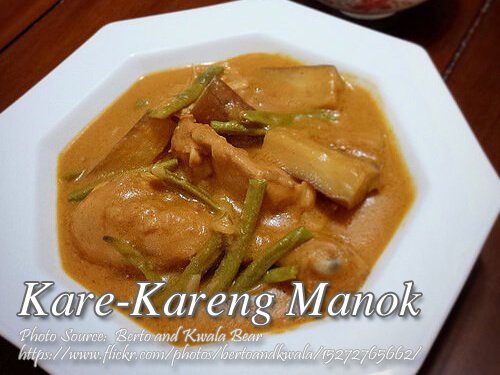
Kare-kareng manok is a variety of the popular Filipino kare-kare dish and usually ox tail is used as the main ingredient. Other varieties of kare-kare are ox tripe and pork legs but this recipe, the kare-kareng manok uses chicken as an alternative meat. With regard to the kind of chicken used in this dish, as much as possible, native chicken (native free range chicken) is preferable because the meat is tastier than the commercial broiler chicken usually sold in supermarket or wet market. Anyway there is already free range chicken sold in supermarket poultry section which you can use in this dish.
Kare-Kareng Manok and the Comfort of Filipino Home Cooking
Kare-kareng manok is one of those dishes that instantly makes the dining table feel special even on an ordinary weekday. The rich peanut sauce, tender vegetables, and savory bagoong on the side create the kind of meal that encourages everyone to linger a little longer after eating. While the traditional version usually uses oxtail, tripe, or pork hocks, this chicken variation offers a lighter and more affordable option without losing the signature flavors people love about kare-kare.
The first time I cooked kare-kareng manok at home, I honestly thought it would taste too simple compared to the beef version I grew up eating during fiestas. But after simmering the chicken in the peanut-rich sauce and tasting it with warm rice and shrimp paste, I realized the dish carries the same comforting flavor profile. In fact, chicken absorbs the sauce surprisingly well, especially when you allow it enough time to simmer gently instead of rushing the cooking process.
Many Filipino households have their own version of kare-kare. Some families make it thick and creamy while others prefer a thinner sauce that easily coats the rice. In some provinces, ground toasted rice is added to create extra body and nuttiness. This recipe keeps things beginner-friendly while still delivering the classic savory and slightly sweet taste associated with the beloved Filipino stew.
Why Kare-Kareng Manok Works as an Everyday Kare-Kare Alternative
Traditional kare-kare is often reserved for celebrations because cuts like oxtail can be expensive and require long cooking times. Kare-kareng manok solves both problems beautifully. Chicken cooks faster, costs less, and is easier for beginner cooks to handle in the kitchen.
Native chicken or free-range chicken is highly recommended because it has a firmer texture and deeper flavor. The meat stays juicy even after simmering in the sauce. I once tried making this dish using a regular broiler chicken from the supermarket, and while it still tasted delicious, the meat became softer much faster. Free-range chicken tends to hold up better during simmering, giving the stew a heartier texture.
Another reason this dish works so well is how naturally chicken pairs with peanut-based sauces. The savory flavor of the meat balances the richness of the peanut mixture while the vegetables provide freshness that prevents the dish from feeling too heavy.
The Secret Behind the Annatto Oil in Kare-Kareng Manok
One of the most recognizable features of kare-kareng manok is its vibrant orange sauce. That beautiful color usually comes from annatto seeds, also called atsuete. Heating the seeds in oil releases both their color and subtle earthy flavor.
This technique works because annatto contains natural pigments that dissolve easily in hot oil. If the oil is not heated enough, the color stays trapped in the seeds and the sauce may look pale. On the other hand, overheating the seeds can produce a bitter taste. I learned this the hard way after accidentally scorching the atsuete during one busy afternoon preparation. The sauce developed a slightly burnt flavor that no amount of peanut butter could completely hide.
A gentle heat is enough to coax out the deep orange tint. Once the oil changes color, remove the seeds immediately to keep the flavor clean and balanced.
Building Flavor the Right Way
The sautéing stage may seem simple, but it creates the foundation of the entire dish. Garlic, onions, and ginger cooked slowly in annatto oil produce a savory aroma that fills the kitchen almost instantly.
Ginger is especially important in kare-kareng manok because it helps remove any unwanted poultry smell while adding warmth to the sauce. Some beginner cooks skip it thinking the peanut flavor will dominate anyway, but the difference becomes noticeable once the dish is finished.
Cooking the chicken together with the aromatics for several minutes also helps develop deeper flavor. Instead of boiling the chicken immediately, sautéing allows the meat to lightly brown and absorb the seasonings first. This extra step creates richer-tasting broth later on.
When the chicken starts releasing juices into the pan, that is usually a good sign the flavors are blending properly. The onions soften, the garlic mellows, and the ginger becomes fragrant without overpowering the dish.
Kare-Kareng Manok Sauce That Is Rich and Balanced
The sauce is the heart of kare-kareng manok. Some cooks use peanut butter while others rely on kare-kare mix for convenience. Both work well, especially for beginners trying to achieve a creamy consistency without too much guesswork.
Peanut butter gives the stew a fuller nutty taste, while kare-kare mix provides a more traditional flavor profile with less preparation time. I sometimes combine the two when cooking for family gatherings because the result tastes richer and more homemade.
Adding tomato sauce may surprise some people since not all kare-kare recipes include it. However, a small amount enhances the color and adds mild acidity that balances the richness of the peanut sauce. Without it, the stew can sometimes taste flat or overly creamy.
The key is simmering the sauce gently instead of boiling it aggressively. Peanut-based sauces can separate or become oily when exposed to high heat for too long. A slow simmer allows everything to blend smoothly while thickening naturally.
Vegetables That Complete Kare-Kareng Manok
Eggplant and pechay are classic additions that bring texture and freshness to kare-kareng manok. The eggplant absorbs the sauce like a sponge, making every bite flavorful and creamy. Pechay, meanwhile, adds slight bitterness and crunch that cuts through the richness.
Timing matters when adding vegetables. Eggplant takes longer to soften, so it goes into the pot earlier. Pechay cooks quickly and should only be simmered briefly to preserve its bright color and crisp texture.
One common mistake among beginners is overcooking the vegetables until they become mushy. I made this mistake once while distracted by preparing bagoong on the side. The pechay practically disappeared into the sauce. Since then, I always add leafy vegetables during the final minutes of cooking.
Coconut Milk or Evaporated Milk for Kare-Kareng Manok
Different households have different opinions about adding coconut milk or evaporated milk to kare-kareng manok. Coconut milk creates a richer and more traditional Filipino flavor with a silky texture that pairs beautifully with peanuts.
Evaporated milk, on the other hand, gives the sauce a lighter creaminess without making it too heavy. It is a good option for people who want a smoother and milder stew.
I personally lean toward coconut milk during rainy days because it gives the dish a fuller and more comforting flavor. The sauce becomes slightly sweeter and more aromatic. But during warmer months, evaporated milk feels lighter and easier to enjoy with large servings of rice.
The Importance of Bagoong in Kare-Kareng Manok
No bowl of kare-kareng manok feels complete without bagoong alamang on the side. The salty and savory shrimp paste balances the mild sweetness of the peanut sauce perfectly.
This pairing reflects the Filipino love for contrasting flavors. The richness of the stew becomes more exciting with a spoonful of salty bagoong mixed into each bite. Some even add calamansi for extra brightness.
If the shrimp paste tastes too salty, sautéing it with garlic and a little sugar can mellow the sharpness. My uncle used to cook bagoong this way whenever we had kare-kare during Sunday lunches, and the aroma alone could already make everyone hungry before the main dish even reached the table.
Why Kare-Kareng Manok Deserves a Spot on Your Table
Kare-kareng manok proves that comforting Filipino food does not always need expensive ingredients or complicated techniques. With simple pantry staples, patient simmering, and thoughtful preparation, this dish transforms humble chicken into something deeply satisfying.
For beginner cooks, it is also a wonderful introduction to building flavor through layering techniques. From creating annatto oil to simmering the peanut sauce properly, every step teaches practical kitchen skills that can improve many other Filipino dishes as well.
Most importantly, this chicken kare-kare carries the same warmth and nostalgia people associate with traditional kare-kare. Whether served during family lunches, rainy evenings, or simple gatherings at home, it remains the kind of dish that brings comfort long after the last spoonful is gone.
How to Cook Kare-Kareng Manok (Chicken Kare-Kare)
Ingredients
- 1 kilo chicken cut into serving pieces
- 1 cup peanut butter or Mama Sita's Kare kare mix (1 sachet)
- 1 Tbsp. annato seeds
- 4 tsp. ginger cut into strips
- 1 pc red onion sliced
- 1 head garlic crushed
- 200 grams tomato sauce
- 4 pcs medium size eggplants
- 2 cups evaporated milk or coconut milk
- 1 bundle pechay
- 1 cup stringbeans cut 2 inches
- 1/2 cup cooking oil
- Bagoong alamang Shrimp paste
Instructions
How to Cook Kare-Kareng Manok:
- Put 2 tablespoon of cooking oil in the annato seed and heat in a pan until the oil render the color of the annato seeds. Remove the seeds and retain the oil in the pan.
- In the same oil, saute garlic, onions, ginger, and chicken. Cook for 15 minutes.
- Add 3 cups water, Kare-kare mix or peanut butter, tomato sauce, eggplant and string beans. Cook for 15 minutes.
- Add coconut milk or evaporated milk, pechay. Simmer until pechay is cooked.
- Serve with Shrimp paste.
Notes
Use Low Heat When Simmering the Peanut Sauce
Keep the heat low after adding the peanut mixture so the sauce stays smooth and creamy instead of separating. Peanut-based sauces tend to become oily when boiled too hard, especially when coconut milk is added. Stir the kare-kareng manok occasionally to prevent the sauce from sticking to the bottom of the pot and developing a burnt taste.Brown the Chicken Before Adding the Liquid
Sautéing the chicken until lightly browned gives the dish a deeper savory flavor and helps seal in the juices. You will notice a richer aroma once the meat starts caramelizing together with the garlic, onions, and ginger. Avoid overcrowding the pan because the chicken will steam instead of brown properly.Add the Vegetables at the Right Time
Eggplant should go into the pot earlier since it takes longer to soften and absorb the sauce. Pechay cooks quickly, so adding it during the last few minutes keeps the leaves vibrant and slightly crisp. Overcooked vegetables can turn mushy and water down the rich texture of the kare-kareng manok sauce.

I never thought you can use chicken to cook kare-kare. Thanks for this recipe I might try this next week!
Hi Karen, good luck on your cooking and thanks for your comment!