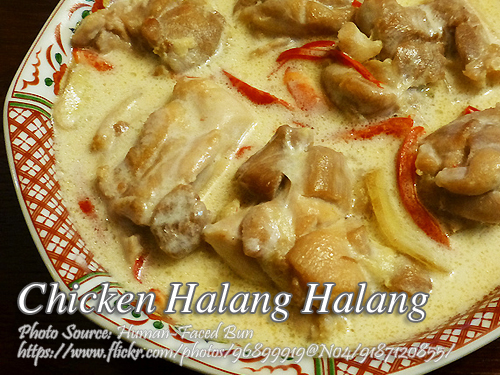
Chicken halang halang is a Visayan chicken dish. Most dish from that region has coconut milk in their cooking. Actually it is very similar to ginataang manok or chicken stew with coconut milk known in most part of Luzon. The only difference is this halang halang dish is a spicy chicken stew in coconut milk. “Halang” means spicy in the Visayan dialect.
The recipe I have here is a simple procedure in cooking the dish where you only need to boil the chicken with ginger until tender, add the papaya, pour in the coconut milk and add the chili and chili leaves then season with salt and pepper until cooked. You can also do the extra step of sauteing the chicken first with garlic and onion before simmering and add the rest of the ingredients.
Chicken Halang Halang: A Spicy Visayan Chicken Stew
If you enjoy Filipino dishes with a little heat, chicken halang halang is one recipe worth trying. This Visayan chicken dish combines tender chicken, creamy coconut milk, ginger, green papaya, and chilies in a simple stew that is comforting but far from bland.
The first time you make it, you might wonder why such a short ingredient list can produce so much flavor. The secret is in the way the chicken is gently simmered with ginger before the coconut milk and chilies go in. As the chicken cooks, its juices become part of the broth, while the ginger helps give the dish a clean, savory aroma.
“Halang” means spicy in the Visayan dialect, which tells you right away what sets this dish apart. It is closely related to ginataang manok, the coconut milk chicken stew familiar in many parts of Luzon. Both are creamy and savory, but this Visayan version gets its character from chili, giving the stew a pleasant kick.
What Makes Chicken Halang Halang Different
At its heart, chicken halang halang is a rustic dish. It does not need complicated techniques, special equipment, or a long list of seasonings. In fact, the simple preparation is part of its charm.
Many Filipino regions have their own ways of cooking with coconut milk. In areas where coconut trees are abundant, gata naturally became an important part of everyday cooking. Coconut milk adds richness to soups, stews, vegetables, seafood, and meat without requiring a lot of additional fat.
The addition of chili changes the personality of the dish. Instead of being simply creamy, the coconut milk becomes a soothing contrast to the heat of siling labuyo. Ginger adds another layer of flavor and helps keep the stew from tasting heavy.
This is also why I like serving the dish with plenty of steamed rice. The rice mellows the heat and soaks up the creamy sauce beautifully.
How to Cook Chicken Halang Halang
Start by placing the chicken and sliced ginger in a large casserole. Add enough water to just cover the chicken. You don’t want to drown the meat in too much liquid because the goal is to build a flavorful cooking broth that will eventually blend with the coconut milk.
Bring the mixture to a gentle simmer over low heat. This part is easy to rush, but slow cooking makes a noticeable difference. A hard boil can make chicken release its juices too quickly and can leave the broth cloudy and the meat less tender. A gentle simmer gives the chicken time to soften while the ginger perfumes the cooking liquid.
When the chicken is almost tender, add the green papaya.
Adding the papaya later is important because it cooks more quickly than the chicken. If you put it in at the beginning, the pieces can become overly soft and fall apart before the meat is done. You want the papaya tender enough to absorb the broth while still holding its shape.
Once the papaya is cooked, pour in the coconut milk. Stir gently and add the siling labuyo and sili leaves. Season with salt and pepper, then continue cooking until everything is heated through and the flavors come together.
One thing I watch closely at this stage is the coconut milk. Keep the heat moderate and avoid aggressively boiling it for a long time. Coconut milk can separate when cooked too harshly, leaving an oily layer on top. The dish will still taste good, but a gentle simmer gives you a smoother, more pleasant sauce.
Getting the Right Amount of Heat
The beauty of chicken halang halang is that you can adjust the spiciness to suit your family.
Siling labuyo packs plenty of heat, so don’t feel that you have to use a large amount to make the stew spicy. If you’re new to cooking with bird’s eye chilies, start conservatively. You can always add more, but you can’t easily take the heat back out once it has infused into the broth.
For a milder version, you can reduce the amount of labuyo while keeping the sili leaves for their fresh, vegetal flavor. If you enjoy a fiery stew, add more chilies according to your tolerance.
A common beginner mistake is tasting the stew immediately after adding the coconut milk and deciding that it needs a lot more salt. Give it a little time first. As the ingredients continue to simmer, their flavors become more integrated. Taste again near the end and adjust the seasoning gradually.
An Optional Step for More Flavor
The straightforward boiling method works well, especially when you want an easy one-pot meal. But if you have a few extra minutes, you can sauté the chicken before adding the liquid.
Lightly browning the chicken creates additional savory flavors on the surface of the meat. This happens through browning reactions during cooking, which produce deeper aromas and a more developed taste. It is not essential for a traditional-tasting stew, but it can make the finished dish taste richer.
After browning, you can proceed with the ginger, water, papaya, coconut milk, and chilies as usual.
I would recommend the simple simmering method if you’re cooking this dish for the first time. Once you’re comfortable with the recipe, try the sautéed version and see which one your family prefers.
Choosing and Preparing the Ingredients
For chicken halang halang, bone-in chicken pieces are a good choice because they stay juicy during simmering and contribute flavor to the broth. Thighs and drumsticks are particularly forgiving for beginner cooks because they remain tender even when cooked a little longer.
Green papaya should be firm rather than soft and ripe. Peel it, remove the seeds, and cut it into fairly even pieces. Keeping the pieces similar in size helps them cook at roughly the same rate.
Fresh coconut milk gives the stew a wonderful richness, but canned coconut milk is perfectly practical for an everyday meal. If using canned gata, give it a good stir before adding it because the thicker coconut cream may settle separately.
Fresh ginger matters here, too. It provides more brightness and fragrance than powdered ginger, which is why I wouldn’t substitute the two if fresh ginger is available.
A Little More About Its Visayan Roots
There isn’t always a single origin story for traditional Filipino dishes like chicken halang halang. Recipes often travel between neighboring towns and families, changing slightly along the way. Ingredients that are plentiful locally tend to become part of the regional cooking style.
The Visayas is known for dishes that make good use of coconut, seafood, meat, vegetables, and locally grown chilies. Coconut milk is especially useful in home cooking because it turns simple ingredients into something rich and satisfying.
The word “halang” itself is a helpful clue to the dish’s identity. Rather than relying on a complicated spice mixture, the recipe lets chili provide the defining heat. That simplicity is something I appreciate about many Filipino home-cooked meals. You can taste the ingredients instead of having every flavor buried under seasoning.
Helpful Tips for First-Time Cooks
If your chicken seems to be taking longer than expected, don’t panic. Chicken pieces vary in size, and older or larger cuts can need more time to become tender. Keep the heat low and add a little water if the pot becomes too dry before the chicken is ready.
If the coconut milk looks slightly separated, reduce the heat and give the stew a gentle stir. It is usually a sign that the mixture has been cooked too vigorously rather than a reason to discard the dish.
For the best texture, avoid overcooking the papaya. It should be tender when pierced with a fork but not mushy. I also prefer adding the sili leaves toward the end so they retain some of their fresh flavor and color.
Most importantly, taste before serving. Salt brings the coconut milk, chicken, ginger, and chilies together, so proper seasoning can make the difference between a flat-tasting stew and one that makes you reach for another spoonful.
Serving Chicken Halang Halang
Serve chicken halang halang hot with freshly cooked rice. The creamy, spicy sauce is meant to be spooned over the rice, where its richness is balanced by the mild grains.
If you’re sensitive to spicy food, a little extra rice can help tame the heat. For those who love chilies, keep a few fresh ones on the side for an additional kick.
What I like most about chicken halang halang is that it feels like the kind of meal that belongs at the family table. It is uncomplicated, hearty, and adaptable. You don’t need restaurant-style techniques to make it well. With gentle simmering, properly timed ingredients, and careful seasoning, a few humble ingredients can become a deeply satisfying Filipino stew.
And once you get comfortable with the basic method, you can adjust the heat, experiment with the chicken cuts, or try the sautéing step to make the recipe your own.
How to Cook Chicken Halang-Halang
Ingredients
- 1 whole dressed chicken cut into serving pieces
- 1 Tablespoon ginger crushed
- 1 pc small green papaya peeled and sliced into 2 inch slices
- 2 cups coconut milk
- 5 pcs bird's eye chili or siling labuyo chopped
- 1 cup sili leaves chili pepper leaves
- salt and pepper to taste
Instructions
How to Cook Chicken Halang Halang:
- In a large casserole, put together chicken and ginger.
- Put in enough water just to cover chicken.
- Simmer over low fire, when chicken is almost tender, add papaya.
- When papaya is cooked, pour in the coconut milk, add siling labuyo, sili leaves and season with salt and pepper. Makes 6 servings.
Notes
Simmer the Chicken Gently
Cook the chicken over low heat instead of letting it boil rapidly, as gentle simmering helps the meat become tender without turning tough. Keep the liquid at a soft bubble and check the chicken with a fork as it cooks. If the broth reduces too quickly, add a little water to keep the chicken from drying out.Add the Papaya at the Right Time
Add the green papaya when the chicken is almost tender so it has enough time to cook without becoming mushy. Cut the pieces into similar sizes so they soften evenly in the broth. Avoid adding the papaya too early because prolonged cooking can cause it to break apart.Keep the Coconut Milk From Boiling Hard
Once you add the coconut milk, lower the heat and let the stew simmer gently until the flavors come together. A vigorous boil can cause the coconut milk to separate and leave an oily layer on the surface. Taste near the end and adjust the salt, pepper, and chilies gradually to get the right balance of creamy, savory, and spicy flavors.


i always copy a recipe that been posted. I am interested to have a mini ecook book.. Is it free?
@emma jamero
Yes it’s free. Just subscribe to our mailing list.