
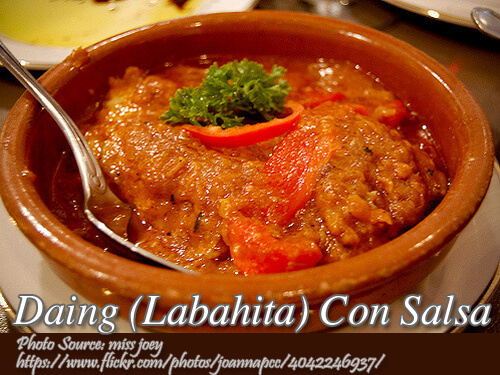
This daing na labahita con salsa recipe is a counterpart and local version of the popular Spanish dish called Bacalo a la Vizcaina. Compared to the pricey dish, this recipe uses sun dried and salted labahita or surgeon fish which is cheaper than the dried codfish which is usually imported.
What Is Daing na Labahita Con Salsa?
Daing na Labahita con salsa is a Filipino fish dish that combines the savory flavor of dried, salted labahita with a rich tomato sauce, tender potatoes, and sweet green peas. It is a local take on the Spanish dish Bacalao a la Vizcaína, traditionally prepared with salt cod and a flavorful sauce. By using locally available dried fish instead of imported cod, this recipe offers a more affordable way to enjoy a dish inspired by Spanish cooking.
What makes this recipe special is the balance of flavors. The fish brings a deep, salty taste, while the tomato sauce adds a little sweetness and acidity. Potatoes make the dish more filling, and green peas provide a pop of color and mild sweetness.
If you’re new to cooking dried fish, don’t worry. The preparation is straightforward, and a few simple techniques will help you manage the saltiness and get a flavorful sauce without making it too watery.
Why You’ll Love This Daing na Labahita Con Salsa Recipe
One of the best things about this dish is how it transforms a humble ingredient into something that feels special enough for a family gathering. Dried and salted labahita has a concentrated flavor that fresh fish doesn’t quite offer. Once simmered with tomato sauce, garlic, onions, and bay leaves, it becomes part of a hearty, comforting meal.
It’s also a practical recipe for home cooks who want to stretch their grocery budget. Imported salt cod can be expensive, but dried labahita offers a more accessible alternative in many Philippine markets. Serve it with freshly cooked rice, and the savory tomato sauce becomes just as welcome on the plate as the fish itself.
You can prepare the dish ahead of time, too. The sauce and fish have time to mingle as the dish rests, making the leftovers especially enjoyable when reheated gently.
Choosing and Preparing the Dried Labahita
The quality of your dried fish makes a difference in the finished dish. Look for labahita that has been properly dried and salted, with a clean, pleasantly briny smell. Avoid fish with an unusually rancid odor or signs of spoilage. Since drying and salting methods vary, the amount of salt in each piece can differ considerably.
Before cooking, soak the daing in three cups of water mixed with one tablespoon of vinegar for 15 to 20 minutes. Change the vinegar solution three times, then drain the fish well.
This soaking process helps remove excess surface salt and some of the strong dried-fish aroma. The vinegar adds mild acidity, although it won’t completely eliminate the fish’s characteristic smell or flavor. Changing the solution gives the salt and other soluble compounds fresh water to move into, rather than leaving the fish in increasingly salty liquid.
After soaking, boil the fish in three cups of fresh water for 10 to 15 minutes. Drain it before adding it to the sauce. This extra step helps soften the dried fish and further reduces excess salt, giving you more control over the final seasoning.
Keep in mind that dried fish can still be quite salty after soaking and boiling. If your pieces are particularly salty, taste a small flake after boiling before deciding how much additional seasoning the dish needs.
Building the Flavor of Daing na Labahita Con Salsa
The sauce is what brings all the ingredients together. Start by sautéing the garlic and onion until fragrant and softened. Garlic adds a savory aroma, while the onion contributes sweetness as it cooks. Avoid browning the garlic too much because burnt garlic can leave a bitter taste in the tomato sauce.
Add the potatoes and green peas, stirring to coat them in the aromatics. Let the potatoes cook briefly in the mixture before adding the tomato sauce. This gives them a chance to absorb some of the flavors from the pan.
Next, add the prepared labahita, tomato sauce, bay leaves, and one cup of water. Stir gently to distribute the fish without breaking it into too many small pieces.
The bay leaves provide a subtle herbal aroma that complements the tomato sauce and dried fish. They shouldn’t dominate the dish, so there’s no need to add too many. Remember to remove them before serving.
Bring the mixture to a gentle simmer rather than a vigorous boil. Slow, steady cooking allows the potatoes to become tender and gives the fish time to absorb some of the sauce. A hard boil can cause delicate pieces to break apart, leaving you with a less attractive finished dish.
How to Get a Thick, Flavorful Tomato Sauce
As the dish simmers, the tomato sauce gradually reduces and becomes more concentrated. This happens because some of the water evaporates, leaving behind a thicker mixture with a fuller flavor.
Stir occasionally, scraping the bottom of the pan to prevent the sauce from sticking. If it becomes too thick before the potatoes are tender, add a small splash of water. If the potatoes are already cooked but the sauce looks thin, continue simmering uncovered for a few minutes.
The potatoes also help give the sauce body as they soften. A little starch released into the liquid can make it feel fuller without needing flour or cornstarch.
This is an important technique for beginners to understand: adding more tomato sauce isn’t always the answer to a thin consistency. Sometimes, the dish simply needs a little more time for excess moisture to evaporate.
Once the sauce reaches your preferred consistency, season with salt, sugar, and pepper to taste. Add the salt sparingly, especially if the fish still has a strong salty flavor. A small amount of sugar can soften the sharp acidity of the tomatoes, but the goal isn’t to make the sauce sweet. Black pepper adds gentle warmth and rounds out the flavors.
Common Mistakes to Avoid When Cooking Daing na Labahita Con Salsa
The most common mistake is seasoning too early. Because dried fish is preserved with salt, adding the usual amount of salt before tasting can make the finished dish unpleasantly salty. Wait until the sauce has simmered and reduced before making your final adjustments.
Another mistake is rushing the sauce. If you turn the heat too high to thicken it quickly, the bottom may scorch while the potatoes remain firm. Keep the heat moderate and give the ingredients enough time to cook together.
It’s also worth paying attention to the potatoes. Cut them into reasonably even pieces so they cook at approximately the same rate. Smaller cubes will soften faster, while larger chunks may need more simmering time. If you prefer your potatoes to hold their shape, avoid stirring too aggressively once they begin to soften.
Finally, don’t skip the initial soaking and boiling steps. Although they add preparation time, they make the fish easier to manage and help prevent excessive salt from overwhelming the sauce.
A Filipino Take on a Spanish-Inspired Classic
The idea behind this dish reflects a familiar part of Filipino food history. Spanish colonial influence introduced and popularized many cooking traditions and ingredients in the Philippines, and these influences gradually adapted to local tastes and available ingredients.
Bacalao a la Vizcaína is associated with Basque cooking in Spain, where salt cod is prepared with a rich sauce. Recipes vary by region and household, and ingredients can differ depending on the version. Filipino preparations inspired by Spanish dishes often make practical substitutions based on what local markets offer.
Daing na labahita con salsa is a good example of this kind of adaptation. Rather than relying on imported cod, it uses salted, dried labahita, a locally available fish. The result isn’t identical to the Spanish original, but it follows a similar idea: preserved fish cooked in a flavorful sauce.
It’s also a reminder that Filipino home cooking has long involved making the most of available ingredients. A dish doesn’t need expensive imported seafood to become memorable. Careful preparation, balanced seasoning, and a little patience can turn everyday ingredients into a satisfying meal.
What to Serve With Daing na Labahita Con Salsa
Steamed white rice is the natural companion to this dish. Its mild flavor balances the savory fish and tomato sauce, while its soft texture soaks up every bit of the sauce. Garlic rice is another option if you’d like a more aromatic meal, although plain rice lets the flavors of the fish shine through.
For a lighter contrast, serve the dish with sliced tomatoes, fresh cucumber, or a simple vegetable side. These fresh accompaniments add crispness and help balance the richness of the sauce.
Just before serving, sprinkle chopped green onions over the top. They add a fresh, mildly sharp flavor that brightens the finished dish. Add them at the end rather than during the long simmer so their color and freshness remain noticeable.
Storing and Reheating Leftovers
Allow leftovers to cool slightly, then transfer them to a clean, covered container and refrigerate within two hours of cooking. For the best quality and safety, eat refrigerated leftovers within three to four days.
When reheating, warm the fish and sauce gently in a covered pan over low to medium-low heat. Add a tablespoon or two of water if the sauce has thickened too much in the refrigerator. Stir carefully to keep the fish and potatoes from breaking apart.
You can also reheat individual portions in the microwave, stirring gently halfway through and checking that the food is heated thoroughly. Avoid repeated cycles of cooling and reheating, since these can affect both food safety and texture.
A Simple, Satisfying Fish Dish for the Family
Daing na labahita con salsa brings together the bold flavor of dried fish and the familiar comfort of tomato sauce, potatoes, and green peas. With a little preparation, the saltiness becomes easier to manage, the sauce develops a richer flavor, and the ingredients come together in a dish that’s both practical and satisfying.
If this is your first time cooking with dried labahita, take your time with the soaking and taste before adding the final seasonings. Those small details make a real difference. Serve it hot with rice, finish with fresh green onions, and enjoy a Filipino home-cooked dish that makes the most of simple, accessible ingredients.
How to Cook Daing na Labahita Con Salsa
Ingredients
- 1 pc medium daing na labahita sun dried surgeon fish, cut into large squares
- 3 Tbsp. vinegar
- 8 cloves garlic crushed
- 1 pc medium onion sliced
- 3 pcs small potatoes cut into 4
- 1/4 cup cooked/frozen green peas
- 1 can Tomato Sauce (227grams)
- 2 pcs laurel leaves
- 4 stalks green onions cut into 1 inch pieces
Instructions
How to cook Daing na Labahita Con Salsa:
- Soak daing in 3 cups water with 1 Tbsp. vinegar for 15-20 minutes.
- Change vinegar solution 3 times. Drain. Boil daing in 3 cups water for 10-15 minutes. Drain.
- Saute garlic, onion, potatoes and green peas. Add tomato sauce, daing, laurel leaves and 1 cup water. Simmer until the sauce is thick.
- Season with salt, sugar and pepper according to taste. Add green onions just before serving.
Notes
Soak the Dried Fish Properly
Soak the dried labahita in water and vinegar for 15 to 20 minutes, changing the solution three times to help remove excess salt. Boil the fish in fresh water for 10 to 15 minutes before adding it to the sauce. Since saltiness varies, taste a small piece after boiling so you can adjust the seasoning later.Simmer the Sauce Until Thick
Let the tomato sauce simmer gently so the flavors meld and the potatoes become tender without breaking apart. If the sauce is too watery, cook it uncovered for a few more minutes to allow excess moisture to evaporate. If it thickens too quickly before the potatoes are cooked, add a little water and continue simmering.Season Gradually for Balanced Flavor
Add salt, sugar, and pepper only after the sauce has simmered, since the dried fish already contributes plenty of saltiness. Start with a small pinch of sugar to balance the tomatoes' acidity, then taste and adjust as needed. Sprinkle chopped green onions just before serving to add a fresh flavor and a pop of color.



Your Comment Here..yummy recipe tnx..😀😀😀