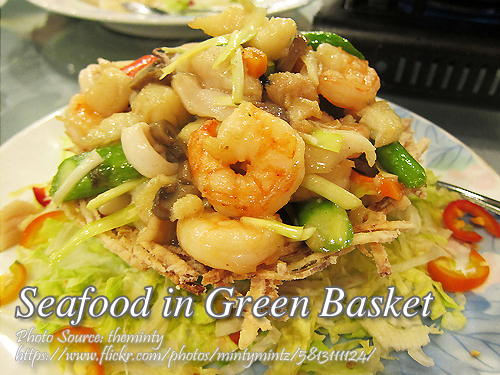
Seafood in green basket is a seafood mix of shrimp, fish fillet, scallops with vegetables such as snow peas and cashew nuts. It is then filled in a miniature baskets made from potatoes, kangkong leaves and cornstarch mixture. The basket is edible and it is made from grated potatoes with kangkong then pressed with two strainers then fried until crispy and golden brown.
Seafood in Green Basket with Crispy Potato Baskets
If you’re looking for a dish that’s as impressive on the table as it is delicious, this Seafood in Green Basket recipe deserves a spot on your menu. Combining succulent shrimp, tender fish fillet, sweet scallops, crisp snow peas, and crunchy cashew nuts, this seafood specialty is served in an edible basket made from potatoes and kangkong leaves.
The first time I made Seafood in Green Basket, I was honestly more curious about the basket than the filling. An edible serving vessel sounds fancy, but it’s surprisingly achievable even for beginner cooks. Once I saw the potato strands transform into a crisp golden shell in the hot oil, I understood why this dish often appears during special family gatherings and celebrations.
What makes this recipe memorable is the contrast of textures. You get the crunch from the basket, the tenderness of the seafood mixture, and the freshness of the vegetables all in one bite. It’s elegant enough for guests but simple enough to prepare at home with a little patience.
The Story Behind Seafood in Green Basket
Many Filipino seafood dishes focus on highlighting the natural sweetness of fresh ingredients. This recipe follows the same principle while adding a creative presentation inspired by Chinese-Filipino banquet-style cooking. During the 1980s and 1990s, edible baskets made from vegetables became popular in restaurants because they transformed ordinary stir-fries into eye-catching centerpieces.
The concept of serving food in edible containers is not unique to the Philippines. Various Asian cuisines use vegetable cups, taro nests, or crispy noodle baskets to add texture and visual appeal. In this version, potatoes and kangkong leaves work together to create a delicate yet sturdy basket that complements the seafood filling beautifully.
Today, Seafood in Green Basket remains a wonderful dish for holidays, birthdays, and family reunions. Despite its elegant appearance, it relies on simple ingredients that are easy to find in local markets.
Why Marinating the Seafood Matters
One of the most important steps in making Seafood in Green Basket is marinating the shrimp and fish with calamansi juice and salt. This simple process does more than add flavor.
The acidity of the calamansi helps remove any lingering fishy smell while lightly seasoning the seafood. It also enhances the natural sweetness of the shrimp and fish without overpowering them. During testing, I noticed that even a short marinating time resulted in a cleaner and fresher flavor.
The scallops are treated differently by soaking them in milk. This technique is commonly used in seafood preparation because milk helps mellow strong odors while keeping delicate seafood moist. After draining the scallops, they retain their sweet flavor and tender texture.
The key is not to marinate too long. Excessive exposure to acidic ingredients can begin to alter the texture of seafood, making it slightly mushy.
Making the Perfect Seafood in Green Basket
The star of Seafood in Green Basket is undoubtedly the crispy edible basket. While it may look complicated, the process becomes straightforward once you understand how the ingredients work together.
Grated potatoes naturally contain starch, but removing excess liquid is essential. If too much moisture remains, the basket may become soft or break apart during frying. After draining the potatoes, mixing them with cornstarch creates a stronger structure.
The cornstarch acts like a binder, helping the potato strands cling together as they cook. Meanwhile, the kangkong leaves contribute color and subtle flavor while reinforcing the basket’s shape.
Using two strainers is a clever technique. The larger strainer serves as the mold, while the smaller one presses the mixture into an even layer. This creates a uniform thickness that cooks consistently.
When lowering the strainers into very hot oil, hold them firmly. The heat immediately begins setting the starches and crisping the potato strands. If the oil is not hot enough, the basket may absorb excess oil and become greasy instead of crisp.
As the potatoes turn golden brown, you’ll notice the basket becoming firmer. That’s a sign that the moisture has evaporated and the structure has developed the crunch needed to support the filling.
Common Mistakes When Preparing Seafood in Green Basket
One mistake beginners often make is overcrowding the pan during stir-frying. Seafood cooks quickly, and too much food in the wok can lower the temperature.
Instead of searing, the ingredients begin to release liquid and steam. The result is a watery filling that lacks the slightly caramelized flavor that high-heat cooking provides.
Another common issue occurs when the potato mixture is packed too thickly into the strainer. Thick baskets may brown on the outside while remaining soft inside. Keeping the layer relatively even helps achieve a consistent crisp texture throughout.
It’s also important not to overcook the seafood. Shrimp become rubbery, fish can break apart, and scallops lose their delicate tenderness when exposed to heat for too long. The brief cooking time in Seafood in Green Basket is intentional and helps preserve the quality of each ingredient.
Stir-Frying the Seafood Filling
Once the baskets are finished, the seafood filling comes together quickly.
Heating both cooking oil and sesame oil creates a balanced flavor profile. The neutral oil handles the high cooking temperature, while the sesame oil contributes a subtle nutty aroma.
The shrimp, fish, and scallops only need a couple of minutes over high heat. You’ll notice the shrimp turning pink, the fish becoming opaque, and the scallops developing a slightly firm texture.
Adding snow peas near the end keeps them vibrant and crisp. Their freshness contrasts nicely with the richness of the seafood. The Hoisin sauce brings a hint of sweetness and savory depth that ties everything together without overwhelming the delicate flavors.
This combination is what makes Seafood in Green Basket so satisfying. Every ingredient maintains its individual character while contributing to the overall harmony of the dish.
Serving Seafood in Green Basket
Presentation is a big part of the appeal of Seafood in Green Basket. Nestling each basket on a bed of shredded lettuce not only makes the plate attractive but also helps keep the basket stable.
The filling should be added just before serving. If the seafood mixture sits in the basket for too long, moisture can gradually soften the crispy shell. Serving immediately ensures the best contrast between the crunchy basket and tender filling.
I like bringing the baskets directly from the kitchen to the table while they’re still hot. Guests are often surprised to discover that the basket itself is edible, and it usually becomes the highlight of the meal.
Why You’ll Love Seafood in Green Basket
Seafood in Green Basket is proof that special dishes don’t always require complicated ingredients. With a few simple techniques and careful attention to texture, you can create a restaurant-worthy meal right in your own kitchen.
What I appreciate most about this recipe is how it transforms everyday ingredients into something memorable. The crispy potato basket adds visual appeal, the seafood mixture delivers fresh flavors, and the vegetables provide balance and color.
For beginner cooks, this dish is an excellent opportunity to learn useful techniques such as marinating seafood, controlling frying temperatures, and stir-frying over high heat. Once you’ve mastered those skills, you’ll find yourself returning to Seafood in Green Basket whenever you want to serve something a little extra special.
Whether it’s for a family celebration or a weekend gathering, this seafood basket recipe offers a combination of flavor, texture, and presentation that never fails to impress.
How to Cook Seafood in Green Basket
Ingredients
For the Filling:
- 250 grams uncooked shrimp shelled and deveined
- 3 tablespoons cooking oil
- 250 grams fish fillets cut in 1-inch pieces
- 1/4 teaspoon sesame oil
- juice from 4 pieces calamansi
- 100 grams snow peas chicharo
- 1/2 teaspoon salt
- 1/4 cup whole cashew nuts
- 100 grams scallops
- 1 1/2 tablespoons Hoisin sauce
- 2 tablespoons milk
- 1 teaspoon sugar
Ingredients For the Potato Baskets:
- 4 pcs large potatoes pared and coarsely grated (like atchara)
- 3 tablespoons comstarch
- 1 cup shredded kangkong leaves no stems
- 3 tablespoons cornstarch
- Oil for deep-frying
- Garnish: shredded lettuce leaves
- Oil for deep-frying
Instructions
How to cook Seafood in Green Basket
- Mix shrimp, fish, calamansi juice and salt in a bowl.
- Put scallops in another bowl and cover with milk.
- Allow both mixtures to marinate while you make the potato baskets.
- Drain off liquid from the grated potatoes.
- Combine potatoes, kangkong leaves and cornstarch in a bowl.
- Stir well to distribute kangkong leaves in the mixture.
- Lightly grease with oil and put in a medium or small strainer.
- Place 1/4 of the potato-kangkong mixture in the medium- sized strainer.
- Press the smaller-sized strainer onto the potato mixture to allow it to take the shape of the strainer.
- Holding the strainer tightly by the handles, lower the strainers into very hot oil to fry.
- Cook the mixture until the potatoes turn golden brown.
- Tap out onto a baking sheet lined with absorbent paper.
- Repeat procedure until you have four baskets.
- Keep the baskets in a 350°F oven while cooking the seafood filling.
- Heat cooking and sesame oils in a wok or frying pan.
- Add drained shrimp, fish and scallops and stir-fry for 2 minutes at high heat.
- Add snow peas and Hoisin sauce. Stir-fry for 30 seconds more.
- To serve, anchor each basket on shredded lettuce leaves on a dinner plate.
- Fill each basket with seafood filling. Serve hot.
Notes
Drain the Potatoes Well
After grating the potatoes, squeeze or drain off as much liquid as possible before mixing them with the kangkong leaves and cornstarch. Excess moisture can prevent the basket from crisping properly and may cause it to fall apart during frying. Drier potatoes create a sturdier basket with a light and crunchy texture.Use Very Hot Oil for Frying
Make sure the oil is fully heated before lowering the strainers into the pan. Hot oil helps the potato strands set quickly, creating a basket that holds its shape and absorbs less oil. If the oil is not hot enough, the basket can become greasy and soft instead of golden and crisp.Avoid Overcooking the Seafood
Cook the shrimp, fish, and scallops over high heat for only a short time to keep them tender and juicy. Seafood continues to cook from residual heat even after it leaves the pan, so it's best to remove it as soon as it's done. Overcooked seafood can become rubbery and take away from the delicate flavors of the dish.