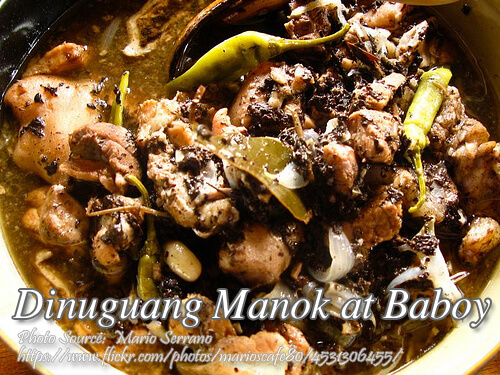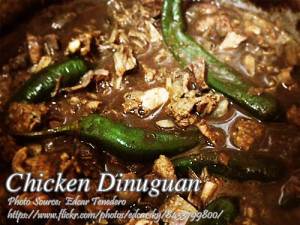
This dinuguang manok at baboy is a mixed version of dinuguan is a combination of chicken meat, chicken blood and pig’s internal organs like the liver,intestines, lungs and spleen. Unlike the dinuguang manok, where only chicken meat, blood and internal organs are utilized, this is similar to the traditional pork dinuguan but replaced pork meat and blood with chicken meat and blood. You also have to clean the pig’s internal organs thoroughly before cooking to get rid of the odor and parasites.
A Family Favorite: Dinuguang Manok at Baboy
Growing up in Pampanga, weekends at my Uncle Ramon’s house always meant something hearty simmering on the stove. While my cousins ran around the backyard, I would stay in the kitchen with my Tita Lorna, watching her stir a dark, glossy stew that filled the house with the smell of vinegar and garlic. That dish was Dinuguang Manok at Baboy, a rich combination of chicken meat, chicken blood, and pig’s internal organs that brought together two well-loved Filipino classics.
My uncle used to say that this version was “best of both worlds.” It has the depth of traditional pork dinuguan but with the lighter texture of chicken. The first time I tried cooking it on my own, I followed Tita Lorna’s advice to the letter. She told me not to rush the sautéing and to be patient when simmering. Those small details, she said, are what make the stew flavorful instead of overpowering.
What Makes Dinuguang Manok at Baboy Unique
Most of us are familiar with pork dinuguan or even dinuguang manok. This mixed version stands somewhere in between. Instead of using pork meat and pork blood, this recipe uses finely chopped chicken meat and chicken blood but keeps the character of classic pork dinuguan by adding pig’s internal organs such as liver, intestines, lungs, and spleen.
When my sister Marites visited Nueva Ecija, she learned from her friend Aling Cely that combining chicken and pork offal creates a more balanced flavor. Chicken absorbs seasoning quickly and becomes tender faster, while the pork innards give the stew that deep, earthy taste dinuguan is known for.
For beginners, this may sound intimidating. But once you understand the process, it becomes surprisingly manageable.
Preparing the Pork Internal Organs Properly
If there is one step you should never skip when cooking Dinuguang Manok at Baboy, it is cleaning the pig’s internal organs thoroughly. My cousin Joel once hurried this part and the stew ended up with a strong odor. Since then, our family has been extra careful.
Wash the intestines, liver, lungs, and spleen several times under running water. Some cooks rub them with salt and vinegar to help remove impurities and unwanted smell. This works because salt acts as a natural abrasive while vinegar helps neutralize odors and reduce bacteria. Proper cleaning not only improves flavor but also ensures the dish is safe to eat.
Taking time with this step sets the foundation for a delicious and worry-free meal.
Building Flavor the Right Way
The cooking process for this chicken and pork blood stew begins with sautéing garlic, onions, and tomatoes. My Uncle Ramon always insisted that the garlic should turn lightly golden before adding the onions. This releases its aroma and prevents bitterness. The tomatoes are cooked until soft so they blend into the sauce, giving it natural sweetness and slight acidity.
Next, add the finely chopped chicken meat and the prepared pork organs. Stir well and cover the pot for a few minutes. Covering helps trap steam, which starts tenderizing the meat and innards without drying them out.
Once the meat begins to cook through, pour in vinegar, then season with salt, pepper, bay leaf, and oregano. One important tip I learned from Tita Lorna is not to stir immediately after adding vinegar. Let it simmer untouched for a few minutes. This allows the vinegar’s sharp taste to mellow as it cooks off, resulting in a smoother and well-rounded sauce.
Simmer the mixture until the meat becomes tender. Slow cooking helps break down the connective tissues in the organs, making them softer and more pleasant to eat.
Adding the Blood for That Signature Texture
What gives Dinuguang Manok at Baboy its signature thick and velvety texture is the chicken blood. Before adding it to the pot, dilute it with a cup of water. This prevents it from clotting too quickly when it hits the heat.
Once poured in, stir continuously for about ten minutes. Constant stirring ensures the blood blends evenly into the stew and thickens it without forming lumps. The gentle simmer also allows the flavors to come together, creating that savory, slightly tangy taste we associate with this Filipino favorite.
The result should be a rich, dark sauce that coats the meat beautifully.
A Dish Rooted in Filipino Tradition
Dinuguan has long been part of Filipino celebrations, from fiestas to simple family gatherings. It is a dish born from practicality, using every part of the animal so nothing goes to waste. In many provinces, variations exist depending on available ingredients. Some are spicier, others are heavier on vinegar.
This mixed version reflects that same resourcefulness. By combining chicken and pork offal, families stretch ingredients while creating something uniquely flavorful. My brother Carlo likes to pair it with puto, while my lola preferred it with steaming white rice.
For beginners, cooking Dinuguang Manok at Baboy may feel like a bold first step into traditional Filipino cuisine. But with careful cleaning, proper sautéing, and patient simmering, it becomes an approachable and rewarding dish. Serve it hot, good for about six persons, and enjoy it with people you love. After all, like many Filipino recipes, it tastes even better when shared.
How to Cook Dinuguang Manok at Baboy
Ingredients
- 1 cup finely chopped pig's internal organs liver, spleen, intestines
- 1/2 cup sliced tomatoes
- 2 cup chicken meat finely chopped
- 1/2 cup sliced onions
- 1/2 cup vinegar
- 1 head garlic chopped finely
- 1 cup chicken blood in 1 cup water
- 1 pc laurel leaf
- few oregano leaves
- salt vetsin, pepper
Instructions
How to Cook Dinuguang Manok at Baboy:
- Saute garlic, onions, and tomatoes. Add finely chopped chicken meat and pig's internal organs (liver, spleen, intestines) and stir.
- Cover and continue cooking for a few minutes more.
- Add vinegar, salt, pepper, bay leaf and oregano and slimmer until meat is tender.
- Add chicken blood diluted with a cup of water.
- Continue stirring for 10 minutes Serve hot. Good for 6 persons.
Notes
Cooking Tips:
Clean and Prep the Pork Organs Thoroughly
Take time to wash the intestines, liver, lungs, and spleen under running water several times to remove any residue. Rubbing them with salt and rinsing with vinegar helps neutralize odor and improves overall flavor. Proper cleaning ensures your dinuguang manok at baboy tastes rich and savory instead of gamey.Let the Vinegar Cook Undisturbed
After adding vinegar to the pot, avoid stirring right away and let it simmer for a few minutes. This allows the acidity to mellow and prevents the dish from tasting too sharp or raw. Giving the vinegar time to cook properly results in a more balanced and well-rounded stew.Stir Constantly After Adding the Blood
Dilute the chicken blood with water before pouring it into the simmering mixture to prevent it from curdling too quickly. Once added, stir continuously over gentle heat so the sauce thickens evenly and stays smooth. This technique gives dinuguang manok at baboy its signature glossy texture without unwanted lumps.