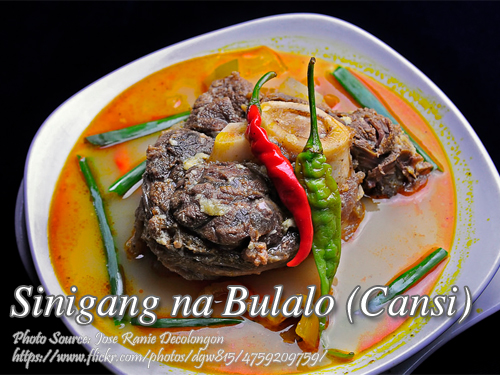
Sinigang na bulalo (cansi) is a famous beef soup dish of Iloilo and Bacolod. It is suppose to be the combination of two well known Filipino dishes, beef bulalo (beef shank with marrow soup) and beef sinigang (beef in sour broth). But actually the vegetables used in sinigang and bulalo are nowhere near to the cansi.
The ingredients that are used the cansi are lemon grass, annato, langka and batwan (or batuan) that are not found or used in bulalo or sinigang. Batwan is a souring agent used by Ilonggos and the areas of west Visayas. (In this recipe kamias is used as a substitute for the batwan. Just in case kamias is also not available, instant sinigang mix can be used.)
So if you don’t live on these areas, I think this fruit is unknown to you. Usually the souring agents are tamarind, kamias, guava and some use unripe mangoes or probably what souring agent is indigenous to the region. If this dish is not familiar with you, I think you should give this nice dish a try with its aromatic flavor because of the lemon grass and reddish/yellowish broth that is appetizing.
Sinigang na Bulalo, the Ilonggo Comfort Soup Worth Discovering
If you’ve ever found yourself choosing between a comforting bowl of bulalo and a hearty serving of sinigang, Sinigang na Bulalo might be the best of both worlds. Inspired by the famous Ilonggo dish called Cansi, this flavorful soup combines tender beef shank, rich bone marrow, and a pleasantly sour broth that warms you from the very first spoonful.
The first time I cooked this dish, I expected it to taste exactly like the usual beef sinigang. It didn’t. The broth was lighter yet deeper in flavor, with a distinct citrusy aroma from lemongrass and a subtle sweetness from young jackfruit. The sourness was different too. Instead of the familiar tamarind flavor, the broth had a cleaner, brighter tang that made every bite of beef taste richer instead of overpowering it.
That’s what makes Sinigang na Bulalo such a memorable meal. It borrows inspiration from two classic Filipino soups but develops its own unique personality through ingredients commonly used in Western Visayas.
The Story Behind Sinigang na Bulalo
Cansi has long been associated with Iloilo and Bacolod, where it has become one of the region’s signature comfort foods. While many describe it as a cross between bulalo and sinigang, that comparison only tells part of the story.
Traditional Cansi relies on batuan, locally called batwan, a native fruit that gives the soup its signature sourness. Unlike tamarind, batuan provides a sharper but cleaner acidity that balances the richness of beef shank beautifully. Since fresh batuan isn’t widely available outside Western Visayas, many home cooks prepare Sinigang na Bulalo using fresh kamias instead. If neither fruit is available, a sinigang mix works surprisingly well and still produces a delicious soup.
Another characteristic that sets this dish apart is the addition of lemongrass, annatto seeds, and young jackfruit. These ingredients create layers of flavor that you won’t normally find in traditional bulalo or beef sinigang.
Why These Ingredients Work Together
One thing I noticed after making this recipe several times is how every ingredient has a specific purpose.
The beef shank slowly releases collagen while cooking. As the connective tissues soften, the broth becomes naturally silky without needing any thickener. The marrow inside the bones also melts gradually into the soup, adding richness that balances the sour broth.
Annatto seeds are first fried in oil to extract their natural color. This simple step creates the attractive golden-orange broth that makes the soup look as appetizing as it tastes. If you skip frying the seeds, you’ll miss much of the vibrant color because annatto pigments dissolve better in hot oil than in water.
Lemongrass contributes a gentle citrus aroma without making the soup taste like lemon. Lightly bruising the stalk before adding it helps release its fragrant oils, giving the broth a fresh scent that complements the beef.
Young jackfruit absorbs the flavorful broth while remaining pleasantly firm. It doesn’t simply add volume to the soup. Instead, it provides a subtle sweetness and texture that balances the tanginess.
Cooking Sinigang na Bulalo Successfully
Making Sinigang na Bulalo is easier than many beginners expect, especially when using a pressure cooker. The pressure dramatically shortens the cooking time while still producing fork-tender beef.
Start by heating cooking oil before frying the annatto seeds. After a minute or two, you’ll notice the oil turning deep orange. That’s your cue to remove the seeds since leaving them too long can introduce a slight bitterness.
Using the same oil, sauté the garlic and onions until fragrant before adding the tomatoes. Allow the tomatoes enough time to soften completely. As they break down, they’ll naturally enrich the broth and provide another layer of savory flavor.
When the beef shanks are added, avoid rushing this step. Sear every side until lightly browned. This creates additional flavor through caramelization, giving the finished broth more depth than simply boiling raw meat.
Add enough water to cover the beef before pressure cooking until tender. Depending on the size of the beef shanks, you may need a little more than thirty minutes. A good indicator is when a fork easily slides into the meat without resistance.
The Final Simmer Makes All the Difference
Once the beef is tender, the remaining ingredients come together quickly.
Add the bruised lemongrass, kamias or batuan, young jackfruit, salt, pepper, and chili peppers. At this stage, avoid covering the pot again if you’re using a pressure cooker.
I learned this lesson the hard way during one batch. I sealed the cooker again out of habit, and the jackfruit became overly soft while some pieces of beef started falling apart. A gentle simmer is all that’s needed. This allows the jackfruit to cook through while keeping both the vegetables and beef intact.
Taste the broth near the end rather than immediately after adding the souring agent. The acidity becomes more balanced as the ingredients simmer together. Sometimes I find that adding one or two extra pieces of kamias near the end brightens the soup without making it overly sour.
Common Mistakes Beginners Can Avoid
Many first-time cooks assume that more souring agent automatically makes a better soup. In reality, the richness of the beef should still shine through. Add the sour ingredient gradually and taste as you go.
Another common mistake is skipping the browning stage. Although it saves a few minutes, you’ll lose much of the rich beef flavor that develops during searing.
Some also overcook the young jackfruit. Properly cooked jackfruit should remain tender with a slight bite instead of becoming mushy.
It’s also worth skimming off excess foam after the beef begins cooking. Removing these impurities produces a cleaner-looking broth without affecting its rich flavor.
Helpful Ingredient Substitutions
One of the reasons I enjoy making Sinigang na Bulalo is that it’s surprisingly flexible.
Fresh batuan remains the traditional choice whenever available, but kamias is an excellent substitute because it provides a similar clean sourness. If both are unavailable, good-quality sinigang mix offers a practical alternative for busy home cooks.
If young jackfruit can’t be found, the soup will still taste delicious, although you’ll miss one of the signature textures that makes this Ilonggo specialty unique.
Fresh lemongrass is highly recommended instead of dried because its essential oils provide a brighter aroma that defines the dish.
Serving Sinigang na Bulalo
Like many Filipino soups, Sinigang na Bulalo is best served piping hot with plenty of steamed rice. The rich broth naturally soaks into the rice, making every spoonful satisfying.
The marrow inside the beef bones is often considered the highlight of the meal. Some gently scoop it onto warm rice before adding a spoonful of broth, while others stir it directly into the soup for an even richer flavor.
Leftovers taste even better the following day. After resting overnight, the flavors continue to develop, producing an even more balanced broth. Simply remove the layer of hardened fat before reheating, then warm the soup gently without bringing it to a vigorous boil.
Why Sinigang na Bulalo Deserves a Place on Your Table
If you’re looking to expand your collection of Filipino comfort food recipes, Sinigang na Bulalo is an excellent place to start. It offers everything people love about a hearty beef soup while introducing the distinct flavors of Western Visayas.
Its rich yet refreshing broth, tender beef, fragrant lemongrass, and pleasantly sour finish create a bowl that’s both comforting and exciting. Even if you can’t find traditional batuan, simple substitutions allow you to recreate much of the authentic experience right in your own kitchen.
Once you’ve tasted this Ilonggo favorite, you’ll understand why families continue to prepare it for weekend gatherings, rainy afternoons, and special occasions. Sometimes the most memorable recipes are the ones that introduce us to flavors beyond our own region, and this comforting bowl does exactly that.
How to Cook Sinigang na Bulalo (Cansi)
Ingredients
- 1 kilo Beef Shank with bone marrow
- 5 pcs large kamias or batwan souring agent for classic Ilonggo cuisine
- 1/4 kilo unripe jackfruit langka
- 2 stalks tanglad lemon grass, tie into knots
- 2 pcs medium size onions chopped
- 1 small head garlic minced
- 3 pcs tomatoes quartered
- salt and pepper to taste
- 3 pcs bird's eye chili peppers siling labuyo
- 1 Tbsp. of atsuete seeds Annato seeds
- 2 Tbsp. cooking oil
Instructions
How to cook Sinigang na Bulalo:
- In a pressure cooker, heat cooking oil and fry the annato seeds until the color is extracted to the oil. Remove the seeds from the oil and discard the seeds.
- In the same pressure cooker, saute garlic and onion until the garlic is slightly brown. Add in the tomatoes and saute for a minute. Then put the beef shank and sear on all sides until slightly brown.
- Add water just enough to cover the beef shank. Cover and pressure cook for 30 minutes or more until tender.
- If the meat is already tender, add in the tanglad, batwan (or kamias), salt, pepper, chili peppers and jack fruit. Simmer until the jackfruit is tender. (Don't put the lid this time or you will overcook the meat and the jackfruit.) Serve hot.
Notes
Choose Beef Shank with Bone Marrow
For the best Sinigang na Bulalo, use beef shank with plenty of bone marrow because it creates a naturally rich and flavorful broth. Look for pieces with a good balance of meat, connective tissue, and marrow for the most satisfying texture. As the beef cooks, the collagen breaks down and gives the soup a silky mouthfeel without needing any thickener.Add the Souring Agent Gradually
Whether you're using batuan, kamias, or sinigang mix, add the souring ingredient little by little and taste as you cook. The broth will become tangier as it simmers, so it's easier to increase the acidity than to fix an overly sour soup. This method helps keep the rich beef flavor balanced with the signature tartness.Simmer the Jackfruit Gently
Add the young jackfruit only after the beef has become tender so it keeps its shape and absorbs the flavorful broth. Let it simmer uncovered instead of pressure cooking again to prevent both the meat and jackfruit from becoming too soft. The result is a hearty bowl with tender beef, perfectly cooked jackfruit, and a well-balanced texture.