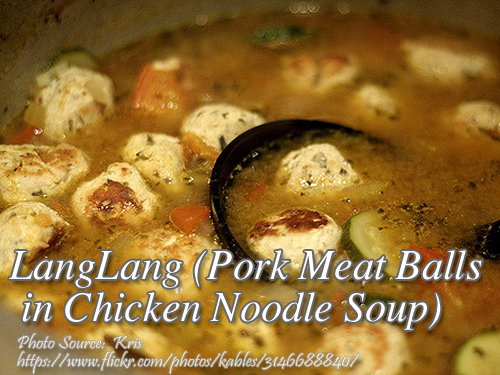
Langlang is a chicken noodle soup with pork meatballs. I think I cannot find a similar Filipino dish like this one. Anyway the way it is cooked is by making a chicken broth by boiling a whole chicken with celery, spring onions and peppercorns.
After the chicken is tender, remove the chicken from the broth and flake. Make meat balls by combining ground pork, shrimp, egg, salt and pepper then form into small balls. Boil the meatballs in the chicken broth then follow with sotanghon, tengang daga and flaked chicken. Season with fish sauce or patis then add the chicharo. To see the complete recipe with list of ingredients, continue reading.
A Warm Bowl of LangLang and a Taste of Home
Every time I prepare langlang, I am reminded of lazy Sunday afternoons in San Pablo when my Uncle Ramon would sit by the kitchen window and tell stories about how this comforting chicken noodle soup with pork meatballs became a quiet staple in our family. It was not a dish you would often find in carinderias, and even among my relatives, only a few knew how to prepare it well. My auntie Lorie liked to say that langlang was the kind of meal you discover only through someone’s patient hands, not from cookbooks or television shows.
What makes this particular soup special is how it feels both familiar and surprising. You get a savory broth, soft noodles, tender chicken flakes, and pork meatballs packed with shrimp. Simple ingredients, yet the flavors feel layered, maybe because so much care goes into preparing it.
The Story Behind It and Its Quiet Origins
When I asked my Lola Celing about the origins of langlang, she said it reminded her of old provincial kitchens where families stretched ingredients to make a meal that fed everyone. It sits somewhere between chicken mami and almondigas, but still holds its own identity. The mix of sotanghon, tengang daga, and meatballs might seem unusual to beginners, but this combination is what gives the soup its hearty character.
Some say that a version of this noodle soup dates back to early Chinese Filipino households where meatballs and broth-based dishes were common. Over time, locals adapted it to whatever ingredients they had. That slow evolution explains why langlang feels both familiar and unique. It carries a hint of history without being too complicated for home cooks.
Preparing It with Family Tricks and Kitchen Memories
The first time I tried making langlang, I followed the instructions of my cousin Pia, who learned it during her stay in Pampanga. She shared how her landlady, Aling Remy, would always start with a whole chicken instead of shortcuts because real flavor begins in the broth. I kept that lesson in mind, and I still do it the same way today.
You place the chicken in a pot with celery, spring onions, and peppercorns, then let it simmer until the meat turns tender enough to shred. Allowing the broth to cook slowly extracts the natural juices from the chicken, which gives the soup its depth. This technique works because time unlocks flavor. Rushing the broth often leads to something flat, and langlang deserves better than that.
Once the chicken is ready, the flaking part becomes almost therapeutic. In our household, it was the moment when everyone gathered around the table. Someone talked, someone helped, someone tasted. Cooking turned into community.
Meatballs that Bring the Heart of LangLang to Life
My brother Nico used to joke that the meatballs are the real stars of langlang, not the noodles. These little spheres are made by mixing ground pork, minced shrimp, egg, salt, and pepper. Combining pork and shrimp creates a tender and flavorful bite, which sets this soup apart from other noodle dishes. The egg holds everything together, making the meatballs soft but never crumbly.
When you drop them into the simmering broth, they firm up without turning tough. This is a simple technique but very effective. Poaching the meatballs directly in the broth infuses them with chicken flavor while also enriching the soup with the natural fat from the meat.
A Pot of LangLang that Feels Like Home
Once the meatballs are cooked, you add sotanghon and tengang daga. These noodles absorb the broth differently, giving the soup layers of texture. My sister Mara swears that tengang daga adds a touch of chewiness that makes the entire dish more satisfying. After that, you add the flaked chicken, season the broth with patis, and finish with chicharo. The trick is to avoid overcooking the vegetables so they stay crisp and bright.
Every time I serve langlang, I place toasted garlic and sliced spring onions on the side, just like how my grandmother taught me. The aroma alone can pull anyone into the kitchen. It is the kind of dish that reminds you of childhood, long afternoons, and stories told over steaming bowls of noodle soup.
A good pot of langlang is more than a recipe. It is a memory you can taste, a warm reminder that the simplest meals often carry the richest stories.
LangLang (Pork Meat Balls in Chicken Noodle Soup)
Ingredients
- 1 small whole dressed chicken
- 2 stalks celery
- 1 bunch spring onion
- 1/2 teaspoon peppercorns
- 1/2 kilo ground pork
- 1/3 kilo shrimp shelled and chopped
- 2 pcs eggs beaten
- 200 grams sotanghon soaked in water
- 10 grams tengang daga wood ear fungus, soaked in water
- 1 cup chicharo
- Patis or fish sauce
- 1 head garlic sliced thinly and fried till golden brown
- spring onion chopped
Instructions
How to cook langlang:
- In a casserole, put together chicken, celery, 1/2 bunch spring onion and peppercorns. Add about 12 cups water and bring to a boil. Lower heat and simmer till chicken is tender. Remove chicken and flake.
- Combine ground pork, shrimp, eggs, salt and pepper. Form into small balls about 1/2 inch. Set aside.
- Bring the chicken stock to a boil. Drop the pork and shrimp balls. Lower the heat and add the sotanghon, tengang daga and flaked chicken. Season with patis, add the chicharo last and do not overcook. Serve with the toasted garlic and spring onion on the side.
Notes
Cooking Tips:
Build a Flavorful Broth
Use a whole chicken to create a rich base because the bones release natural collagen that deepens the taste. Let the broth simmer gently so it stays clear and full-bodied. Avoid rushing this step since a slow cook brings out the signature warmth of langlang.Keep the Meatballs Tender
Combine pork and shrimp with just enough egg to bind them without making the mixture dense. Gently drop the meatballs into the simmering broth so they cook evenly and stay soft. Avoid overmixing the meat mixture because it can make the meatballs tough.Add the Noodles at the Right Time
Sotanghon and tengang daga soften quickly, so add them only when the meatballs are almost done. Let them soak up the broth but watch closely to prevent mushy texture. Proper timing keeps the noodles springy, which gives langlang its satisfying mouthfeel.