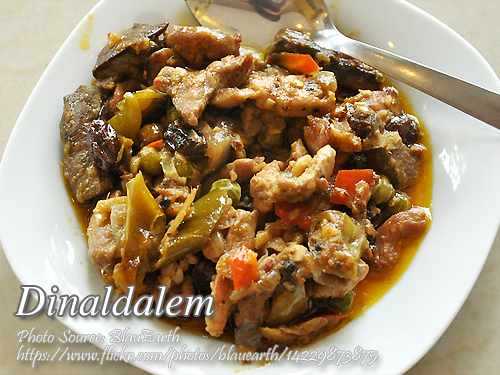
This pork meat and internal organs recipe is from Ilocos Region 1. This dinaldalem dish is very similar to pork igado but it is not combined with chick peas or garbanzos or maybe I’m wrong. I see some dinaldalem dishes that is mixed with chick peas and green peas, maybe this is a variation. The word dinaldalem comes from the Ilocano “dalem” which means liver.
Anyway dinaldalem is actually igado to non-Ilokanos and I think this is the reason why dinaldalem has many variations with regard to the ingredients used in cooking this dish.
Dinaldalem and a Memory from the Ilocos Kitchen
The first time I tasted dinaldalem was during a visit to my Uncle Rogelio’s home in Vigan. It was one of those slow provincial mornings where the kitchen smelled of garlic frying and freshly cooked rice steaming on the table. My Auntie Mila stood by the stove with a well-used kawali while my cousin Liza helped slice peppers on the wooden board.
She told me they were making dinaldalem, a traditional Ilocano dish made with pork and internal organs. At that time, I thought it looked a lot like pork igado. When I mentioned that, Uncle Rogelio chuckled and said many people outside the Ilocos Region actually think the same thing. In fact, for non-Ilocanos, this savory pork dish is often considered another version of igado.
What makes this Ilocano specialty interesting is how families cook it differently. Some add chickpeas or green peas while others keep the dish simple with just pork, heart, liver, and lungs. My aunt preferred the classic preparation without garbanzos because, according to her, the flavor of the meat stands out better.
The Ilocano Roots of Dinaldalem
The name dinaldalem comes from the Ilocano word “dalem,” which means liver. This explains why pork liver is one of the main ingredients in the dish. Over time, the recipe evolved depending on the cook and the household.
In many Ilocano homes, dishes that use pork organs are common because families traditionally made sure nothing from the animal went to waste. It was both practical and flavorful. The combination of lean pork with heart, lungs, and liver creates a dish that is rich, hearty, and deeply savory.
When my sister Ana later visited Laoag for work, she told me she tasted another version of dinaldalem served with green peas. The cook there explained that each town sometimes has its own twist. Some people even add a little vinegar or soy sauce, but the simple sautéed style remains the most traditional.
Cooking Dinaldalem the Traditional Way
One of the things I learned from Auntie Mila is that the cooking process of dinaldalem is simple but requires the right order of ingredients. She started by heating leaf lard with a little water in the frying pan. As the mixture heated, the fat slowly melted and released its rich flavor.
Using leaf lard may sound old-fashioned, but it works beautifully because it produces a deep pork taste that cooking oil cannot fully replicate. Once the fat is rendered, garlic is browned until fragrant. Browning garlic first builds the base flavor of the dish and gives the meat something aromatic to absorb.
After the garlic turns lightly golden, lean pork and sliced pork heart are added to the pan. These cuts are sautéed for a few minutes so they develop a light browning. This step is important because it seals the juices and adds more flavor to the dish.
Next, water is added and the pan is covered. The gentle simmer allows the pork and heart to soften slowly. Cooking them first makes sense because these cuts take longer to tenderize compared to liver and lungs.
Why the Cooking Technique Matters
A few minutes before the dish finishes cooking, the lungs and pork liver are added to the pan. My uncle explained that adding them later prevents them from becoming tough or grainy. Liver especially cooks very quickly, and if it stays in the pan too long it can turn dry and crumbly.
This technique is something many experienced cooks follow when making dinaldalem or other organ-based dishes. Timing ensures every ingredient keeps the right texture while blending flavors together.
Salt and pepper are added for seasoning, followed by green and red bell peppers. The peppers bring a slight sweetness and color to the dish. They are cooked briefly so they stay vibrant and slightly crisp.
When Auntie Mila finally lifted the lid, the aroma filled the entire kitchen. The pork, liver, and spices created a comforting smell that instantly made everyone gather around the table.
Serving the Dish at Home
The finished dinaldalem was served with a big bowl of steaming white rice, just like most Ilocano meals. The sauce was simple yet flavorful, and every bite had a mix of tender pork and rich liver.
Even now, whenever I cook this dish at home, I remember that morning in Vigan. My cousin jokingly called it the kind of food that tastes even better the next day because the flavors settle deeper into the meat.
If you are new to cooking Filipino dishes with pork organs, dinaldalem is a great place to start. The recipe is straightforward, the ingredients are easy to prepare, and the result is a comforting dish that reflects the resourceful and flavorful traditions of the Ilocos Region.
Sometimes the best recipes are the ones passed down through family kitchens, where simple ingredients turn into something truly memorable.
Dinaldalem
Ingredients
- 1/2 cup pork lungs chopped boiled
- 1 cup cubed pork liver soaked in 1/4 cup vinegar
- 1 1/2 teaspoons salt
- 1/4 teaspoon pepper
- 1/4 cup green sweet pepper cut into strip
- 1/4 cup red sweet pepper cut into strip
- 1/2 cup cut leaf lard small pieces
- 1/4 cup water
- 1 teaspoon crushed garlic
- 1/2 cup sliced lean pork
- 1/2 cup sliced pork heart
- 1/4 cup water
Instructions
How to Cook Dinaldalem:
- Heat leaf lard and water in a frying pan and cook until fat is extracted. Brown garlic in fat. Add lean pork and pork heart. Sauté for 5 minutes.
- Add water. Cover and cook 16 minutes over low heat. Add lungs and pork liver and cook 5 minutes. Season with salt and pepper.
- Add green and red pepper and cook 5 minutes longer. Six servings.
Notes
Cooking Tips:
Slice the pork organs evenly
When preparing dinaldalem, slice the pork heart, lungs, and liver into thin, even pieces so they cook at the same rate. Uneven cuts can cause some parts to become tough while others overcook. Consistent slicing helps the meat stay tender and absorb the savory flavors of the dish.Add the liver near the end of cooking
Pork liver cooks very quickly, so it’s best to add it during the last few minutes when making dinaldalem. If it cooks too long, the liver can turn grainy and dry instead of soft and creamy. Adding it later keeps the texture smooth and lets it blend nicely with the other meats.Brown the garlic properly
Take the time to brown the garlic gently before adding the pork when cooking dinaldalem. This step releases a deep aroma that builds the base flavor of the entire dish. Lightly golden garlic gives the recipe a richer taste compared to simply adding raw garlic with the meat.