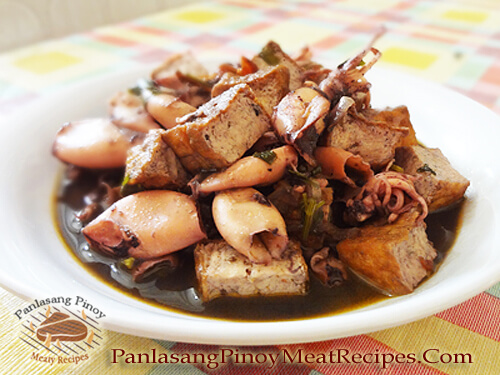
Adobong pusit is a favorite among the many Filipino dishes and there are also variations on cooking it. This version of adobong pusit at tokwa was combined with fried tofu which I’m not sure where this kind of recipe originates but this is always cooked in our home. Maybe my wife just invented it, whenever we cook adobong pusit she always add fried tofu in it. When buying tofu, look for the branded one like the Masoya tofu or tokwa so you can be sure it is always fresh. Tofu or tokwa sold in the wet market usually stinks because the containers and handling are sometimes not hygienic.
Adobong Pusit at Tokwa That Tastes Like Home
Adobong pusit at tokwa is one of those comforting Filipino dishes that never seems to get old. It has everything you could ask for in a home-cooked meal: tender squid, savory adobo flavors, and crispy fried tofu that happily soaks up the rich sauce. Every bite brings together the briny sweetness of fresh seafood and the familiar tang of vinegar that Filipinos have loved for generations.
Growing up, adobong pusit was always reserved for days when fresh squid was available at the market. The version with tofu, however, became a regular favorite in our kitchen because it made the dish heartier without taking away the seafood flavor. The tofu absorbs the dark, savory sauce so well that many family members often reach for it before the squid is gone.
If you’re making this recipe for the first time, don’t worry. It’s surprisingly simple, and once you understand a few basic techniques, you’ll find that cooking this Filipino squid adobo is easier than it looks.
Why Add Tokwa to Adobong Pusit at Tokwa?
Some households prepare squid adobo using only squid, while others add vegetables or aromatics depending on family tradition. In our home, fried tokwa has always been part of the dish. Whether the idea came from an old family recipe or simply from wanting to stretch the meal a little further, it has become something we now consider essential.
Fried tofu brings a pleasant contrast to the soft texture of cooked squid. Its golden exterior absorbs the flavorful adobo sauce while the inside remains light and delicate. After simmering for a few minutes, each cube becomes packed with the savory, garlicky broth without falling apart.
When buying tofu, I always prefer fresh branded varieties because they are more consistent in quality. They usually have a clean smell and firmer texture, making them easier to fry. Tofu sold in some wet markets can sometimes develop an unpleasant odor if it has not been stored properly. Fresh tofu should smell mild and clean, never sour.
A Little History Behind This Filipino Favorite
Adobo is often considered the unofficial national dish of the Philippines, but every region and every family has its own interpretation. While chicken and pork are the most common versions, seafood adobo has long been popular in coastal communities where fresh catch is plentiful.
Squid is especially suited for adobo because its natural sweetness balances the sharp acidity of vinegar. As it cooks, the squid releases flavorful juices, including the ink if the ink sac remains intact. The ink naturally darkens the sauce and adds another layer of rich seafood flavor without making the dish overly fishy.
Adding tofu is a more modern home-style variation, but it works beautifully because it stretches the recipe while making every spoonful more satisfying.
Choosing Fresh Ingredients for Adobong Pusit at Tokwa
The quality of the squid makes a noticeable difference. Fresh squid should have shiny skin, clear eyes, and a clean ocean smell. Avoid squid that smells overly fishy or has dull, discolored flesh.
Cleaning squid may seem intimidating at first, but it becomes easier after you’ve done it once or twice. Remove the transparent quill from the body and gently squeeze the head to remove the beak. One important step is keeping the ink sac intact. If it accidentally bursts while cleaning, don’t panic. Simply let the ink mix into the sauce during cooking.
The ginger, garlic, onion, and tomatoes all help round out the flavor. Ginger minimizes any strong seafood aroma, while tomatoes add a subtle sweetness that balances the vinegar.
How to Cook Adobong Pusit at Tokwa Successfully
One of the first things you’ll notice while cooking adobong pusit at tokwa is how quickly squid changes texture. At first it looks soft and translucent, then within minutes it becomes firm and opaque.
This is why timing matters.
After sautéing the garlic, onion, ginger, and tomatoes until fragrant, the squid is added over higher heat. Stirring it briefly before covering allows the seafood to release its own juices naturally. As the liquid builds in the pan, the squid gently cooks in its own flavorful broth.
Keeping the ink sac intact creates a darker sauce with a richer taste. If you’re expecting a thick black sauce, remember that the color depends on how much ink each squid naturally contains. Some batches produce a darker sauce than others, and that’s completely normal.
The vinegar should be added after the squid has released its juices. One helpful technique many Filipino cooks follow is allowing the vinegar to simmer undisturbed for the first few minutes. Stirring immediately can sometimes leave a stronger acidic taste because the vinegar hasn’t had enough time to mellow. As it simmers, the sharpness softens while keeping the signature adobo flavor intact.
Once the seasoning is adjusted with patis or salt and a little Magic Sarap, the fried tofu goes into the pan. It only needs several minutes to absorb the sauce. If cooked much longer, the tofu can become too soft and lose the pleasant contrast that makes this version so enjoyable.
Common Mistakes Beginners Can Avoid
One mistake many first-time cooks make when preparing adobong pusit at tokwa is overcooking the squid. Unlike pork or beef, squid does not become more tender with moderate cooking. After a few minutes, the muscle fibers tighten, making it noticeably chewy.
If you accidentally cook it too long, don’t throw it away. Continue simmering for much longer until the squid eventually softens again, although this changes the texture considerably. It’s much easier to simply watch the cooking time from the beginning.
Another common mistake is frying tofu that still contains too much moisture. Patting the tofu dry before frying reduces splattering and helps create a crisp golden crust. That crust allows the tofu to stay intact while soaking up the sauce later.
Taste the sauce before serving. Depending on the natural saltiness of the patis and the sweetness of the tomatoes, you may want a small pinch of salt or a splash more vinegar. Small adjustments at the end often make the biggest difference.
Serving Adobong Pusit at Tokwa
Like many Filipino adobo dishes, adobong pusit at tokwa tastes even better with hot steamed rice. The rich sauce naturally finds its way over every spoonful, making even a simple meal incredibly satisfying.
Some families enjoy adding chopped chilies for gentle heat, while others garnish the dish with fresh kinchay for a brighter finish. Either way, the flavors continue to develop as the dish rests for a few minutes before serving.
Leftovers also reheat surprisingly well. The tofu absorbs even more flavor overnight, making the next day’s meal just as delicious.
Why This Recipe Deserves a Spot in Your Kitchen
There is something comforting about cooking a dish that has been passed from one family table to another. This version of adobong pusit at tokwa may not be the traditional recipe everyone grew up with, but it perfectly represents how Filipino home cooking continues to evolve. Every household adds its own touch, whether it’s an extra tomato, more garlic, or cubes of crispy tokwa.
Once you make it yourself, you’ll see why this variation has become a favorite in many homes. The squid stays tender, the tofu becomes packed with flavor, and the rich adobo sauce brings everything together into one satisfying meal. It’s simple enough for beginners yet rewarding enough to earn a regular place in your weekly menu.
How to Cook Adobong Pusit at Tokwa
Ingredients
- 1 kilo small squids
- 3 cloves garlic minced
- 1 pc medium size onion chopped
- 1 inch ginger julienne (slice into strips)
- 3 pcs medium size tomatoes chopped
- 1 Tbsp. kinchay chopped
- 2 pcs large blocks of tofu about 4 x 4 inches size each
- 2 Tbsp. cooking oil
- Salt or patis to taste
- 1/2 cup vinegar
- 1 tsp. white pepper
- 1 tsp. Magic Sarap (granulated seasoning)
Instructions
How to Cook Adobong Pusit at Tokwa:
- Clean the squids by removing the transparent squid bone and beaks by squeezing the head but don't remove the ink sac.
- Wash and rinse in running water and put in a strainer to remove the water from the squid. Set aside.
- Deep fry the tofu blocks and slice it into 3/4 inch cubes then set aside.
- In a wok, heat oil and saute garlic, onion and ginger. Saute until the onions are soft then add the tomatoes.
- Stir cook for a minute then cover and simmer until the tomatoes are cooked.
- Increase the heat and add in the squid and stir cook for a few seconds then cover and cook for about 5 minutes.
- Season with patis or salt, Magic Sarap, vinegar and kinchay.
- Add in the cubed fried tofu, cover and cook for 5 minutes more.
- Serve hot.
Video
Notes
Don’t Overcook the Squid
Squid cooks very quickly, so keep an eye on the cooking time to prevent it from becoming tough and rubbery. Once it turns opaque and tender, it's ready to enjoy. Cooking it just until done helps preserve its naturally sweet flavor and delicate texture.Fry the Tofu Until Golden
Fry the tofu until all sides are lightly golden and crisp before adding it to the sauce. A crisp exterior helps the tofu absorb the adobo sauce without breaking apart during simmering. Patting the tofu dry before frying also reduces oil splatter and creates better browning.Let the Vinegar Simmer Undisturbed
After adding the vinegar, allow it to simmer for a few minutes without stirring. This simple technique helps mellow the sharp acidity while developing the signature adobo flavor. Once the vinegar has cooked through, stir everything together and adjust the seasoning to taste.