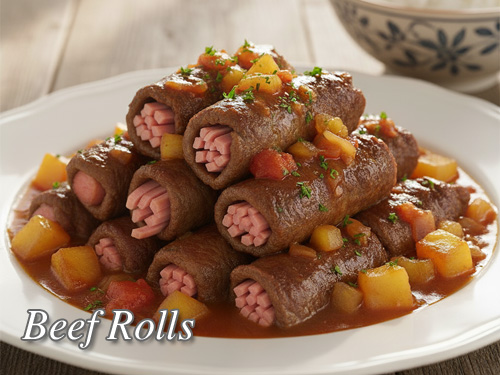
Want to try cooking something different? why not try beef rolls? No these are not bread roll stuffed with beef but beef slices stuffed with hotdog slices and pork fat. You can substitute the filling on what ever you like as long as it will compliment with the sauce. The stuffing of beef is done by slicing the beef sirloin and form it into 2″ x 2″ square.
Then lay it flat on a surface, fill it with the slices of what ever stuffing you want, then roll it like a spring roll then secure it with the toothpick. Once the beef is cooked it will stay that way with the filling inside even if you remove the toothpick.
Beef Rolls: A Rainy Afternoon Discovery
I still remember the first time I tried making beef rolls. It was one of those rainy afternoons in Nueva Ecija when my cousin Lando came home from Manila with a bag full of groceries and a big appetite. He said, “Let’s cook something different—pero dapat ulam na may kanin!” That’s when my late Tita Norma mentioned her old recipe for beef rolls — thin slices of beef stuffed with hotdogs and pork fat, simmered in a flavorful sauce until tender.
At first, I thought it was complicated. But once I watched Tita work her magic, I realized it’s actually one of those dishes that looks fancy but is simple enough even for beginners to pull off.
The Heart of Home Cooking
Beef rolls are not bread rolls, as most people might think at first. They’re actually savory beef slices filled with bits of hotdog and pork fat, rolled like tiny spring rolls, then simmered slowly until juicy and soft. The combination might sound unusual, but in Filipino cooking, we love dishes that balance richness, sweetness, and umami — just like this one does.
My Tita used to say that the key to good beef rolls is choosing the right cut. She preferred sirloin because it’s tender enough to roll but still has structure. You want each piece about two inches by two inches so it cooks evenly and holds the filling nicely. Once flattened and filled, you roll it tightly and secure it with a toothpick. When cooked properly, the roll stays in shape even after you remove the toothpick.
Why This Cooking Technique Works
Simmering the beef rolls slowly is more than just tradition — it’s a science of patience. The gentle heat allows the meat fibers to relax and absorb the flavors from the sauce. If you rush this step and turn the heat up too high, the beef turns tough and chewy. My uncle, Mang Tonyo, once explained it perfectly: “Parang tao ‘yan, kailangan dahan-dahan para lumambot.”
This low-and-slow technique also helps the pork fat melt gradually, coating the meat with flavor. It’s that process that gives each roll a melt-in-your-mouth texture and that signature savory aroma.
A Dish That Tells a Story
Every Filipino household seems to have their own take on beef rolls. In some provinces, they add cheese or even pickles to the filling. Others prefer to drizzle the sauce with banana ketchup for a hint of sweetness. My sister, Leah, tried making hers with luncheon meat when she was living in Cebu — surprisingly, it worked!
That’s the beauty of Filipino recipes: they evolve with our stories and situations. Beef rolls might not be as famous as adobo or sinigang, but they capture the same spirit of resourcefulness and creativity. You use what you have and make it special.
How to Make Flavorful Beef Rolls
Here’s how my family does it. First, lay each slice of beef flat on a plate. Add a strip or two of hotdog and a small piece of pork fat at the center. Roll it up tightly and secure with a toothpick.
Now, here’s a small trick I learned from Tita Norma — sear the rolls lightly before simmering. Browning them first gives the dish a deeper flavor because of the Maillard reaction (that’s when proteins caramelize on the surface, creating that irresistible savory taste). Once browned, arrange the rolls in a casserole, pour in your sauce mixture, and let it simmer over moderate heat for about an hour or until the beef turns tender.
When you see the sauce thickening and the rolls glistening, you’ll know it’s ready. Remove the toothpicks and serve it hot with rice. You can garnish it with chopped parsley or even a bit of grated cheese if you want to be fancy.
Food for Thought
There’s something comforting about making dishes like beef rolls — maybe because it reminds us of old family kitchens and long lunches with stories and laughter. Some food historians believe this recipe has Spanish roots, influenced by morcon or embutido, both of which involve rolling meat with fillings. Over time, Filipinos adapted the idea using local ingredients and simpler methods, turning it into a home-style dish that feels both humble and festive.
Today, I still make beef rolls whenever we have guests or when I crave a taste of home. Every bite brings back the warmth of those afternoons in the province — the sound of rain outside, the smell of simmering sauce, and my Tita’s laughter echoing from the kitchen.
So if you’re looking to try something new yet familiar, give beef rolls a go. It’s one of those recipes that prove the best dishes aren’t just about ingredients — they’re about memories made around the table.
How to Cook Beef Rolls
Ingredients
- 1 kilo beef sirloin thinly sliced (2" x 2" size)
- 1/4 kilo pork fat cut into strips
- 2 pcs hotdog julienne
- 2 cups pineapple juice
- 2 pcs onions chopped
- 1/4 cup garlic chopped
- 2 pcs tomatoes chopped
- 3 pcs potatoes diced
- 1/4 cup soy sauce
- 1/2 tsp. salt
- 1/2 tsp. black pepper ground
- 1 Tbsp. sugar
Instructions
How to cook Beef Rolls:
- In a platter, place each beef slice with pork fat and 2 strips of hotdog at the center.
- Roll and seal with a toothpick. Do the same with the rest.
- In a heated casserole, arrange the beef rolls. Add the remaining ingredients.
- Boil and simmer over moderate heat for one hour or until the meat is tender. Adjust the seasonings.
- Remove toothpicks. Serve hot with garnishing.
Notes
Cooking Tips:
Choose the Right Cut of Beef
For the best beef rolls, go for sirloin or top round—these cuts are tender enough to roll but won’t fall apart during cooking. Make sure to slice the meat thinly and pound it lightly to even thickness so it cooks evenly. This also helps the beef absorb the flavors from the sauce better.Sear Before You Simmer
Browning the beef rolls before simmering adds a deep, savory flavor to the dish. This happens because of the Maillard reaction, which creates that irresistible, slightly smoky aroma. A quick sear also locks in the juices, keeping your beef rolls moist and flavorful even after an hour of slow cooking.Simmer Low and Slow
Patience is key when making tender beef rolls. Cooking over moderate heat allows the fibers to break down gradually while soaking up all the sauce’s goodness. If you boil too fast, the beef toughens up, so let it simmer gently until it’s soft and bursting with flavor.