
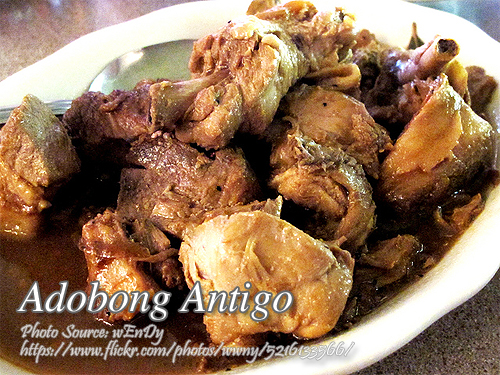
A unique adobong antigo that dates back from our Philippine history. This variation of adobo have rum and buco juice which will produce an exotic adobo which I’m sure you will love the taste. And with regard to the meat used in this adobo, either chicken or pork can be used or you can combine them both. For example, instead of buying one kilo of chicken, you can buy half a kilo of pork and half a kilo of chicken. Since chicken cooks faster than pork, you can cook the pork first of about 15 minutes then add the chicken and simmer until both of them are tender.
Adobong Antigo: A Taste From Yesterday
I first tasted adobong antigo during a summer in Antique when my cousin Lira dragged me to her friend’s family reunion by the shore. I remember the late afternoon light and how the whole house smelled of garlic, rum, and simmering pork. Tita Nena, the kind of auntie everyone adopts, told me the recipe was older than she was. She said her own lolo used to cook it for town fiestas when bottled rum first became easy to buy. Since then I have always linked this dish with long tables, sand between my toes, and loud laughter drifting in from the beach.
That day I learned that this heirloom version stood out because it holds a mix of familiar flavor and a soft sweetness from the coconut juice. It was adobo that felt both rustic and a little playful. When I finally made it myself, I understood why families kept passing it down.
Why Rum and Coconut Juice Work
When I asked my Uncle Rodel why his side of the family still prefers this old version, he explained it in his usual easy way. Rum brings depth; it warms the marinade and softens the sharp edges of soy sauce and vinegar. The alcohol cooks off but leaves a mellow sweetness that clings to the meat. Coconut water lightens everything, keeping the stew from getting too salty. The mix creates balance. Beginners often worry that the rum will overpower the dish, but once it simmers, the flavors settle into something comforting.
Food historians say dishes like this came from the need to preserve meat during the Spanish period. Vinegar and salt did the job, and later on Filipinos added what they had available. Traders brought rum, coconut trees were everywhere, and it was natural for home cooks to experiment. That spirit of making do and making better shaped the version we now call adobong antigo.
Memories in the Marinade
When I started cooking this at home, I followed Auntie Lira’s instructions closely. She always said the marinade is where the magic happens. One rainy Saturday, my brother Paolo caught me smashing garlic in the kitchen and asked if I was cooking “that fiesta adobo again.” I told him yes and he joked that he could smell the rum from the gate.
Marinating the pork and chicken in a mix of rum, soy sauce, garlic, salt, pepper, and vinegar gives the meat time to absorb every bit of flavor. Two hours is the sweet spot, long enough to season the meat without turning it too dry. This step matters because the acids in the vinegar and the sugar in the rum loosen the fibers. That allows the meat to cook tender later without losing its bite.
In our family we mix chicken and pork. My mother says it brings the best of both worlds. Pork gives richness, chicken brings softness. Pork cooks slower, so it helps to simmer it first so both meats finish together. Small details like this save beginners from guessing.
Searing for Better Flavor of Adobong Antigo
I learned another lesson from my neighbor Mang Tonyo, who swears he has been cooking adobo since the Marcos era. He said browning the meat before simmering is not just for color. Searing creates a thin crust that locks in flavor. When the edges turn golden, they add a mild smokiness to the stew. He laughed when I tried it the first time and splashed oil everywhere. But once I got the hang of it, the meat tasted richer.
After frying, pouring off the excess oil keeps the dish clean. Then the coconut water goes in and everything begins to simmer into a thick, glossy sauce. You will know it is close when the pot starts giving off that gentle, nutty aroma. The adobo releases its own oil, which means the flavors have settled.
Finishing Touches That Matter
The last step comes from my grandmother, who never served adobo without extra fried garlic. She said it wakes up the dish. A quick fry of chopped cloves until crisp, then sprinkle on top right before serving. It adds crunch and a burst of aroma that ties everything together.
Every time I cook this old recipe, it feels like opening a window to my family’s stories. The rum, the coconut juice, the mix of pork and chicken, the golden sear, and the final shower of garlic all carry reminders of the people who taught me. If you are new to cooking, this is a forgiving dish. It is patient. It allows you to learn as you go. And when the pot finally settles and the sauce coats the meat just right, you will understand why many households keep returning to adobong antigo.
How to Cook Adobong Antigo (Adobo with Rum)
Ingredients
- 1 kilo chicken or pork cut in serving pieces
- 1/4 cup vino blanco or 5 year old rum
- 4 teaspoons soy sauce
- 5 cloves garlic crushed
- 2 teaspoons salt
- 1 teaspoon freshly ground pepper
- 1 cup vinegar
- 1 cup buko juice
- 1 small head garlic crushed
Instructions
How to cook adobong antigo:
- Marinate the meat in the vino blanco or rum, soy sauce, garlic, salt, pepper and vinegar, for at least 2 hours. Drain.
- Fry meat till golden brown, pour off excess oil and add buko juice.
- Simmer till tender and adobo begins to give off oil.
- Fry the extra garlic and sprinkle on the adobo before serving.
Video
Notes
Cooking Tips:
Marinate Long Enough for Full Flavor
Let the meat sit in the rum, soy sauce, vinegar, and spices long enough for the flavors to sink deep. This helps tenderize both pork and chicken without making them mushy. A well-marinated batch gives adobong antigo its warm, rounded taste.Sear the Meat Before Simmering
Browning creates a light crust that adds depth to the final sauce. It also helps the meat hold its shape during the slow cook. This step builds flavor even before the coconut juice goes in.Let the Sauce Reduce Naturally
Allow the pot to simmer gently until it starts releasing its own oil. This slow reduction blends the rum and coconut notes into a balanced, glossy sauce. Patience here gives the dish its signature richness.





Hi! Thanks for this wonderful recipe. I’m trying this out maybe tonight or tomorrow. May I ask for a good alternative of the rum? I might not find a 5-year old rum in our market
Hi Rachelle, Thanks also for your comment and for visiting this blog. You can use white wine(vino blanco) instead of rum.