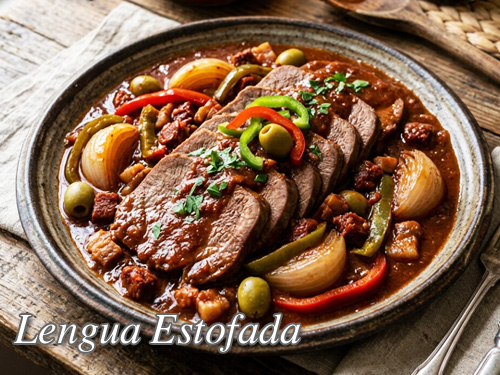
Lengua estofada is a Filipino dish with a Hispanic influence which consist of ox tongue braised in a tomato sauce. This is really a Spanish dish which is very obvious just looking at the name of this dish. Sometimes is its also called lengua estofado which is the real Spanish name of this dish.
Preparation is a little bit tedious because you have to blanch the tongue first then scrape and remove the white thick skin. Because if you don’t, it will have a disgusting taste when cooked. Tenderizing it will also take some time so a pressure cooker is a great help to make your cooking time shorter.
Lengua Estofado Recipe for Special Occasions
Lengua estofado is one of those dishes that instantly feels special the moment it reaches the table. Rich tomato sauce, buttery aroma, and melt-in-your-mouth ox tongue make it a popular centerpiece during fiestas, holiday gatherings, and Sunday family lunches. While it may sound intimidating for beginner cooks, this Filipino-style braised ox tongue dish is actually easier to prepare than most people think once you understand the cooking process.
Growing up, lengua estofada was the kind of dish that only appeared during big occasions. My Tita Linda usually made a huge pot for Christmas Eve, and everyone knew dinner was serious business once the tender beef tongue started simmering in tomato sauce and butter. The smell alone drifting from the kitchen was enough to make people sneak peeks under the pot lid.
What makes lengua estofado unique is its Spanish influence. The word “estofada” comes from the Spanish cooking method “estofar,” which means to braise slowly in a flavorful sauce. Like many Filipino dishes adapted during the colonial period, this recipe evolved to suit local tastes. Over time, Filipino home cooks added richer tomato flavors, butter, and occasionally pork fat to create a deeper and more comforting sauce.
What Makes Lengua Estofado So Tender
The first thing many beginner cooks notice about lengua estofado is how unbelievably soft the meat becomes after cooking. Beef tongue looks tough at first, and honestly, it can feel intimidating sitting on the counter. But once simmered properly, it turns silky and fork-tender with a texture similar to very soft pot roast.
The Secret is Collagen.
Ox tongue contains a lot of connective tissue, and slow cooking allows that collagen to break down gradually into gelatin. This is why the meat becomes moist instead of dry. Rushing the cooking process usually results in chewy slices, which is probably the most common mistake first-timers make.
A pressure cooker helps speed things up considerably. Instead of simmering for several hours on the stovetop, you can tenderize the meat much faster while still getting that soft texture lengua estofada is known for. If cooking traditionally, keep the heat low and steady. A rapid boil can toughen the outer layers before the center becomes tender.
Cleaning the Ox Tongue Properly
One important step in making lengua estofado is cleaning the tongue thoroughly before cooking. This part may feel tedious, but it makes a huge difference in flavor and texture.
After dipping the tongue in boiling water for a few minutes, you’ll notice the thick white skin starting to loosen. Scraping and peeling this layer off removes impurities and the slightly unpleasant taste that can linger if the skin is left intact. The first time I skipped this process years ago, the finished dish had a strange aftertaste that completely overpowered the sauce.
The skin usually peels easier while the tongue is still warm. Using a small knife helps lift stubborn areas, especially around the thicker base. Once cleaned, rinse the meat well under running water before simmering.
This technique works because blanching softens the outer membrane without cooking the inside too quickly. It loosens trapped residue and makes the tongue cleaner and milder tasting.
Building Flavor for Lengua Estofado
One reason lengua estofado tastes incredibly rich is the layering of flavors during cooking. Butter, onions, tomatoes, pork fat, and seasonings slowly combine as the meat braises, creating a savory sauce that clings beautifully to every slice.
When sautéing onions in butter, let them cook until softened and aromatic instead of rushing the process. Properly cooked onions release natural sweetness that balances the acidity of the tomatoes. The pork fat also plays an important role. As it renders, it gives the sauce more body and depth.
Some home cooks worry the tomato sauce may turn too acidic. If this happens, letting the dish simmer longer usually solves the problem. Tomatoes naturally mellow as they cook down. I also find that a small pat of butter added near the end smooths out the flavors nicely.
The bread crumbs used to thicken the sauce may sound old-fashioned, but they work surprisingly well. Instead of making the sauce heavy, they absorb liquid gently while keeping the texture velvety. This method was commonly used in older Filipino kitchens before cornstarch became widely popular.
Why Slow Braising Matters in Lengua Estofada
Patience is one of the most important ingredients in lengua estofado. Unlike quick sautés or fried dishes, braising depends on low and slow cooking.
As the ox tongue simmers, the meat gradually absorbs the tomato sauce and seasonings. You’ll notice the sauce becoming darker, richer, and slightly glossy after a long simmer. That transformation is a good sign the flavors are concentrating properly.
Adding extra water during cooking is completely normal. Sometimes the liquid reduces faster than expected, especially if the pot is uncovered or the heat runs too high. If the sauce dries out too early, the tongue can toughen before becoming tender.
A helpful trick is checking the meat with a fork instead of relying only on cooking time. When the fork slides through easily with very little resistance, the lengua estofada is ready.
Serving Lengua Estofado the Filipino Way
Lengua estofado is usually served sliced thinly with generous spoonfuls of sauce poured over the top. Thin slices matter because they allow the tender texture to shine without feeling too heavy.
This dish pairs beautifully with steamed rice because the sauce itself is incredibly flavorful. In many Filipino homes, extra rice is practically required. The rich tomato gravy mixed with butter has a way of soaking into the rice that makes every bite comforting.
For special occasions, some families serve lengua estofada alongside embutido, morcon, or chicken galantina during Noche Buena. It fits naturally into Filipino celebration food because it feels elegant without being overly complicated.
One thing I learned after making lengua estofado several times is that it tastes even better the next day. Overnight refrigeration allows the flavors to settle deeper into the meat. The sauce thickens slightly too, making leftovers especially delicious.
Common Mistakes When Cooking Lengua Estofado
A common beginner mistake is undercooking the tongue. Even if the sauce tastes good, the dish will not feel right if the meat is still rubbery. Always allow enough cooking time for proper tenderizing.
Another issue is slicing the tongue while still too hot. Letting it cool slightly before cutting helps create cleaner and thinner slices. Otherwise, the meat can shred apart.
Using too much heat during simmering can also cause problems. Fast boiling reduces the sauce too quickly and may leave the meat unevenly cooked. Gentle simmering produces better texture and flavor.
Some cooks also skip tasting the sauce as it cooks. Tomato-based dishes change flavor significantly over time. Early in cooking, the sauce may taste acidic or flat, but after simmering, it becomes fuller and more balanced.
Lengua Estofada for Family Gatherings
There’s something nostalgic about serving lengua estofado at family gatherings. Maybe it’s because dishes that require patience naturally feel more heartfelt. You can tell when a recipe has been cooked slowly and carefully.
My Kuya Marco once joked that lengua estofada is the kind of food that makes guests linger at the dining table longer than usual. Honestly, he wasn’t wrong. Between the rich sauce and tender meat, people tend to go back for second servings quietly.
Despite its reputation as a special-occasion dish, lengua estofado can absolutely be made at home even by beginner cooks. Once you understand the cleaning process and the importance of slow cooking, the recipe becomes surprisingly manageable.
The best part is watching the transformation happen in the pot. What starts as a tough cut of meat slowly turns into something rich, tender, and deeply comforting. That’s the beauty of traditional Filipino cooking. Sometimes the recipes that take the most patience end up becoming the ones everyone remembers most.
How to Cook Lengua Estofado
Ingredients
- 1 pc ox tongue about 1 1/2 to 2 kilos
- 2-3 pcs large onions quartered
- 6 pcs green olives optional
- 1/4 kilo pork fat
- 3 Tbsp. pimento
- 1 small can tomato paste or 2 cans tomato sauce
- 1 Tbsp. MSG
- 1 tsp. pepper ground
- 1 Tbsp. salt
- 1/2 cup rum
- 2 Tbsp. chili sauce
- 2 Tbsp. Worcestershire sauce
- 3 pc bell pepper red & green (strips)
- 1 small can pineapple juice
- 1/2 cup bread crumbs
- 1 pc chorizo de bilbao finely chopped
Instructions
How to Cook Lengua Estofado:
- To clean tongue, dip in 3 cups boiling water. Let stand for 5 minutes, then scrape white, thick skin. Then wash in clear water.
- Place in deep pan, pour water enough to cover tongue. Boil. Lower heat and simmer until half done.
- Saute onion and pork fat (in big slices) in butter. When onion is wilted, add all ingredients except bread crumbs.
- Stir for 3 minutes, then add to the deep pan where you boil the ox tongue. Continue cooking until the tongue becomes tender.
- You may add more water if sauce dries and meat is not yet done.
- Let it cool. Cut tongue into thin slices. Arrange in serving plate. Thicken sauce with bread crumbs then pour over sliced tongue.
Notes
Clean the Ox Tongue While Warm
After blanching the ox tongue, peel and scrape the thick white skin while it is still warm because it becomes harder to remove once cooled. Proper cleaning removes impurities and prevents the meat from developing an unpleasant taste during cooking. Using a small knife around stubborn edges helps remove the membrane without wasting too much meat.Simmer the Lengua Stofada Slowly
Cook lengua stofada over low heat to give the connective tissues enough time to break down properly. A rapid boil may toughen the outer layer of the tongue before the center becomes tender. Gentle simmering also helps the tomato sauce develop a richer and smoother flavor over time.Slice the Meat After Resting
Allow the cooked tongue to cool slightly before slicing to keep the meat firm and easier to cut thinly. Cutting it immediately after cooking can cause the slices to fall apart because the meat is extremely tender. Thin slices also absorb the savory tomato sauce better, making every bite more flavorful.