Beef pata paella is a Spanish dish. But Since the Philippines has been colonized for more than 300 years so many of our cooking has have a similarity with Spanish dishes like the paella. This paella recipe is composed of ox feet or beef pata and none of the seafood ingredients that the usual paella have.
Beef Pata Paella with a Filipino Twist
Paella is one of those dishes that feels fancy when it arrives at the table, but once you understand how it comes together, it is really just a comforting rice dish cooked with good ingredients and a little patience. This beef pata paella takes that idea in a distinctly Filipino direction by replacing the usual seafood with tender ox feet, or beef pata.
At first, the combination might sound unusual. Pata is more commonly seen in dishes like crispy pata, paksiw na pata, or nilaga. But cooked slowly and folded into a savory rice dish, the meat and gelatin-rich pieces bring a depth that seafood simply cannot provide.
There is also something familiar about the dish despite its Spanish roots. The Philippines was under Spanish colonial rule for more than 300 years, and Spanish cooking left a lasting mark on Filipino cuisine. Paella is one of the dishes that became part of that culinary influence, although Filipino cooks naturally adapted it to local ingredients and tastes.
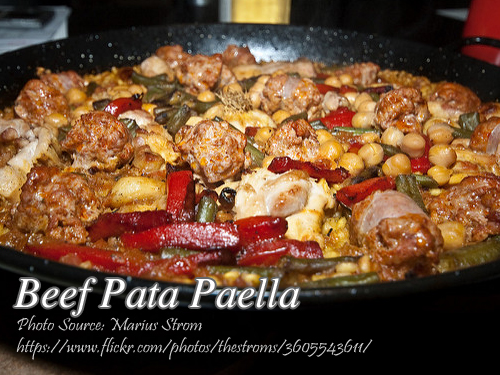
This version is a good example of that adaptation. There are no mussels, shrimp, or squid here. Instead, the pata is simmered until tender, cut into bite-sized pieces, and cooked with rice, chorizo, garbanzos, peppers, paprika, and saffron.
Preparing the Beef Pata for Paella
The most important part of this recipe happens before the rice ever touches the pan.
Beef pata needs a long cooking time because the meat is surrounded by connective tissue and collagen. If you simply toss raw pata into the rice, the rice will be finished long before the meat becomes tender. That is why the pata is cooked separately first.
I also recommend boiling the pata once and throwing away that first cooking water. It helps remove impurities and some of the strong smell that can come from the skin and bones. Give the pieces a good rinse afterward before starting the second simmer.
For the second cooking, the pata goes back into a clean pot with peppercorns and a bay leaf. Keep the heat low and let it simmer gently for about three to four hours, or until the meat is tender enough to pull away easily from the bone.
Don’t worry if the stock looks a little rich by the end. That’s actually what we want. The long simmer extracts flavor and gelatin from the bones and connective tissue, giving the cooking liquid a fuller body.
A pressure cooker can shorten this step considerably, but if you’re using a regular pot, patience pays off. A gentle simmer is better than a furious boil because hard boiling can make the meat break apart unevenly while also causing more evaporation.
Making a Rich Stock for Beef Pata Paella
Once the pata is tender, remove it from the pot and let it cool enough to handle. Pull the meat from the bones and cut it into roughly half-inch cubes.
Try to keep some of the tender, slightly gelatinous portions along with the meat. Those little pieces soften beautifully in the rice and are one of the best parts of the dish.
Before using the broth, skim off excess fat from the surface. You don’t have to remove every last drop. In fact, a little fat adds flavor. The goal is simply to avoid making the finished rice unnecessarily greasy.
Taste the stock before adding it to the rice. This is a small step that can make a big difference. If the broth tastes flat, the paella will taste flat too. Seasoning the stock lightly at this stage gives you a better foundation for the entire dish.
Cooking the Rice
For the actual paella, heat olive oil in a paellera or a large, wide skillet. Sauté the garlic and onions until softened and aromatic. This is where the kitchen starts smelling like something special.
Add the rice and cook it briefly until the grains become opaque. Don’t skip this step. Coating and lightly toasting the rice in the seasoned oil helps build flavor and allows the grains to hold their shape better during cooking.
Add the paprika, cubed pata, and chorizo, stirring gently so everything gets coated with the aromatics and spices.
When you pour in the reserved stock, spread the rice into an even layer. Sprinkle the saffron over the top and season with salt and pepper.
Saffron can be expensive, so it is tempting to use very little. A small amount is enough to give the rice its characteristic aroma and golden color, but don’t expect saffron alone to make the dish flavorful. The real foundation comes from the beef stock, aromatics, chorizo, and proper seasoning.
Letting Beef Pata Paella Cook Undisturbed
Once the stock has been added, resist the urge to constantly stir the rice.
This is one of the biggest differences between making paella and cooking an ordinary pot of rice. Frequent stirring releases starch and can turn the mixture creamy. Paella is better when the grains remain distinct and absorb the flavorful stock gradually.
Arrange the garbanzos and sliced red and green peppers over the rice. Let everything cook for about 20 minutes, or until the rice has absorbed most of the liquid and is tender.
Keep an eye on the pan during this stage. If the liquid disappears too quickly while the rice is still firm, lower the heat. A wide skillet can cause the stock to evaporate faster than expected. If necessary, add a small amount of hot stock rather than cold liquid, which can interrupt the cooking.
The bottom may develop a lightly toasted layer of rice. This is known as socarrat in Spanish paella cooking, and many people consider it a prized part of the dish. Don’t deliberately burn the rice, though. There’s a difference between pleasantly toasted and bitterly scorched.
Finishing the Paella
When the rice is cooked, arrange sliced hard-boiled eggs over the top before serving. The eggs may seem more Filipino than Spanish, and that’s part of the charm of this adaptation.
The finished dish should have tender rice with savory pieces of pata, smoky bits of chorizo, sweet peppers, creamy garbanzos, and a fragrant hint of saffron. The beef adds a richness that makes this version especially satisfying.
If you’re serving it for a family gathering, bring the whole pan to the table. There is something wonderfully communal about letting everyone scoop from the same wide pan, especially when the crispy bits from the bottom are being quietly claimed.
A Little History Behind the Dish
Traditional paella originated in Spain, particularly around Valencia, where rice became an important part of the local cuisine. Over time, paella developed many regional and ingredient variations.
Its presence in Filipino cooking makes sense when you consider the long Spanish influence on the Philippines. Filipino cooks did not simply copy Spanish dishes. We adapted them according to what was available, affordable, and familiar.
That is why a dish like this can use pata instead of seafood. It reflects a familiar Filipino habit in the kitchen: take an established cooking idea and make it work with the ingredients you have.
You can think of this recipe as a meeting point between Spanish-style rice cooking and the Filipino love of flavorful, slow-cooked meats.
Tips for a Better Beef Pata Paella
The biggest mistake beginners can make is rushing the pata. If the meat isn’t tender before it goes into the rice, it won’t magically become tender in the twenty-minute cooking period.
Another common problem is using too much liquid. Paella should be flavorful and moist without becoming mushy. Since different pans and rice varieties absorb liquid differently, pay attention to the rice rather than blindly relying on the clock.
Season gradually as well. Chorizo and the beef stock already contribute salt and flavor, so taste before adding a heavy hand of seasoning.
Finally, give the cooked rice a few minutes to settle before serving. This allows the remaining moisture to distribute more evenly through the grains and makes the dish easier to serve without turning into a mound of sticky rice.
Serving Beef Pata Paella
This beef pata paella is substantial enough to serve as a complete meal, especially with the meat, garbanzos, peppers, and eggs already in the pan.
I like serving it straight from the skillet while the rice is still warm and fragrant. There’s no need to dress it up too much. The colorful peppers and sliced eggs already make it inviting, while the tender pata and chorizo give every spoonful plenty of flavor.
What makes this dish worth trying isn’t just the unusual combination of ingredients. It’s the way familiar Filipino flavors can transform a Spanish-inspired dish into something that feels right at a Filipino table. Once you’ve made it successfully, you’ll also have a better feel for the basic principles behind paella: build flavor in layers, use a well-made stock, cook the rice gently, and let the ingredients do most of the work.
How to Cook Beef Pata Paella
Ingredients
- 1 piece beef pata ox feet
- 1 teaspoon peppercorns
- 1 pc bay leaf
- 1/4 cup olive oil
- 1 small head garlic crushed
- 3 pcs large onions chopped
- 2 cups California rice or japonica rice
- 1 teaspoon Spanish paprika
- 2 pieces Chorizo de Bilbao
- 4 cups soup stock
- 1 envelope saffron
- 1 cup garbanzos
- 1 pc red pepper sliced
- 1 pc green pepper sliced
- 2 pcs hardboiled eggs sliced
Instructions
How to cook beef pata paella:
- Clean the pata very well. Boil once and discard the water.
- Boil the pata a second time with the peppercorns and bay leaf. Simmer till tender for about 3-4 hours.
- Remove pata, debone and cut into 1/2 inch cubes and set aside. Skim the fat from the stock.
- In a paellera or large skillet, heat olive oil and sauté garlic and onions.
- Add rice and cook until it becomes opaque. Add paprika, pata and chorizo.
- Pour in the stock and sprinkle the saffron over the paella. Season with salt and pepper.
- Arrange the garbanzos and the red and green peppers on top and cook for 20 minutes.
- Garnish with sliced hard boiled eggs.
Notes
Cook the Beef Pata Until Tender
Simmer the beef pata gently for three to four hours until the meat easily pulls away from the bone. Avoid boiling it too aggressively because a gentle simmer helps the connective tissue soften gradually and gives you a richer stock. Skim excess fat from the broth before using it so the paella stays flavorful without becoming overly greasy.Avoid Stirring the Rice
Once you add the stock, spread the rice evenly in the pan and let it cook without frequent stirring. Stirring releases too much starch, which can make the rice sticky instead of keeping the grains separate. If the liquid evaporates too quickly, lower the heat and add a little hot stock rather than stirring the rice repeatedly.Watch the Bottom of the Pan
Keep an eye on the heat during the final cooking stage because a wide paellera or skillet can cause the liquid to evaporate quickly. A lightly toasted layer of rice at the bottom adds a delicious nutty flavor, but reduce the heat if the rice starts smelling burnt. Let the finished beef pata paella rest for a few minutes before serving so the remaining moisture can settle evenly throughout the rice.