
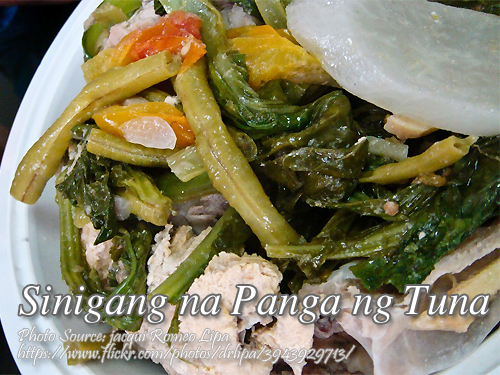
Sinigang na panga ng tuna is one of the tasty dishes you can do with tuna jaw. The other is grilled panga ng tuna. Since the jaw part of the tuna does not have much meat in it, most you can find is the soft tissue and cartilages which is better cooked in a soup or some dishes with sauce. And one of best dish you can do is sinigang.
There are many souring agent you can use in making sinigang and this recipe calls for fresh tamarind fruits. Make a tamarind puree by boiling the fruits in water until soft then mash it in the liquid where you boil the tamatind. Then sieve it to extract the juice.
Sinigang na Panga ng Tuna: A Comfort Bowl That Feels Like Home
Every time I make Sinigang na Panga ng Tuna, I remember a rainy afternoon in General Santos when my Uncle Rodel first taught me how to handle tuna jaw. He worked at the port for years and always came home with the freshest catch. He used to say the jaw was the most underrated part of the fish because people expected big chunks of meat, but what you get instead is tender cartilage and soft tissue that melt right into the broth. That is exactly why this soup lives in my memory. It feels humble, familiar, and steady like a warm welcome after a long day.
My cousin Maricar would always joke that the dish tastes even better when cooked slowly while everyone talks about old stories around the kitchen. Maybe that is why this Filipino classic always brings a little nostalgia. It is a dish that asks you to slow down and pay attention to what the broth wants to become.
Why Tuna Jaw Works So Well in Sour Broth
If you have ever wondered why Sinigang na Panga ng Tuna stands out, it is because the jaw transforms in ways other cuts do not. The soft cartilage turns silky when simmered, giving the soup a gentle richness that goes well with the sharpness of tamarind. When my sister Lalaine visited Davao years ago, she told me people there almost always pair tuna jaw with a sour broth because it enhances the natural sweetness of the fish. She was right. The moment the hot soup hits the bowl, you get that comforting aroma that only fresh seafood cooked the old way can bring.
The technique of simmering the jaw slowly helps the collagen soften. This gives the broth a fuller body even without adding fat or seasonings. It is a simple process that works because collagen breaks down better at a gentle heat, turning the soup smooth and round. Even beginners can pull this off with confidence.
The Flavor of Fresh Tamarind
My Lola Sion once reminded me that fresh tamarind makes all the difference. She would boil the fruits until soft, mash them right in the liquid, then press everything through a sieve until every drop of pure sourness is captured. Using fresh fruits gives the dish a vibrant tang that powdered mixes cannot fully copy. There is a bit of extra work, yes, but the result is a broth that tastes alive.
This souring agent has deep roots in Filipino cooking. Before packets were sold in stores, households relied on what grew around them. Tamarind trees were common in many yards, and families used their fruits for everyday meals. Making the puree is a tradition kept alive by cooks who appreciate the balance of natural flavor. It is a small culinary heritage that continues to thrive every time we prepare this dish.
Bringing Everything Together in the Pot
The moment the tomatoes, taro, and water start to boil, the foundation of the soup begins to build. The taro softens into the broth and gives it a light creaminess that binds everything together. Adding the jaw afterward allows the seafood flavor to seep into the vegetables. Finger chili provides mild heat while radish gives that crisp, earthy bite that many Filipinos love in their sinigang.
Pouring the tamarind extract into the simmering pot makes the aroma bloom instantly. My younger brother Nino once said it smells like coming home after being away for months. Maybe he exaggerated, but I know exactly what he meant. The scent is bright and familiar, almost like a warm memory.
Finishing with kangkong and sitaw keeps the vegetables vibrant and fresh. Letting them simmer just enough helps preserve their flavor and snap. This part is important because vegetables can turn mushy if overcooked. Gentle heat works best here. It respects the ingredients and ensures a balanced bowl.
A Little Food for Thought
Sinigang in general has been part of Filipino tables for generations. Some say it started from the natural abundance of sour fruits in the islands, while others believe it evolved from early trade influences. Whichever story you follow, one thing is constant. Sinigang is comfort food for many families. It adapts to what is available, whether it is pork, shrimp, bangus, or in this case, tuna jaw.
Sinigang na Panga ng Tuna brings that tradition forward. It carries the taste of coastal towns, the rhythm of simple kitchen stories, and the heart of shared meals. Cooked slowly, served hot, and enjoyed with rice, it becomes more than a soup. It becomes a reminder that the best dishes are often the ones passed quietly from one relative to another, one memory at a time.
How to Cook Sinigang na Panga ng Tuna (Tuna Jaw in Sour Broth)
Ingredients
- 4 halves panga ng tuna
- 10 cups water
- 3 pcs ripe tomatoes chopped
- 2 pieces taro gabi, peeled and halved
- 150 grams tamarind or sampaloc
- 1 cup water for tamarind or sampaloc
- 1 pcs finger chili
- 1 cup radish peeled and cut into 1", slices
- 1 bunch kangkong tops washed
- 100 grams string beans or sitaw cut into 2'' pieces.
- Salt to taste
Instructions
How to cook Sinigang na Panga ng Tuna:
- In a soup pot, combine water, ripe tomatoes and taro. Boil for 4-5 minutes or until taro is almost tender.
- Meanwhile, in a saucepan, boil tamarind or sampaloc in water until soft. Mash tamarind (sampalok) in the liquid to extract juice then strain liquid into a bowl, Set liquid aside and discard the sampalok.
- Add the panga ng tuna, finger chili and radish to the soup pot and simmer until tuna is almost cooked, about 8-10 minutes. Stir in reserved sampalok juice and season with salt. Adjust seasoning to taste.
- Place kangkong and string beans or sitaw on top of the fish and simmer further until vegetables are cooked just right, about 2 -3 minutes. Serve piping hot with rice. Makes 2-4 servings
Notes
Cooking Tips:
Choose the Freshest Jaw You Can Find
Fresh tuna jaw gives the broth its clean sweetness and tender texture, so check for bright eyes, firm flesh, and a mild sea smell. Older cuts turn rubbery and lose flavor once simmered. Starting with good seafood makes the entire dish easier to balance.Extract Tamarind Juice the Right Way
Boiling the fruits until soft allows the sourness to fully release, which helps build a lively broth. Mashing them in their own liquid ensures every bit of pulp is used. Straining the mixture keeps the soup smooth while preserving natural tang.Add Vegetables at Just the Right Time
Drop sturdier vegetables earlier to let them soften without turning mushy. Add greens last so they stay bright, crisp, and full of flavor. Timing each ingredient keeps the dish vibrant and prevents the broth from tasting flat.





Hi Tsag, I’m very glad that you like the recipe. Thanks for your comment.
Thank you so much for updates on your Filipino recipes! This sinigang na panga ng tuna will definitely on my next list! Your recipes are simple and quite easy to follow…thank you so much Pareng Manny!
Hi Jo Ann,
Thanks for the kind words and your rating. I’m happy that this blog has helped you in your cooking. Cheers!
I often try your recipes and everytime it turns out perfect…thank you for the recipes that easy to follow, I’m not an expert cook but with easy to follow recipe, I do make delicious dishes. 🙂