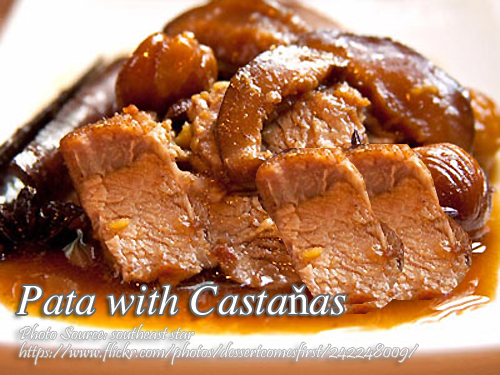
Pork hocks with chestnuts is a savory dish with a very simple cooking procedure and few simple ingredients. This is a good addition on Christmas celebration since roasted chestnuts are only abundant during Christmas and New Year but some times you can see vendors selling these during ordinary days or months. If you can find canned chestnuts, then I think that will be alright to use just don’t be confused buying the canned Chinese water chestnuts. They are not the same because the water chestnut is not a nut but an aquatic vegetable.
Pork Hocks with Chestnuts for a Filipino Holiday Table
There’s something especially comforting about a pot of pork slowly simmering on the stove. The kitchen starts smelling savory and rich, the meat gradually becomes tender, and before you know it, everyone is asking when dinner will be ready. That’s exactly the kind of dish I think of when making pork hocks with chestnuts, also known as Pata Con Castañas.
This is a simple Filipino-style dish that doesn’t require a long list of ingredients or complicated cooking techniques. Most of the work is really about giving the pork enough time to become tender and allowing the marinade to work its way into the meat.
I especially like serving this during Christmas and New Year celebrations. Roasted chestnuts tend to make an appearance during the holiday season, and their slightly sweet, nutty flavor makes a wonderful partner for rich pork. If you happen to find fresh or roasted chestnuts outside the holidays, there’s no reason to wait until December to make this dish.
Why Pork Hocks with Chestnuts Works So Well
Pork hocks are naturally flavorful, but they can also be quite tough when you first put them in the pot. They contain plenty of connective tissue, which needs time and gentle heat to break down.
That’s why pork hocks with chestnuts is not a dish I recommend rushing. A fast boil may cook the outside of the meat, but it won’t give you the soft, almost yielding texture you want. A steady simmer does a much better job.
As the pata cooks, the collagen in the connective tissue gradually melts into the cooking liquid. This is what gives the sauce a fuller, richer body. The meat becomes tender without falling apart immediately, and the skin takes on that wonderfully soft, gelatinous texture that makes pork hock so satisfying.
If you’re new to cooking pata, don’t worry if it seems like nothing is happening during the first hour. The transformation takes time. I’ve found that the second hour is usually when you really start noticing the difference.
Preparing the Pata Before Cooking
The first thing I pay attention to with pork hocks with chestnuts is cleaning the pork properly. Pata can have a strong porky smell, especially if it hasn’t been cleaned well.
For this recipe, the pork hocks are soaked briefly in water with baking soda. The baking soda helps clean the surface and can help loosen impurities and residue from the skin. You don’t want to leave the pork sitting in the mixture for an extended period, though.
After a few minutes, rinse the pata thoroughly under clean water. This step is important because you don’t want leftover baking soda affecting the taste or texture of the finished dish.
Once rinsed, drain the pork well before adding the marinade. If the meat is sitting in a lot of water, the marinade will be diluted before it has a chance to do much.
Marinating Pork Hocks with Chestnuts Before Simmering
Giving the pork time to marinate is one of the easiest ways to improve the finished dish. For pork hocks with chestnuts, let the cleaned pata sit in the marinade for at least two hours.
I know two hours can feel like a long wait when you’re hungry, but this is a good place to be patient. The marinade seasons the surface of the pork and gives the meat a head start on developing flavor before it goes into the casserole.
If I know I’m making the dish for a family gathering, I prefer to do this part earlier in the day. It makes the actual cooking much less stressful, especially when there are several other dishes competing for space in the kitchen.
Keep the pork refrigerated while it marinates, particularly if you’re preparing it several hours ahead.
Slow Cooking Pork Hocks with Chestnuts
After marinating, transfer the pork and its marinade to a casserole and add about one and a half cups of water. Bring everything to a boil first, then lower the heat and let it simmer gently.
This gentle simmer is one of the most important techniques in pork hocks with chestnuts. You want enough heat to keep the liquid bubbling lightly, but not so much that the pork is being aggressively boiled.
A hard boil can make the meat tighten instead of becoming beautifully tender. It can also cause the cooking liquid to evaporate too quickly. With a slow simmer, the pork has time to soften while the flavors concentrate naturally.
The cooking time is roughly two hours, but use tenderness as your real guide rather than watching the clock. Depending on the size and thickness of the hocks, your pata may need a little more or less time.
You should be able to pierce the meat easily with a fork. The skin should feel soft, and the meat should be tender enough to pull away without a struggle.
When to Add the Chestnuts
Once the pork is tender, taste the sauce and correct the seasoning. This is something I never skip. The liquid reduces during cooking, so the flavor at the end can be quite different from what it tasted like at the beginning.
This is also the point where you add the chestnuts.
For pork hocks with chestnuts, the chestnuts only need about five minutes of gentle simmering. Adding them too early can cause them to become overly soft and lose their shape.
There’s another little detail worth remembering when buying them. Canned chestnuts and canned Chinese water chestnuts are not the same thing.
Chinese water chestnuts are an aquatic vegetable, not a tree nut. They’re crisp and crunchy, while the chestnuts used in this dish are starchy, tender, and mildly sweet. The two ingredients behave completely differently in cooking, so check the label before putting a can in your grocery basket.
Making Pork Hocks with Chestnuts Ahead of Time
One thing I appreciate about pork hocks with chestnuts is that it’s a forgiving dish for gatherings. You can cook it ahead and gently reheat it before serving.
In fact, the flavors can become even more harmonious after resting. As the dish cools, the flavorful cooking liquid also becomes thicker because of the natural gelatin released by the pork. Don’t be surprised if the sauce looks noticeably thicker after refrigeration.
When reheating, use low to medium heat and add a small splash of water if the sauce has become too thick. Stir gently because the tender pork and chestnuts can break apart if handled too roughly.
A Little History Behind Pata Con Castañas
Pata has long been a familiar ingredient in Filipino cooking because pork is deeply woven into many celebrations and everyday meals in the Philippines. Different regions and families have their own ways of preparing pork leg, from crispy pata to saucy stews.
The combination with chestnuts gives this version a festive character. Chestnuts are strongly associated with the cooler months and Christmas season in many places, which helps explain why pork hocks with chestnuts feels particularly suited to a holiday table.
It’s also an interesting example of how Filipino cooking has absorbed influences from different culinary traditions while adapting them to local ingredients and tastes. Pata Con Castañas has that familiar Filipino love of rich, savory pork, paired with the subtle sweetness and earthy flavor of chestnuts.
Serving Pork Hocks with Chestnuts
Serve the finished pork hocks with chestnuts hot, preferably with plenty of sauce spooned over the pork. Steamed white rice is the natural partner because it balances the richness and gives you something to soak up all that flavorful cooking liquid.
If the pork is especially tender, serve it carefully rather than aggressively stirring the casserole. The skin and meat can become delicate after a long simmer.
For a Christmas meal, I’d place the pata in the center of the table and let everyone help themselves. There’s something wonderfully homey about a dish that arrives at the table in the same casserole it was cooked in, still warm and fragrant.
My Final Tips for Tender Pata
The biggest lesson I’ve learned from cooking pork hocks with chestnuts is that patience matters more than complicated technique. Clean the pork well, give it enough time to marinate, simmer it gently, and don’t add the chestnuts until the pork is already tender.
Most importantly, trust your senses. If the meat is still firm after two hours, keep simmering. If the sauce tastes a little flat, adjust the seasoning. If the chestnuts are tender after five minutes, take the pot off the heat instead of continuing to cook them simply because the recipe says so.
Those small adjustments are what turn a basic pot of ingredients into a dish that tastes like it belongs on a family celebration table.
Pork hocks with chestnuts may have a short ingredient list and a straightforward method, but the result is anything but plain. The tender pata, rich savory sauce, and soft chestnuts make every spoonful hearty and satisfying. Whether you’re preparing it for Christmas dinner or simply craving something comforting on a weekend, this is one of those dishes worth giving a little time to.
How to Cook Pork Hocks with Chestnuts (Pata Con Castañas)
Ingredients
- 1 whole pork pata from the front leg
- 1/4 kilo lean pork cubed
- 2 teaspoons baking soda
- 250 grams castañas or chestnuts cooked and peeled
For the marinade:
- 1/2 cup soy sauce
- 1/3 cup brown sugar
- 1 pc bay leaf
- 1 teaspoon cracked peppercorns
Instructions
How to Cook Pork Hocks with Chestnuts:
- Clean pata well and put in a bowl with the baking soda and enough water to cover.
- Let to stand for a few minutes, rinse well to remove soda and drain.
- Return to the bowl and add the marinade. Let to stand for at least 2 hours.
- Put pork and the marinade in a casserole. Add about 1 1/2 cups water.
- Bring to a boil and then simmer till pork is tender for about 2 hours.
- Correct seasoning and add castañas. Simmer for another 5 minutes . Serve hot.
Notes
Clean the Pork Hocks Thoroughly
Soak the pork hocks briefly in water with baking soda, then rinse them very well to remove any residue. Don’t skip the rinsing step, as leftover baking soda can affect the flavor of the finished dish. Pat the hocks dry before marinating so the seasonings cling better to the skin and meat.Simmer Gently for Tender Meat
Bring the marinated pork hocks to a boil first, then lower the heat to maintain a gentle simmer. Slow cooking gives the connective tissue enough time to soften, resulting in tender meat and a rich, naturally gelatinous sauce. Avoid vigorous boiling because it can make the cooking liquid evaporate too quickly and may leave the meat firmer than desired.Add the Chestnuts Near the End
Add the chestnuts only after the pork hocks are completely tender, then simmer them gently for about five minutes. This gives them enough time to absorb some of the savory sauce without becoming mushy. Make sure you use regular chestnuts rather than Chinese water chestnuts, which are crunchy aquatic vegetables and have a completely different texture.