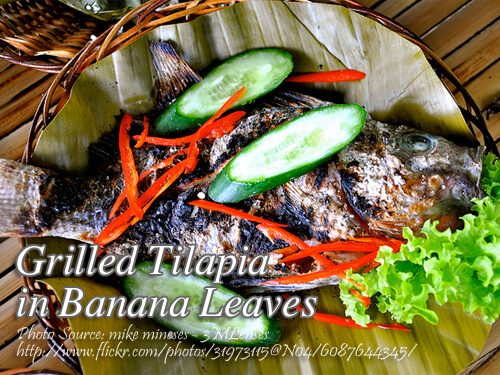
This recipe is grilled tilapia in banana leaves stuffed with onions and tomatoes. Grilling is best when using live charcoal than using electric grill because it enhances the flavor. This is no ordinary grilled tilapia because instead of only using salt or patis for flavoring, this grilled fish uses Worcestershire sauce and lemon and dill marinade. If you can’t find lemon and dill marinade in your local supermarkets, you can make your own by searching the internet but it has quite a lot of ingredients.
Grilled Tilapia with a Flavorful Filipino Twist
When it comes to simple yet satisfying Filipino seafood dishes, grilled tilapia is always a favorite. It’s affordable, widely available, and easy to prepare, making it a practical choice for both everyday meals and weekend gatherings. While many households season fish with nothing more than salt or a splash of patis before grilling, this version takes things a step further by infusing the fish with a savory and tangy marinade and wrapping it in banana leaves for extra flavor.
The first time I prepared this recipe, I expected a typical grilled fish experience. What surprised me was how much difference the banana leaves and Worcestershire-based marinade made. As the fish cooked over hot charcoal, the leaves slowly charred on the outside while trapping moisture inside. When unwrapped, the fish was tender, juicy, and packed with flavor from the onions, tomatoes, ginger, and kamias tucked inside.
If you’re new to cooking fish, don’t worry. This recipe is beginner-friendly and forgiving, yet impressive enough to serve to family and friends.
The Tradition Behind Banana Leaf Grilling
Cooking food in banana leaves has been part of Southeast Asian cuisine for generations. In the Philippines, banana leaves are often used for wrapping rice cakes, meats, seafood, and vegetables. Beyond tradition, the leaves serve a practical purpose.
As the fish cooks, the banana leaves create a protective barrier between the flesh and direct heat. This helps prevent sticking and reduces the risk of overcooking. The leaves also trap steam, allowing the fish to cook gently while absorbing the subtle earthy aroma released from the leaves.
Many Filipino home cooks associate the scent of banana leaves on a charcoal grill with family gatherings and outdoor celebrations. It is one of those aromas that instantly brings back memories of backyard cookouts and festive meals shared around the table.
Why Charcoal Makes Better Grilled Tilapia
Although an electric grill can cook fish successfully, charcoal grilling produces results that are difficult to replicate indoors. The smoke generated by live charcoal adds a distinct depth of flavor that enhances the natural sweetness of tilapia.
One thing I’ve noticed after preparing grilled tilapia countless times is how the fish develops a richer aroma when cooked over charcoal. The smoky notes blend beautifully with the marinade, creating layers of flavor that make every bite more enjoyable.
The high, consistent heat from charcoal also helps cook the fish evenly. When the coals are properly heated, the banana leaf package gently sizzles while the fish steams inside. The result is moist flesh that flakes easily with a fork.
A common mistake beginners make is placing the fish over charcoal that is still producing large flames. Excessive flames can burn the banana leaves before the fish is fully cooked. Waiting until the charcoal develops a layer of white ash creates a more stable cooking temperature.
What Makes This Grilled Tilapia Special
What sets this grilled tilapia apart from more traditional versions is the combination of Worcestershire sauce and lemon and dill marinade.
Worcestershire sauce adds savory complexity with its balance of sweetness, tanginess, and umami. Meanwhile, the lemon and dill marinade contributes brightness that helps cut through the richness of the fish.
The addition of ginger and chili provides subtle warmth without overpowering the delicate flavor of tilapia. Slices of onion, tomato, and kamias tucked inside the fish create natural moisture during cooking.
As the fish grills, the vegetables soften and release their juices. These juices mingle with the marinade and create a flavorful liquid that keeps the flesh from drying out. This is one of the reasons the finished grilled fish remains moist even after spending time over hot charcoal.
Preparing the Fish for Grilling
Before wrapping the fish, season it lightly with salt. This simple step helps draw out some moisture from the surface and enhances the natural flavor of the flesh.
Place each fish on several layers of banana leaves. Using multiple layers is important because it creates insulation and prevents tearing during grilling. Banana leaves can become fragile once exposed to heat, so the extra layers provide protection.
Arrange the onions, tomatoes, and kamias inside the fish cavity. These ingredients not only add flavor but also help maintain moisture throughout the cooking process.
When mixing the marinade, combine Worcestershire sauce, lemon and dill marinade, chili, ginger, salt, and pepper until well blended. Pour the mixture over the fish before folding the banana leaves securely around it.
One trick I’ve learned is to make sure the package is tightly wrapped but not compressed. Leaving a little room inside allows steam to circulate while the fish cooks.
How Grilled Tilapia Cooks Inside Banana Leaves
Many beginner cooks wonder whether wrapping fish in banana leaves prevents browning. While the fish itself does not develop direct grill marks, something equally delicious happens.
The banana leaves trap steam generated from the fish and vegetables. This creates a moist cooking environment that gently cooks the flesh from all sides. At the same time, the outer layers of the leaves absorb smoke from the charcoal.
During the fifteen-minute cooking time, you’ll notice the leaves changing color from bright green to olive brown. Small charred spots may appear, which is perfectly normal. In fact, these charred areas contribute additional smoky aroma.
When the fish is done, the flesh should appear opaque and separate easily when tested with a fork. If the fish still looks translucent near the thickest part, continue grilling for a few more minutes.
Common Mistakes to Avoid
One of the most common issues with grilled tilapia is overcooking. Tilapia is a relatively lean fish, which means it can dry out quickly if exposed to heat for too long.
Another mistake is using banana leaves that are too stiff. Fresh leaves should be briefly passed over a flame or dipped in hot water to make them pliable. This prevents cracking when folding around the fish.
Insufficient seasoning can also lead to bland results. Because the fish is wrapped, much of the flavor comes from the marinade and stuffing ingredients. Taking time to distribute the marinade evenly ensures every bite is flavorful.
Avoid opening the package repeatedly while grilling. Every time the wrapper is opened, valuable steam escapes, slowing the cooking process and reducing moisture.
Serving and Enjoying
Fresh from the grill, grilled tilapia pairs beautifully with steamed rice and a simple dipping sauce. The tangy and smoky flavors complement classic Filipino side dishes, making it suitable for both casual lunches and special occasions.
One of my favorite ways to serve this fish is directly in the banana leaf wrapper. Opening the package at the table releases an incredible burst of aroma that immediately gets everyone’s attention.
The combination of smoky charcoal, fragrant banana leaves, savory marinade, and juicy vegetables transforms a humble tilapia into something truly memorable.
Why This Tilapia Recipe Works
This grilled tilapia recipe succeeds because every ingredient serves a purpose. The salt enhances flavor, the vegetables add moisture, the marinade contributes depth and brightness, and the banana leaves protect the fish while infusing subtle aroma.
Most importantly, charcoal grilling ties everything together by adding a smoky character that cannot easily be duplicated using other cooking methods.
For beginner cooks looking to expand their seafood repertoire, this recipe offers an approachable way to create restaurant-worthy results at home. With a little patience and properly heated charcoal, you’ll discover why grilled tilapia wrapped in banana leaves remains a beloved Filipino favorite.
How to Cook Grilled Tilapia in Banana Leaves
Ingredients
- 3 pcs tilapia scaled and cleaned
- 2 Tbsp. Lea & Perrins Lemon and Dill 5-minute Marinade optional
- 1 tsp rock salt
- 1 chopped red chili
- 1 sliced onion
- 1 tsp chopped ginger
- 3 sliced kamias
- 1/2 tsp pepper
- 3 pcs quartered tomatoes
- 1/2 tsp salt
- 3 Tbsp. Worcestershire Sauce
- Banana leaves
Instructions
How to cook Grilled Tilapia In Banana Leaves
- Season fish with salt. Place each fish in three layers of banana leaves.
- Top each fish with slices of onion, kamias and tomatoes.
- In a bowl, mix Worcestershire Sauce and Lemon and Dill 5-minute Marinade, chili, ginger, salt and pepper.
- Pour Worcestershire Sauce mixture over each fish and fold banana leaves to wrap fish.
- Cook over hot charcoal for 15 minutes. Serves 3.
Notes
Soften the Banana Leaves First
Briefly pass the banana leaves over an open flame or dip them in hot water before wrapping the fish. This makes the leaves more flexible and less likely to tear during grilling. Softened leaves also create a tighter seal that helps keep the grilled tilapia moist.Use Fully Heated Charcoal
Wait until the charcoal is covered with a light layer of gray ash before placing the fish on the grill. Charcoal that is too hot with active flames can burn the banana leaves before the fish cooks through. Steady heat allows the grilled tilapia to cook evenly while developing a delicious smoky flavor.Don’t Overstuff the Fish
Add enough onions, tomatoes, and kamias to flavor the fish, but avoid packing the cavity too tightly. Overstuffing can prevent heat from circulating properly inside the wrapper and may increase cooking time. A balanced amount of filling helps the grilled tilapia stay juicy while allowing the seasonings to penetrate the flesh.