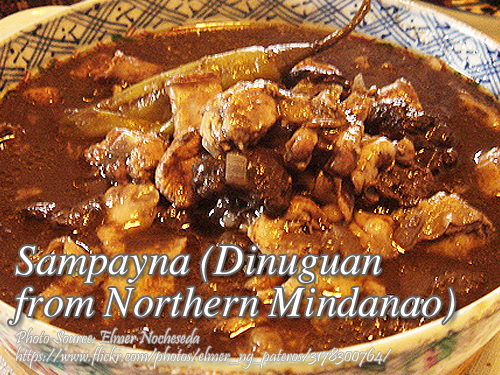
This sampayna, a dinuguan style recipe is from Northern Mindanao region 10. Unlike the usual dinuguan dish which uses dried oregano, this recipe uses olasiman or purslane and with the addition of banana heart which is not found on the usual dinuguan dish. With regard to purslane, it is a common wild plant which can be found almost anywhere in the Philippines. Also known as known as pigweed or wild portulaca in English and gulasiman or olasiman in Tagalog is a succulent plant with green oblong leaves and reddish stem. It’s a very nutritious plant and pack with omega 3 fatty acid.
Sampayna (Dinuguan from Northern Mindanao)
If you grew up thinking all dinuguan tasted the same, this recipe might surprise you. The first time I tried cooking this Northern Mindanao version, I honestly expected it to be just another variation of the usual rich, savory pork blood stew. But somewhere between slicing the banana heart and adding the olasiman, I realized this dish had its own personality.
Sampayna is not just dinuguan with a twist. It reflects how regional cooking in the Philippines adapts to what’s available. In this case, it leans on wild greens and simple ingredients that bring both texture and brightness to an otherwise deep and earthy dish.
What Makes Sampayna Different
Most of us are used to dinuguan flavored with dried oregano, giving it that familiar herby note. This dish skips that entirely. Instead, it uses olasiman, also known as purslane, which has a slightly sour, almost lemony taste.
The first time I added olasiman to the pot, I was hesitant. I worried it might overpower the dish or turn too mushy. But after five minutes of cooking, the leaves softened just enough while still keeping a slight bite. That subtle tang actually balanced the richness of the pork blood better than I expected.
Another standout ingredient is banana heart. If you’ve never worked with it before, it can feel intimidating. It stains your hands, and if not prepped properly, it can taste a bit bitter. I learned the hard way that slicing it and soaking it in water helps remove that bitterness. Once cooked, it absorbs the flavors of the stew beautifully and adds a soft, almost meaty texture.
These two ingredients are what truly define Sampayna and set it apart from the usual versions we see on the table.
Preparing the Ingredients the Right Way
Cooking Sampayna starts with properly handling the offal. The intestines and lungs need to be cleaned thoroughly. I usually boil them first for about thirty minutes until tender. This step does two things. It removes impurities and also makes slicing much easier later on.
There was one time I rushed this step and ended up with chewy pieces that never softened, no matter how long I simmered the stew. Since then, I’ve made sure to give the meat enough time to tenderize before anything else.
Once cooked, I slice them into small, even pieces. Keeping them around one centimeter thick helps them cook evenly later when everything comes together.
Building the Flavor Base
Like many Filipino dishes, Sampayna begins with a simple sauté of garlic, onion, ginger, and tomatoes. This is where the aroma starts to build.
Don’t rush this part. I let the onions soften fully and the tomatoes break down until they release their juices. When the tomatoes start to look almost saucy, that’s when I know the base is ready.
Adding ginger might seem unusual if you’re used to classic dinuguan, but it plays an important role. It helps reduce the strong odor of the offal and adds a gentle warmth to the dish.
Once the aromatics are ready, I add the boiled intestines, lungs, liver, and the prepared banana heart. At this stage, everything already smells rich and savory, even before the defining ingredient goes in.
The Key Step That Makes or Breaks Sampayna
Now comes the most crucial part of cooking: adding the vinegar and blood mixture.
I mix the vinegar and blood beforehand to make sure it blends smoothly. Then I pour it into the pot and let it come to a boil without stirring.
This is one of those techniques that might seem small but makes a big difference. Stirring too early can cause the blood to curdle unevenly, giving the dish a grainy texture. Letting it boil undisturbed allows the mixture to set properly and create that smooth, thick sauce dinuguan is known for.
I usually give it about fifteen minutes before touching it. You’ll notice the color deepen and the sauce start to thicken. That’s your sign that it’s safe to stir.
Bringing Everything Together
After the mixture has settled, I season it with salt and gently stir everything together. This is when the flavors really start to come alive.
The final step is adding the olasiman. Unlike other greens, it doesn’t need long cooking. Around five minutes is enough. Overcooking it will make it too soft and dull its fresh, slightly tangy flavor.
When done right, Sampayna has a balanced taste. It’s rich but not too heavy, thanks to the natural acidity from both the vinegar and the purslane. The banana heart adds body, while the offal provides that classic depth you expect from a blood stew.
A Dish Rooted in Resourcefulness
Sampayna is a good example of how Filipino cooking makes use of what’s readily available. In many parts of Northern Mindanao, olasiman grows wild and doesn’t require cultivation. It’s often overlooked, but it’s packed with nutrients, including omega-3 fatty acids.
I remember a neighbor, Tita Lorna, pointing out purslane growing near her garden and saying, “Sayang kung hindi mo lulutuin yan.” That stuck with me. Sometimes the best ingredients are the ones we don’t even think to use.
Adding banana heart is another practical choice. It stretches the dish, making it more filling without needing more meat. For families cooking on a budget, this kind of ingredient substitution makes a big difference.
Common Mistakes to Avoid
When cooking, there are a few things to watch out for.
Skipping the pre-boil step for the intestines and lungs can lead to tough, unpleasant textures. Not soaking the banana heart can leave a bitter aftertaste. Stirring the vinegar and blood mixture too early can ruin the consistency of the sauce.
I’ve made all these mistakes at least once, and each time, the dish just didn’t come out right. But once you get these steps down, the process becomes much easier and more intuitive.
Serving Sampayna at Its Best
Sampayna is best served hot, straight from the pot. The sauce thickens as it cools, so timing matters. I usually prepare rice just before finishing the dish so everything is ready at the same time.
The flavors deepen even more after sitting for a while, so leftovers the next day can taste even better. Just reheat gently and add a splash of water if the sauce becomes too thick.
Why Sampayna Is Worth Trying
If you’re new to cooking regional Filipino dishes, it is a great place to start. It may look complex at first, but the process is straightforward once you understand the steps.
What makes this dish special isn’t just the ingredients, but how they come together. It tells a story of local cooking traditions, resourcefulness, and the creativity of home cooks who know how to make something memorable out of simple components.
The next time you’re in the mood for something hearty and different, give Sampayna a try. It might just change the way you think about dinuguan.
How to Cook Sampayna (Dinuguan from Northern Mindanao)
Ingredients
- 1 cup pork's small intestines (cleaned, boiled and cut crosswise, 1 cm. Lengths)
- 1 cup pork's lung (cleaned, boiled and cut into small cubes)
- 2 tablespoons cooking fat
- 1 teaspoon crushed garlic
- 2 teaspoons sliced onion
- 1 teaspoons sliced ginger
- 2 tablespoons slice tomatoes
- 1/2 cup cut pork liver (cubes)
- 2 cups sliced banana heart
- 1 cup vinegar mixed with 2 cups pork's blood
- 2 1/2 teaspoons salt
- 1/2 cup olasiman stems and leaves
Instructions
How to Make Sampayna:
- Boil intestines and lungs until tender or for about 30 minutes. Clean and boil and cut crosswise, 1 cm. Lengths.
- Sauté garlic, onion, ginger and tomatoes. Add intestines, lungs, liver and sliced banana heart.
- Add well-mixed vinegar-blood mixture and bring to a boil without stirring for about 15 minutes.
- Add salt, stir and add olasiman. Cook 5 minutes longer. Serve hot. Six servings.
Notes
Frequently Asked Questions:
Can I substitute olasiman in Sampayna?
Yes, you can substitute olasiman if it’s not available in your area. Some people use spinach or kangkong, but the flavor will be milder and less tangy. Olasiman has a distinct slight sourness that really helps balance the richness of Sampayna.How do I prevent Sampayna from tasting too sour?
The sourness in Sampayna mainly comes from the vinegar and olasiman. Make sure to measure the vinegar properly and avoid adding too much at once. You can also balance the flavor by adjusting salt after cooking rather than diluting it with water.Can I make Sampayna ahead of time?
Yes, Sampayna actually tastes better after a few hours as the flavors continue to develop. Store it in the refrigerator and reheat gently when ready to serve. Just add a little water while reheating if the sauce becomes too thick.