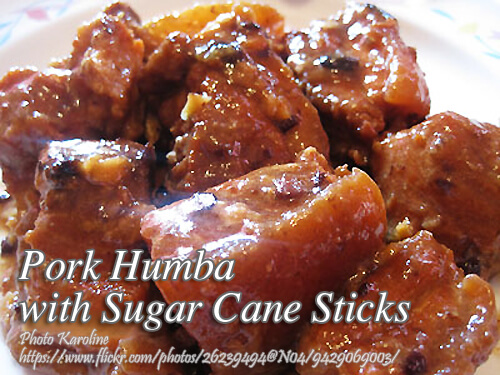
Pork humba in sugarcane sticks is almost similar to the usual humba recipe. The only difference is, this recipe has black beans added and sugarcane sticks to serve as a pot bottom lining and to add a distinct flavor to the dish. Using a lining on the bottom of the pot is very helpful specially if you are using clay pot or palayok which usually burns the dish on the bottom. Some people are using banana leaves lining on the bottom of the pot to avoid burning and also adds an aroma to the dish. I’m hoping that I can find a teflon coated non-stick palayok in the future.
Pork Humba with Sugar Cane Sticks: A Family Version of Pork Humba
I grew up thinking pork humba was one of those dishes that every Filipino family cooked a little differently, and I still believe that today. In our house, this version with sugar cane sticks always felt special, something my relatives cooked when there was time to slow down and do things the old way. I first learned it from my Uncle Rene, who insisted that the pot matters just as much as the ingredients. According to him, pork humba tastes better when it simmers gently, picking up flavor not just from the sauce but from whatever lines the bottom of the pot.
This recipe brings together that memory and a technique that makes sense even for beginners. Pork humba with sugar cane sticks may sound unusual at first, but once you understand why it works, it becomes a dish you’ll want to cook again.
A Dish with Roots in the Visayas
Humba is often associated with the Visayas, especially Cebu, where sweet and savory flavors come together beautifully. When my sister Liza worked for a few months in Bohol, she came home talking nonstop about the local food. One weekend, she cooked humba the way she learned there, adding black beans and letting the pork simmer until the sauce turned dark, glossy, and sticky.
What stood out was how sweet the dish tasted without relying on too much sugar. That sweetness comes from slow cooking and, in this version, from the sugar cane itself. Historically, sugar cane has been abundant in many provinces, so it makes sense that home cooks found creative ways to use it beyond desserts.
Why Sugar Cane Sticks Make a Difference
Using sugar cane sticks as a pot lining is both practical and flavorful. My Uncle Rene explained that pounding the cane helps release its natural juices. When placed at the bottom of the pot, the heat causes the sugar to steam upward, gently infusing the pork with sweetness. This method also prevents the meat from sticking directly to the pot, which is especially helpful if you’re using a clay palayok.
For beginners, this technique solves two common problems. It keeps the pork from burning at the bottom, and it adds flavor without complicated steps. Think of it as a natural buffer and seasoning all in one.
Cooking Pork Humba the Traditional Way
When cooking pork humba, patience matters. The pork is first boiled until half-cooked, which helps remove impurities and starts tenderizing the meat. This step ensures the pork absorbs the sauce later instead of tightening up. After that, the sugar cane sticks are laid at the bottom of the pot, unpeeled and pounded, just as my uncle taught me.
Once the pork sits on top of the cane, the remaining ingredients are added and brought to a boil. Lowering the heat and covering the pot allows the dish to simmer gently. This slow cooking gives time for the flavors to deepen and blend. Toward the last part of cooking, letting the sauce thicken transforms it into that sticky, sweet glaze humba is known for.
The Role of Black Beans and Sweet Sauce
Black beans add more than just texture to pork humba. They bring a mild earthiness that balances the sweetness from the sugar cane. My cousin Marco once skipped the beans, thinking they weren’t necessary, and the dish tasted flatter. That small detail makes a difference.
As the sauce reduces, the natural sugars caramelize. This is why the last ten to fifteen minutes are important. Keeping the heat low prevents burning while allowing the sauce to cling to the pork. It’s a simple technique, but it’s what gives the dish its signature look and flavor.
Food for Thought for First-Time Cooks
If you’re new to cooking Filipino food, pork humba is a great place to start. It teaches you how slow cooking builds flavor and why traditional methods still work today. Using sugar cane sticks may not be common in modern kitchens, but it shows how resourceful Filipino cooking has always been.
Every time I cook pork humba like this, I remember family gatherings, stories shared while waiting for the pot to simmer, and the smell of sweet sauce filling the kitchen. It’s a reminder that food is not just about following instructions. It’s about learning techniques, understanding why they work, and carrying forward memories one dish at a time.
How to Cook Pork Humba with Sugar Cane Sticks
Ingredients
- 1 kilo fresh liempo w/ skin cut into 4 slabs
- 1 cup Pineapple juice
- 1/2 cup Black beans drained
- 1/2 cup Soy Sauce
- 1/2 cup Brown sugar
- Sugar cane sticks cut to fit and make a grid at the bottom of the pot
Instructions
How to cook Pork Humba in Sugar Cane Sticks:
- Boil pork in water until tender, till half-cooked.
- Pound the sugar cane, do not peel off.
- Use as under liner for the pork so the steam will cook its sugar to add flavor.
- Add the other ingredients and bring to boil.
- Set the heat to low, continue to simmer, covered.
- Let sauce thicken at the last 10 to 15 minutes till sticky and sweet.
Notes
Cooking Tips:
Choose the Right Cut of Pork
Use pork belly or a cut with enough fat because lean meat tends to dry out during long simmering. The fat slowly renders and mixes with the sauce, giving pork humba its rich and silky texture. This also helps the flavors cling better to the meat instead of staying watery.Simmer Low and Slow for Better Flavor
Keeping the heat low allows the pork to absorb the sweet and savory sauce without burning. Rushing the cooking process can make the meat tough and prevent the sauce from thickening properly. A gentle simmer gives you tender pork and a naturally sticky glaze.Let the Sauce Reduce at the End
Do not cover the pot during the last few minutes of cooking so excess liquid can evaporate. This step helps the sugars caramelize, creating the signature glossy sauce of pork humba. Stir occasionally to prevent sticking while allowing the sauce to coat the meat evenly.

Good pork. I am a meat lover.