
This dish is I think a Kapampangan version of the paella. Bringhe is almost similar to the famous Spanish rice dish called paella containing rice, meat, seafood and vegetables. But the most obvious difference is that bringhe contains coconut milk which paella doesn’t have. And bringhe uses glutinous rice instead of regular rice that is why bringhe is very sticky compared to paella. It’s like you are eating rice cake.
A Family Memory of Bringhe
I first tasted bringhe in my auntie Lorna’s kitchen during a humid afternoon in Pampanga. My cousin Jessa had just come home from a school trip, and she couldn’t stop talking about the food she tried there. A few days later, Auntie Lorna decided to recreate what she called her version of bringhe, guided by an old recipe she learned from her neighbor, Aling Cely.
The aroma alone was enough to gather everyone in the house. My uncle Benjo kept peeking into the kitchen, pretending to help but really just waiting for a taste. That day, I realized that bringhe was more than just a dish. It carried stories, memories, and a sense of home.
What Makes Bringhe Special
Bringhe is often described as the Kapampangan take on paella, but it has a personality of its own. While both dishes share ingredients like meat, vegetables, and rice, the use of coconut milk gives this Filipino rice dish a rich and creamy flavor that sets it apart.
Another key difference is the use of glutinous rice. This makes the texture softer and slightly sticky, almost like a savory rice cake. The first time I cooked bringhe on my own, I was surprised at how comforting that texture felt. It reminded me of kakanin we usually enjoy during fiestas.
Some say that bringhe reflects the blend of Spanish influence and local ingredients. It’s a good example of how Filipino cuisine adapts and transforms, making something familiar feel uniquely ours.
Preparing the Traditional Way
The first time I attempted to cook bringhe, I called my older brother Marco for advice. He once stayed in Pampanga for work and picked up a few kitchen tricks. He told me not to rush the sautéing process because that’s where the flavor starts.
In a large wok, I sautéed garlic and onions in lard just like Auntie Lorna did. The smell alone brought back memories. When the chicken hit the pan, it sizzled nicely, and I made sure to brown it well. This step is important because browning the meat locks in flavor and adds depth to the dish.
I added chorizo next, followed by a bit of ginger juice. My uncle once said ginger helps cut through the richness of coconut milk, and he was right. It gives a subtle freshness that balances everything.
Cooking Bringhe with Care
When it was time to add the glutinous rice and regular rice, I hesitated a bit. I remembered my cousin Jessa telling me that getting the rice right is the trickiest part of bringhe. Too much liquid and it becomes mushy. Too little and the grains stay undercooked.
Pouring in the coconut milk felt like the turning point. The mixture slowly thickened as it simmered, and I seasoned it with patis and added a bay leaf. Covering it with banana leaves was something I almost skipped, but Marco insisted.
He explained that banana leaves trap steam and infuse a subtle earthy aroma into the dish. It’s a small step, but it makes a noticeable difference. As the bringhe cooked, the scent filled the entire house, just like it did years ago in Auntie Lorna’s kitchen.
The Final Touch of Bringhe
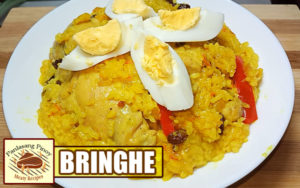
Once the rice was cooked, I carefully transferred the bringhe onto a serving platter. I topped it with sliced pimientos and boiled eggs, just like how my aunt used to present it.
My younger sister Nina walked into the kitchen and smiled. She said it smelled like a family gathering. That moment made all the effort worth it. Food has a way of bringing people back, even if it’s just through memory.
The creamy texture, the savory meat, and the hint of coconut all came together beautifully. It wasn’t exactly the same as Auntie Lorna’s version, but it carried the same warmth.
Why It Feels Like Home
There’s something comforting about cooking bringhe, especially for beginners. It may seem like a complicated dish at first, but once you understand the steps, it becomes more approachable.
The techniques involved, like browning the meat and using banana leaves, are not just for tradition. They enhance flavor and texture in ways that simple shortcuts cannot replace. Each step builds on the next, creating a dish that feels complete.
Whenever I cook bringhe now, I think about my family. I remember my uncle’s advice, my cousin’s stories, and my aunt’s quiet confidence in the kitchen. It reminds me that recipes are not just instructions. They are experiences passed down, shaped by the people who make them.
And maybe that’s what makes bringhe truly special. It’s not just something you eat. It’s something you share.
How to Make Bringhe
Ingredients
- 1 whole chicken cut into serving pieces
- 1 piece chorizo Bilbao sliced
- 1 head garlic crushed
- 1 pc medium onion chopped
- Chorizo de Bilbao lard
- 1/2 cup turmeric juice about 2 pieces peeled and pounded
- 1 cup glutinous rice washed
- 1 cup rice washed
- 4 cups thin coconut milk
- 1 pc bay leaf
- 1 small can pimientos
- 2 pcs hard boiled eggs quartered
- patis to taste
- banana leaves
Instructions
How to Cook Bringhe:
- In a large wok, sauté garlic and onions in the lard. Add chicken and brown, add chorizo and ginger juice.
- Simmer for a few minutes and add the malagkit and the rice. Pour in the coconut milk.
- Season with patis and add the bay leaf. Cook covered with banana leaves.
- When rice is cooked, pile into a serving platter and garnish with sliced pimientos and egg.
Notes
Cooking Tips:
Use the Right Rice for the Perfect Texture
For authentic bringhe, combine glutinous rice with regular rice to achieve that signature soft and slightly sticky texture. Using only regular rice will make the dish too dry, while too much glutinous rice can make it overly dense. This balance helps create a creamy consistency that holds the rich coconut flavor well.Brown the Meat for Deeper Flavor
Take time to brown the chicken properly before adding other ingredients to build a richer taste. This step caramelizes the surface of the meat, adding depth and a slightly savory note to the dish. Skipping this process can result in a flatter, less developed flavor.Cover with Banana Leaves While Cooking
Covering the bringhe with banana leaves helps trap steam and keeps the rice moist as it cooks. It also adds a subtle earthy aroma that enhances the overall flavor of the dish. If banana leaves are not available, you can still cook it without them, but the traditional fragrance will be less pronounced.



Nice bringhe recipe and looks delicious!