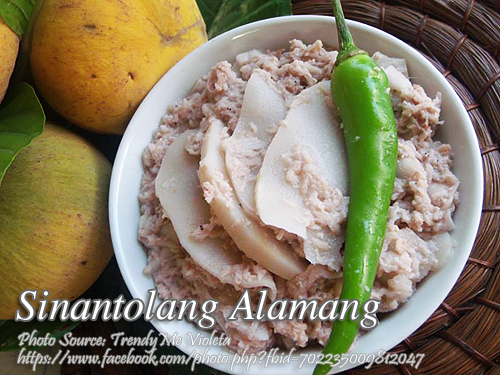
How to Cook Sinantolang Alamang
Sinantolang alamang is a spicy Filipino coconut-based dish made with grated santol and shrimp paste, simmered until rich, creamy, and perfectly balanced between salty, sour, and savory flavors.
Prep Time10 minutes mins
Cook Time45 minutes mins
Total Time55 minutes mins
Course: Vegetable Recipe
Cuisine: Filipino
Keyword: santol recipe, sinantolang alamang
Servings: 8 servings
Calories: 502kcal
Author: Manny
- 1 kilogram semi-ripe santol cotton fruit
- 1 Tbsp. pork fat
- 1 tsp garlic minced
- 1 pc onion finely chopped
- 1 & 1/2 cup bagoong alamang
- 2 pcs siling labuyo red chillis
- 6 cup coconut cream
How to cook Sinantolang Alamang:
Wash santol. Pare outer skin. Cut in half and remove seeder Grate skin or flesh.
Set aside. Saute garlic and onion in pork fat.
Add the grated santol, bagoong and siting labuyo.
Cook for 5 minutes. Pour in coconut cream.
Simmer and stir occasionally until oil comes out of the coconut cream about 45 minutes.
Serve hot with steamed rice. Serves 8.
Choose the Right Santol for Better Flavor
Pick santol that is slightly mature but still firm because it gives the best balance of sourness and texture for sinantolang alamang. Overripe fruit can turn mushy and watery, which affects the final consistency of the dish. If the santol is too sour, gently squeeze a little juice out before cooking to mellow the taste without losing its character.
Control the Saltiness of the Bagoong
Start with a small amount of bagoong alamang since its saltiness can vary greatly depending on the brand. Let it simmer with the santol and coconut cream first before adjusting the seasoning at the end. Adding too much early on can overpower the natural flavors and make the dish too salty to fix.
Simmer Low and Slow for Creamy Texture
Cook sinantolang alamang over low heat so the coconut cream slowly releases oil and develops a rich, creamy texture. High heat can cause the coconut milk to curdle or burn at the bottom of the pan before the santol softens properly. Stir occasionally to prevent sticking and allow the flavors to blend evenly as it thickens.