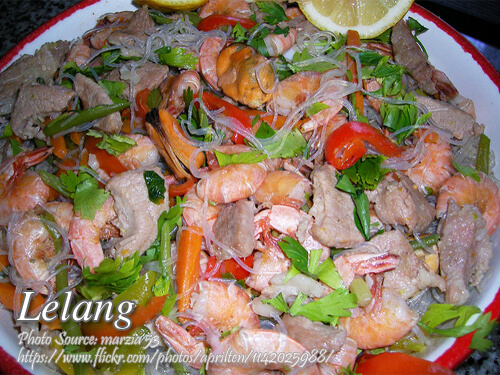
How to Cook Lelang
Lelang is a comforting Filipino noodle dish from Eastern Visayas made with sotanghon, pork, shrimp, and bean sprouts simmered in a savory, home-style broth.
Prep Time10 minutes mins
Cook Time20 minutes mins
Total Time30 minutes mins
Course: Vegetable Recipe
Cuisine: Filipino
Keyword: comfort food, lelang, Pinoy merianda
Servings: 6 servings
Calories: 214kcal
Author: Manny
- 2 tablespoons cooking oil
- 1 teaspoon garlic
- 2 tablespoons sliced onion
- 1/2 cup fresh shrimps blanched and shelled
- 1 cup cubed boiled pork
- 2 cups shrimp juice from pounded heads of shrimps
- 2 cups munggo sprouts toque
- 2 teaspoons salt
- 2 cups sotanghon soaked and cut 2" long
- 1 cup water
- 1/4 cup green onions
- Dash of pepper
How to Cook Lelang:
Sauté garlic, onion, shrimp and pork. Add shrimp juice.
Cover and allow to boil. Add togue and cover. Cook 10 minutes.
Season to taste. Add sotanghon and cook 5 minutes longer.
Add one cup water and bring to a boil.
Just before removing from fire, add green onions and dash of pepper.
Serve hot. Serves 6.
Cooking Tips:
Build Flavor Early When Cooking Lelang
Start by sautéing the garlic, onion, pork, and shrimp together to create a rich base for lelang. This step allows the natural oils and juices to release slowly, giving the dish depth without extra seasoning. Rushing this stage can result in noodles that taste flat instead of well-rounded.
Add the Bean Sprouts Before the Noodles
Togue should go in before the sotanghon so it can release moisture while cooking. This helps soften the noodles later without making them soggy or overcooked. In lelang, this order keeps the texture balanced and pleasant for beginners.
Control the Liquid to Avoid Mushy Noodles
Glass noodles absorb liquid quickly, so adding water gradually is important when cooking lelang. Bringing the dish back to a gentle boil ensures the noodles cook evenly and soak up flavor instead of plain water. Turning off the heat at the right time keeps the sotanghon springy and not limp.