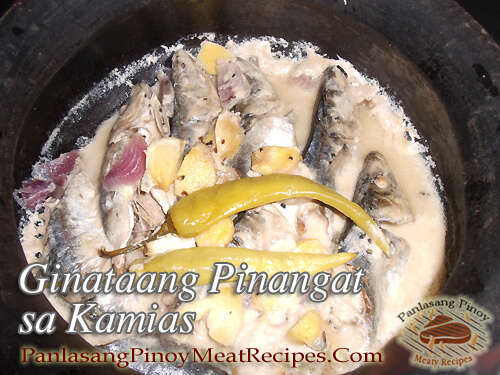
How to Cook Ginataang Pinangat sa Kamias
Ginataang pinangat is a comforting Filipino fish dish simmered gently with kamias, aromatics, and coconut milk, creating a balance of sour, savory, and creamy flavors that taste like home.
Prep Time10 minutes mins
Cook Time25 minutes mins
Total Time35 minutes mins
Course: Fish Recipe
Cuisine: Filipino
Keyword: ginataang pinangat, pinangat na galunggong
Servings: 3 servings
Calories: 142kcal
Author: Manny
- 1/2 kilo fresh small galunggong scad fish
- 5 to 6 tomatoes quartered
- 1 pc large onion chopped
- 6 to 7 pcs large kamias
- 1 Tbsp. salt
- 1 Tbsp. patis
- 1 Tbsp vetsin or MSG
- 2 Tbsp. cooking oil
- 3/4 cup water
- 1 and 1/2 cup coconut cream thick
How to cook Ginataang Pinangat sa Kamias:
Cut off ends of kamias. Slice into halves, lengthwise. Put on a shallow pan, add onion and tomatoes.
Pour in water and cooking oil, add patis, salt and vetsin.
Arrange galunggong on top of mixtures. Cover and cook for 15 - 20 minutes over low heat.
Add coconut cream. Stir gently so the cream would not curdle. Cook for another 5 minutes.
Cooking Tips:
Keep the Heat Low for Tender Fish
Ginataang pinangat is best cooked over low heat to keep the fish tender and intact. High heat can cause galunggong to toughen and break apart before it absorbs the flavors. Slow simmering allows the sourness of the kamias and the richness of the coconut milk to blend smoothly.
Layer the Ingredients Instead of Stirring Early
Placing the kamias, onions, and tomatoes at the bottom of the pan protects the fish from direct heat. This technique helps prevent sticking and burning while creating a flavorful base. Avoid stirring until the fish is fully cooked to keep it whole and presentable.
Add Coconut Milk at the Right Time
Coconut milk should be added only after the fish is cooked through. Adding it too early or boiling it aggressively can cause the sauce to curdle and lose its creamy texture. Gentle stirring at the end keeps the ginataang pinangat rich, smooth, and well-balanced.